
Performance and Communion
Dear Reader,
Perhaps you may have noticed by now how taken I am with music. I literally “grew up in and into” music of many kinds. As I said to you earlier, one of my chief regrets is having failed to heed my mother’s gentle prodding to take piano lessons. I know now that, though I never chose to pursue a vocation as a musician or teacher, I have, deep down inside, a belief that, had I ever mastered an instrument and learned theory, I would have succeeded on some level. As it is, nothing was ever completely lost on me. I did “sing,” and it “made the world a better place to be,” and now I have so much music in this head that I need to, and am able to, share it with others.
Today’s post is no random account of an inspirational music event. The musical group that I will be telling you about has been a part of our life together for fifteen or so years. We (the two of us) first saw and heard them in a little venue simply called the “Cook Shack,” run by Pal and Myles Ireland. It was in the tiny town of Union Grove, NC and served mostly a local population, offering a menu of classic comfort foods and Southern favorites, including breakfast. Myles and Pal were musicians themselves, and the small narrow room was as eclectic as they were. The most memorable of “decorations” being the vintage vinyl album covers attached to cheap plastic trouser hangers that littered the ceiling. They had intimate bluegrass jams on Saturday mornings for all comers.
A friend gave them the brilliant idea to book traveling musicians on Thursday nights, on the theory that they might be willing to stop and play on their way to bigger gigs in Raleigh or Charlotte that weekend. It worked. Those of us who learned of it could sit and hear individuals and groups way above our pay grades. There were only seventy-nine folding chairs packed into the interior. There was no “stage,” so the concerts were as intimate as anyone could ask for.
Fortunately for us, the group of which you are about to read lived just up the road and played at the “shack” regularly. Though they were from the country/bluegrass tradition, the banjo player was also a composer of music that approached “classical” status. Can you imagine a “country” band of banjo, guitar, and bass playing pieces that J. S. Bach would have admired?!
Believe it.
We have heard them since, playing before thousands at festivals and in concert halls. Some of their larger pieces have even been recorded with a string quartet. You cannot make this up—I would not try.
I sincerely hope that this little piece will inspire you to seek them out or at least listen to their many, very diverse recordings. With no further adieux, I present my best effort at describing a magical musical night.
Oh, please try to attend a live concert. I did once and have never looked back.
Good things rarely last forever.
Real Tears, Cried in a Glorious Outpouring of Love
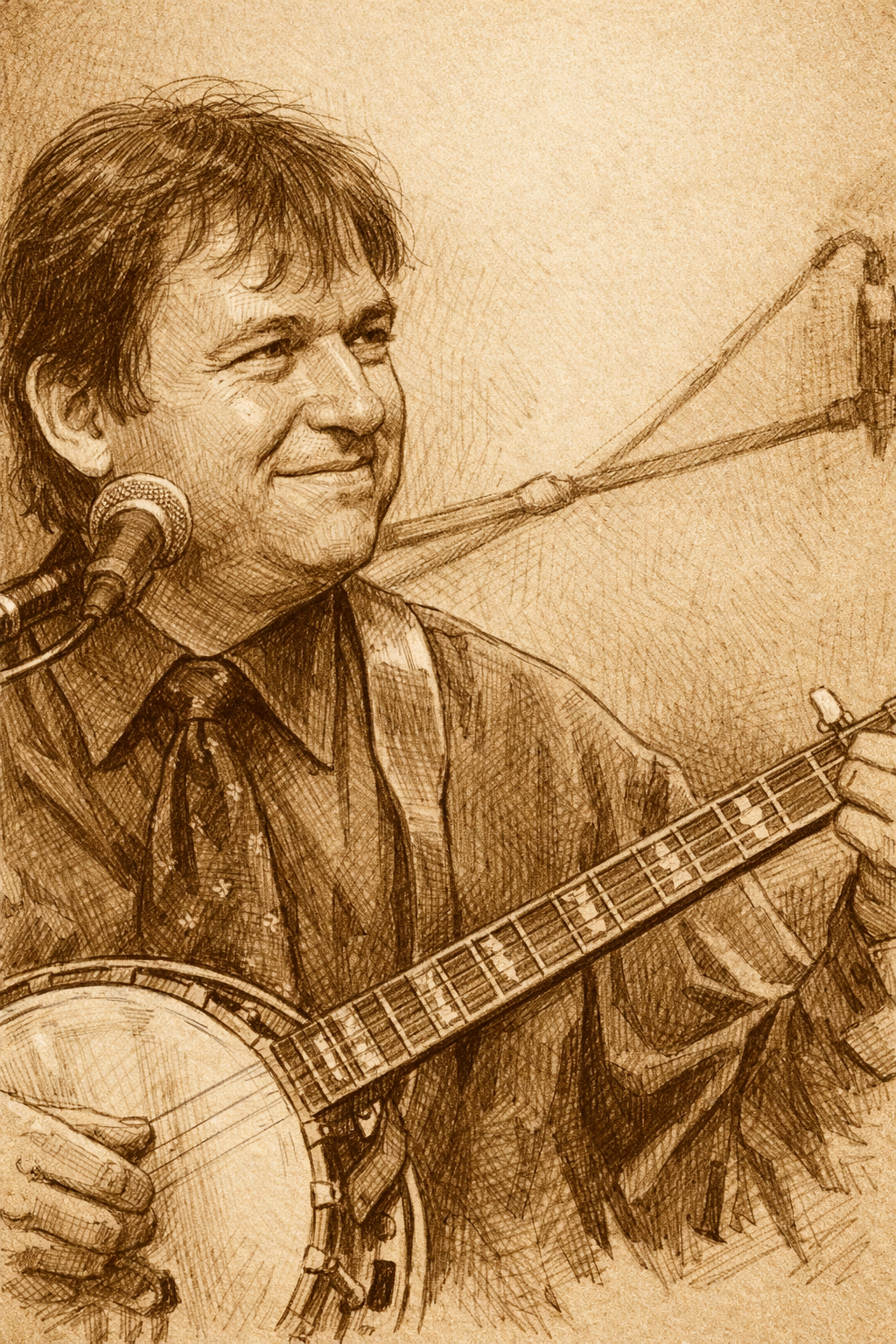
— for Jens Kruger
I want to tell you a story. I am the only one who can tell it. I say that without a single iota of egotistical human pride. On the contrary, I consider it a gift of the highest value. Saying that I am the only one who could tell it is simply to express a reality—one that I want the reader to receive very seriously.
The stories that each of us tell could only be written or spoken by that single individual. The beauty of each mind is that its conscious perspective and unconscious contemplation are truly unique. No other single human has them. All of who we are, and who no one else is, comes together in our stories, and in telling them we say a great deal about who we are, but also about the things we have experienced—things that no one else has. That is why stories are so important. We must tell them, or they will not be told.
It is a true story—not because all of the facts can be verified, but because of its message. When it has been told, the hope is that the reader will have encountered something about a “secret” of life that will ring with an undeniable clarity—one whose beauty cannot be denied.
The story begins in an improbable place and in a moment that might never have happened. In a very humble corner of the earth, there is a small rural town. For most of every year, only ordinary things happen. For one glorious weekend each spring, the extraordinary comes to visit—an international music festival. Held on the campus of a community college and now in its thirty-fifth year.
It came into being to celebrate the life of a beloved son—his father a towering songwriter, flat-picking guitar virtuoso, family man, and friend. He was also a revered ambassador of traditional American music to the larger world. Many young singers and instrumentalists from numerous countries credit his concerts and recordings with giving them a creative life in music.
On one spring day in Western North Carolina, two brothers from Switzerland arrive to be performers at the event and are taken in by their local family hosts. They are immediately moved by the hospitality they receive. They had been invited to play sets on the numerous venues scattered around the verdant campus. Almost from the beginning, their extraordinary musicality and virtuosity on the banjo and guitar endeared them to a patronage that came each year expecting to see and hear the very best of a genre that has come to be known as “Americana,” or simply “roots” music. They were not disappointed.
The brothers’ enthusiasm and sparkling personalities took each new listener in, language barriers melted away by their “universal sound”. They were invited to play at an emerging feature of the event and one that was fast becoming legendary: A Saturday Midnight Jam. By their own admission, they were up practically all night.
Unfortunately for them—fortunately for the storyteller—they were scheduled to play their last set on Sunday morning at 10:00 a.m. (if memory serves, it was cool and misty, as mornings in a creek “holler” can be in the mountains). Word had gotten around, and a surprisingly large crowd showed up to hear them.
They sat and played an enthusiastic and amazing set of largely bluegrass covers. Songs heard from vinyl recordings brought to them by their traveling father, from which they learned to play in the family kitchen back at home. Their fingering and picking were so hot and fast that few of us uninitiated could even comprehend what we were witnessing. We left the morning inspired and joyous, all hoping that the brothers would be invited back the following year. If you do not know, music fans tend to “fall in love” when they encounter new groups—certainly those that exhibit extraordinary talent.
The year was 1997.
In the fall of that year, the brothers returned at the invitation of their host family. From tales told in the ensuing years, the brothers experienced something of a “conversion.” They became very close not only with the family but with the larger community. Something special was beginning to grow. To “make a long story short,” they were invited back and became a fixture of the festival lineup. In the following years, they visited regularly, stayed for months at a time, and eventually moved permanently to the town.
Although first known for their faithful (though innovative) covers of traditional pieces, their performances began to include original compositions—songs from one and accomplished instrumental works from the other.
This storyteller was extremely fortunate to remember one night in a very small venue named The Cook Shack. During the week, it was a local burger-and-fries place run by a salt-of-the-earth couple named Herb and Pal. On select Thursday evenings, it hosted concerts by “itinerant,” but extremely talented, musicians who were on their way to larger, more remunerative venues in surrounding towns. The atmosphere could not have been more intimate or captivating. There were only seventy-nine seats available. Album covers hung from the ceiling. The “stage” was a ten-inch-tall platform at the front of the store and could barely accommodate a quartet and their instruments. Those sitting in the front row could literally reach out and touch the microphones.
The Brothers were regular entertainers, though money was not the draw (the proprietors relied on sales and gave all of the “gate” to the musicians—mostly gas money). They loved, then and now, playing for, sharing with, and interacting with their audiences. We all came one night expecting to hear their “hits,” such as “Jack of the Woods” and “Carolina in the Fall,” which were forthcoming. However, after the break (for more burgers and dogs and Cheerwine), we returned to our chairs and booths anticipating all those favorites not yet rendered. It was immediately apparent that the mood (and the mode) had changed. We were treated to a mostly instrumental grouping of selections that later became a record named “The Suite, Volume 1.” Many of the pieces had been years in the making but had not yet emerged on these shores (bluegrass having been the early theme). This storyteller was stunned by the “classic” nature of the “new” material. He knows now that what the small crowd had witnessed was the emergence of a major composer of what is known in some circles as “programmatic” music—that is, music which reflects (or is inspired by) the composer’s environment.
Nothing would ever be the same again.
Fast forward to the year 2011. The Brothers had become a beloved fixture at the festival. One of the venues was a concert hall on top of a steep hill that, at that time, could be reached only by climbing a very steep set of stairs through a natural, garden-like setting among tall trees and blooming native shrubs. Devoted fans negotiated the challenging terrain to attend the afternoon concert by the brothers. One never knows what to expect from their self-designed set lists. This day was different. It had been announced that there would be a festival premiere of a long piece entitled “The Appalachian Concerto.” The piece would include a young, up-and-coming string quartet. By this time, audiences expected that performances would include a mixture of songs and instrumental selections. This was something entirely new. The concerto would fill the entire forty-five-minute set.
Having come to adore and expect music of the highest possible quality, this listener was both ecstatic with anticipation and just a bit apprehensive. Could they pull it off? Would the promise be fulfilled?
The first movement was eclectic and complex and emotionally moving. How would it be resolved? Would it be complete—would the promise be fulfilled? As the phrases moved inexorably toward climax, many, to be sure, must have found themselves on the edge of their seats.
“Finish,” we thought, “this is already enough. I cannot breathe,” we said collectively.
Then the last chord resolved itself, and…as one, we exploded into the most spontaneous, leap-to-our-feet ovation one can imagine. The applause seemed to last for minutes. Finally, limp as a washing machine full of dish rags, we slumped back into our seats. Totally sated emotionally, we paused for more. Two more gorgeous movements followed. Beethoven’s fans themselves could not have felt more rewarded. Our own adopted son—how great will he become —how great already?
Saturday, April 29, 2023. Same hall, same trio (the brothers added a third member early on as a bass player—equally accomplished and revered). As usual, everyone was so glad to be there. It had become one big family. The musicians loved it—they were playing to a packed hall of over three thousand in their own “hometown,” though the audience included some first-timers from elsewhere (how lucky they were about to become). This was “our band.” As the first chords played, it became obvious to long-timers that the first selection would be the very same first movement from the Appalachian Concerto. So familiar, so memory-stimulating, we sat back drinking it all in. But…something felt different. The banjo-playing brother seemed more intent. His movement up and down the fretboard was more animated. The playing was at a generally higher velocity, more baroque. The movement of thirteen years before was being transformed before our very eyes and ears. “Dynamic” does not begin to do the performance justice. Not being a professional musician or music critic, one should hesitate to say more.
Though the music was beyond words, what happened next was so unexpected that it left one (or more) speechless. Before the last note had begun to fade, the entire body of listeners almost literally leapt to their feet as one. The shouts and the applause rose and went on in a display of unabashed, spontaneous pleasure. This storyteller, who for many years had reaped great individual pleasure from simply watching the facial displays and wordless interaction between the brothers, was observing the banjo-playing composer as he sat, without moving, in his chair. I saw him as I had never done before. His usually joyous visage began to dissolve. He looked down instead of out. He gently placed his hand over his heart. Gradually, with his other palm, he wiped an obvious stream of tears from his eyes. Finally, he looked up and, without words, met the gazes of the audience. Several times he mouthed the words “thank you.” He patted his chest to emphasize the import of his silent speech. He glanced aside, almost helplessly, at his brother who, seemingly reading his thoughts, eased into a song. His selection (if not already planned) was almost certainly offered as an antidote: “Carolina in the Fall,” which has come to memorialize the brothers’ acknowledgement of their “homecoming” to this sacred place.
This storyteller cannot conclude without a very personal footnote. Whatever the banjo master was experiencing at that moment, this is what has come through and what has only strengthened in intensity in the few hours since. The reaction, and the exchange that it represented, is nothing less than the very essence of the very best aspect of live music—its offering and reception—that can ever be experienced.
This musician, though he had played for a room full or a packed hall, had a moment when dual gifts were exchanged in a much deeper way. His art, born in the depths of his heart and soul, had become manifest and been delivered directly to the very being of his listeners. In a spontaneous exchange, their hearts had leapt toward him and had been viscerally experienced by him. I have no other words.
If one believes in the existence and power of love, what other name is appropriate to this moment?
[Reaction to a live concert by The Kruger Brothers in Watson Hall, Wilkes Community College, Wilkesboro, NC, April 2023)