
The “Nature” of Sacred Places
By Clay Hipp
A sense of place, a search for what matters
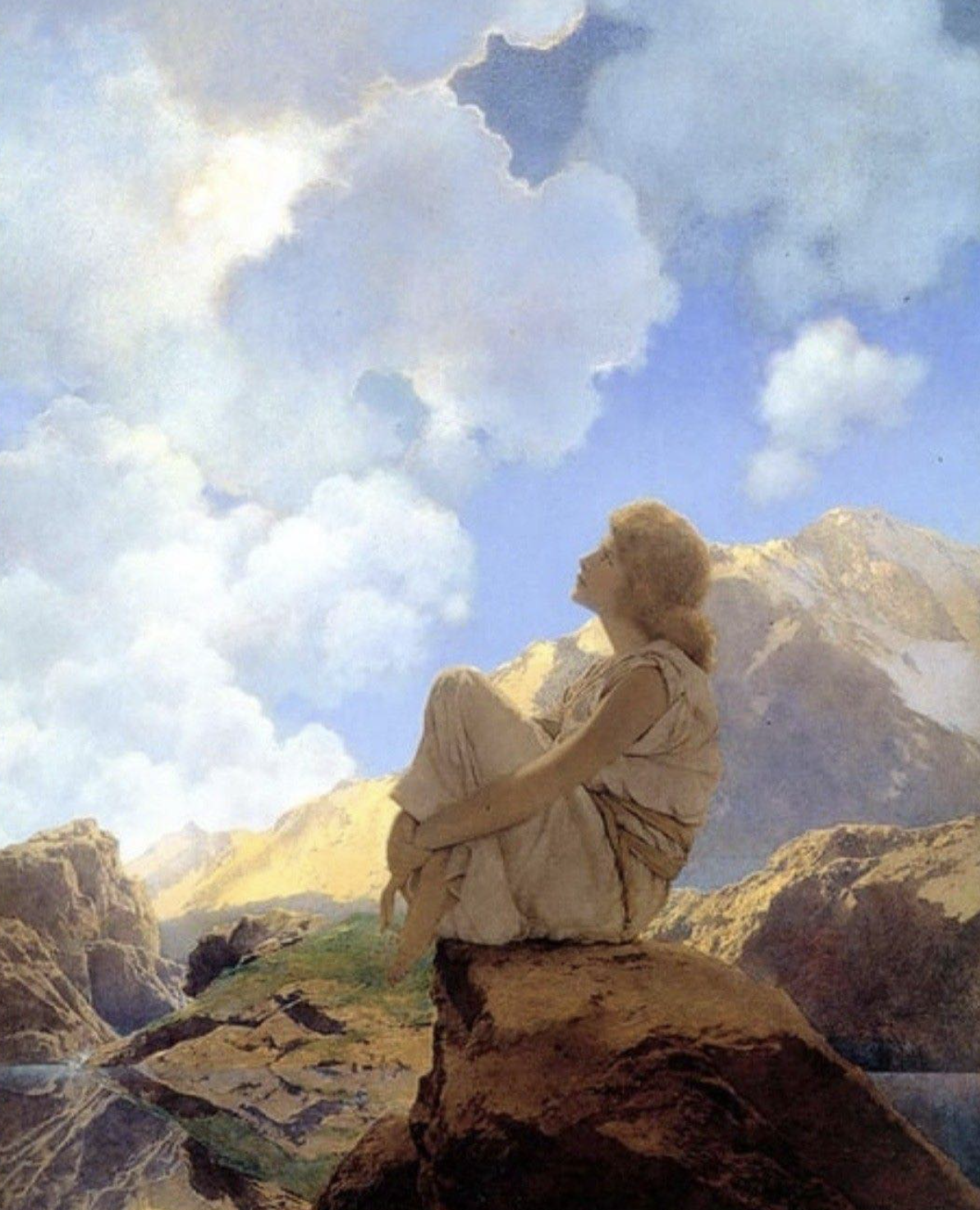
Morning—Maxfield Parrish, 1922
All cultures seem to have sacred sites. They exist; they were “created.” Human nature compels some to “celebrate, commemorate” them by adding structures of some kind or enclosing them for their own purposes. Other cultures, including Indigenous and Native cultures, proceed instead by identifying these places, giving them names—often descriptive and mystical—and handing those names down through the generations until the names themselves come to identify the sites. The sacredness needs no edifices, which can deteriorate over time or be destroyed by succeeding cultures.
Do these two vignettes suggest anything about how we, as humans, relate to our surroundings?
Over the last several decades, I have become concerned about where we are and where we are going. These thoughts about sacredness and changing ways of being tend to question whether our individual natures are a reflection of a larger change in our common, shared culture. Have we chosen a path of least resistance and failed to give proper attention to the “road less taken”? Have we chosen “conventional wisdom” over creative thinking and more fruitful alternatives?
Do you know the term conventional wisdom? It is worth knowing the phrase and understanding how it works and affects our very lives—individually and collectively.
Allow me a moment, and then we might just have a conversation:
While the exact two-word phrase appeared occasionally in the 19th century as a neutral synonym for “commonplace knowledge,” an economist, professor, and writer, John Kenneth Galbraith, fundamentally redefined and popularized it in his landmark 1958 book, The Affluent Society.
Galbraith specifically used the term to describe ideas that are widely accepted not because they are inherently true or empirically proven, but because they are comfortable, convenient, and predictable to society. In his view, “the conventional wisdom” acts as a powerful form of societal and institutional resistance, protecting people from the painful work of updating their beliefs when real-world facts change. (Paraphrase of a Wikipedia source.)
Pay special attention to that paragraph:
“...the ‘conventional wisdom’ acts as a powerful form of societal and institutional resistance, protecting people from the painful work of updating their beliefs when real-world facts change.”
Do you see evidence that we are in this situation today because we bought the idea that individualism and its accompanying “freedom” were better than “collectivism” and regulation? And because, though capitalism had some drawbacks, it was better than the “alternatives,” why not just stay with the status quo?
Look where it has taken us...
With respect to our beginning paragraphs and questions about two opposing ways of “thinking”—natural beauty and the sacredness of our inherited environment versus exploitation and utility—does that feel “true”?
In just five short decades, we have traveled from Rachel Carson and Silent Spring and the creation of environmental protection legislation to unbridled destruction of natural resources for private gain.
How should we expand on and finish this thought?
I am tempted to call this little retreat on the Carolina shore a sacred place. But even as I have that thought, it seems somehow presumptuous to do so. Have I the right, when I speak to others, to cite years, centuries, over which a place has been “worshipped” by generations of minds? Yet...
And what about a small hill called Jomeokee? My feelings for it are mostly derived from the decade or so during which I merely had the privilege of tending a crop, sharing the space with a variety of non-human creatures, and witnessing the phenomenon of the setting sun as it almost disappeared behind the “pinnacle.” This feels more worthy of my claim of sacred places because I am sure that the Saura people must have felt the same way about their “guiding place.” And other pilgrims on the old “wagon road” must have had lofty thoughts as they sought their own promised land in the shadow of the Appalachians. Were they not “pilgrims” in the truest sense? Must they not have retained memories of that quest and passed them down through generations, telling stories of the small, conical mountain and following its pathway—its guiding presence and sense of direction toward personal promise?
Yet, what about this seemingly insignificant little piece of a thousand miles of Atlantic coast? I can only say that those of us who have, for over six decades, spent precious time feeling that we have arrived at a small slice of paradise—are we not part of an adoring Tribe?
But I finally wonder about this little planet itself. Might we be presumptuous in calling it a sacred place in the cosmos? Think a moment with me to contemplate that question. What if, somewhere back in celestial time, the creators, as they watched the ever-evolving state of the universe, noticed a small blue dot? They might not have noticed it before because it circled a minor star among the millions of those that have become known as the Milky Way.
Amused, they wondered why it was such an unusual color in the spectrum. Upon closer examination, they peered through clouds and discovered the blue of the oceans and the brown, green masses that seemed solid and did not move as the sea seemed to. One of them exclaimed the universal equivalent of “wow”! Their collective mind could not let it go and visited time and again, wondering whether the phenomenon might appear, or already exist, elsewhere. It was all new and marvelous to them. Might one try to see into the mind of the eternal creators and interpret the “wow” as a recognition of “sacredness”?
And one more possibly sacred thing. What of the eighth of an acre of shaded privacy that is on the north side of the porch and our private backyard, from which we marvel at the revelations that we are given during each “blue hour”? Yes, a personal sacred place.
Where have all the seekers gone?
Have they finally reached the mecca that the prophets of the free market promised, only to find it in ruins? Will they have learned a lesson in their faithful, failed belief in the gospel of the “conventional wisdom” of prosperity for all?
Might they return to a search for beauty and the lessons to be learned from our rapidly vanishing natural world... in time to make a difference?
Beauty Will Save the World
By Clay Hipp
A practice of attention, a wager on wonder
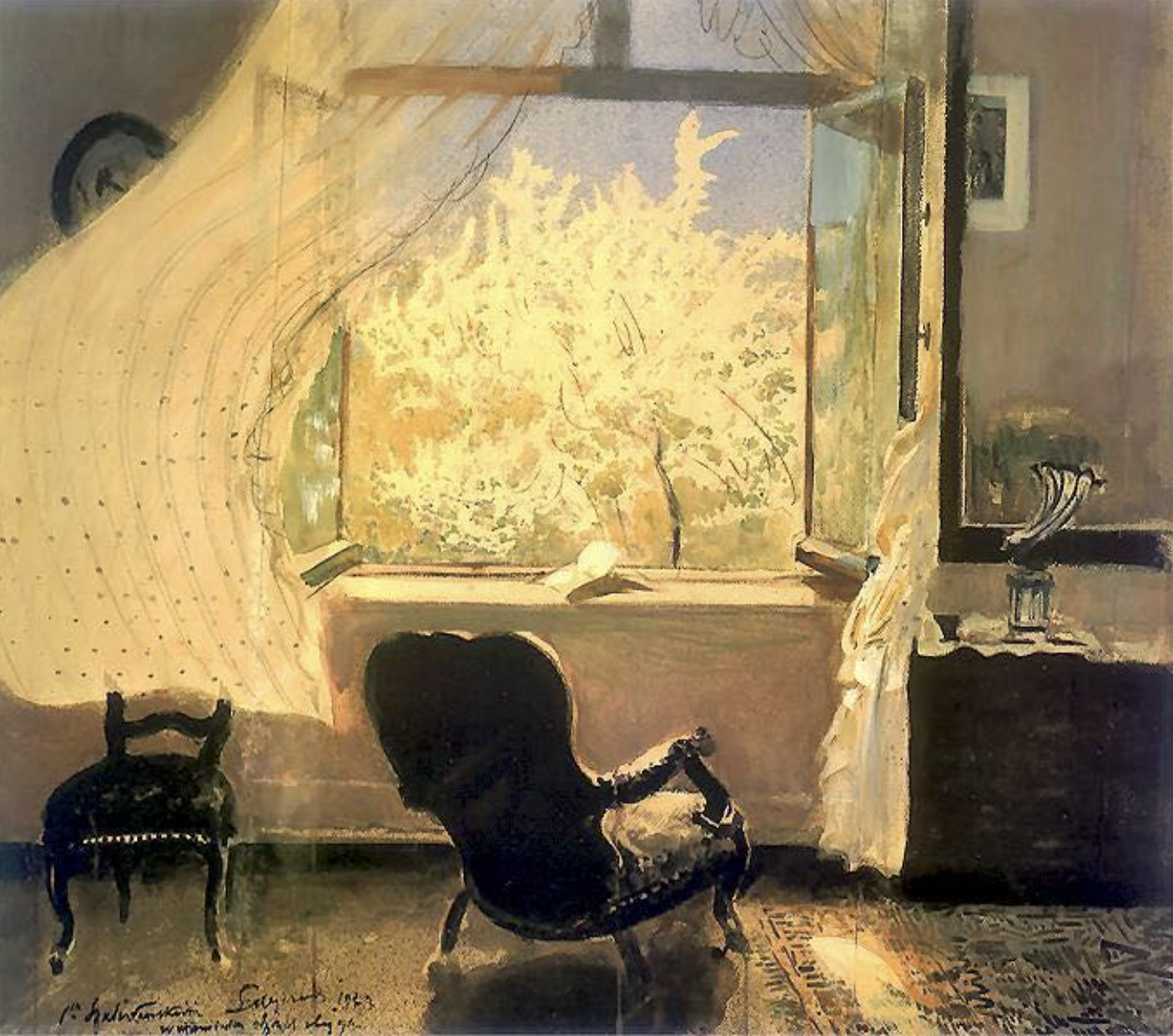
Spring in Gościeradz, 1933—Leon Wyczółkowski
An Aside
An open message to members of the Orlando Gatito Society
I have been in a particularly pensive mood this week. This is probably due to being betwixt and between—the middle of my first semester back at teaching, with the wonderful challenges I am working through, and the great anticipation of a week at the shore in our favorite oceanfront lodge.
The result, as far as the Journal and Words That Sing are concerned, is a strong desire to accomplish two things: to keep improving the content, and to give each of you a greater sense of who is speaking to you, the reader. The first is not that hard, but the second contains some risk: how far does one go in injecting too much “personality and folksiness” into the mode and reality without crossing a line? Today’s post is a partial reflection of that concern. So I would ask that you read with a sense of good will in assessing my motive.
Likewise, Friday night’s very strong endorsement of a particular artist’s work as one of the “best” songwriters working today certainly reflects a judgment possibly based upon preferences such as genre, mode of delivery, and performance style. I rarely resort to calling anything the “best.” This particular artist simply rises above in almost every aspect of the craft. I stand by it but would respect any contrary opinion. I have just begun to tire of the approach used by many to stay in the middle ground of “on the other hand.”
Just wanted you, the reader, to know of my ongoing attempt to practice “integrity” in my offerings! Thanks for being here and for the loyalty you demonstrate when you continue to show up. I just feel that my first literary duty is to show you the utmost respect.
Beauty Will Save the World
That is a very bold statement. I can only imagine if I or somebody else became infatuated with the idea and took it to heart so much that it became something like a religious movement. He or she would talk about it with anyone who would listen. Allow me to imagine with you what that might be like for both the zealot and everyone else.
First of all, what does the statement mean? How could it be explained? A movement must have a message.
If I were the one engaging in zealotry, this is how I might start to seek converts. Beauty is here; it surrounds us: in the natural world of our backyards to nature preserves, in music, all forms of art, in our creative writing, in our nonhuman companions, in the smaller nonhumans—the squirrels and birds that eat the fruit from our trees and bushes. The list is endless.
The problem is that we ordinary people, in general, fail even to notice beauty, much less become aware of its power. Some poetic types compare beauty to love as a corollary, or vice versa, or at least as reciprocating forces.
If I were the prophet, I would be tempted to tell those who are unaware of these things around them that they are just barely living.
Listen. One need not give up their livelihood or become a hermit or a cave dweller. That is so impractical, and those who heard that gospel would quickly reject it—one more potential convert lost, perhaps never to consider the beauty of it all ever again.
Quite simply, I would ask each person to begin to become more aware of their surroundings, big things and small things. At first, just “note” their existence. As time goes on, give them more of your attention. I know, in this age of almost continuous distraction, it gets harder and harder to go within. That is one reason why I am bringing beauty to the fore.
Then, I would also recommend that folks do some research and reading about “wonder.” Please consider reading a book named My Life as Told by Water by David James Duncan. On page 88 and 89 he says,
““I believe some people live in a state of constant wonder. I believe they’re the best people on earth” ”
There would follow talks about the absolute necessity of “curiosity” (it has so many essential qualities and rewards). It may very well underlie all that we have talked about so far. And what of an expanded consideration of the power of love to remain with us to the end or beyond?
Here is the deal: I would have to come up with appealing stories that capture imaginations and have an ongoing effect on the psyche and its companion, consciousness. I would be trying hard to pull them away and recapture their attention.
I am by no means the first to say that “beauty will save the world.” The phrase is associated with Dostoevsky’s famous novel The Idiot, where another character attributes it to Prince Myshkin. But what might Dostoevsky mean by beauty? One interpretation I came across is that it means more than attractive appearances or decoration. It suggests a meeting of beauty, truth, and goodness. Myshkin’s guileless love may embody that ideal: a spiritual purity that can reach the conscience in ways argument or politics cannot. In this reading, beauty offers a glimpse of a higher order, one that might heal the brokenness of a violent world.
This, of course, is more than I have hinted at, but perhaps we should consider his vision before we close. Now, so we are clear, I would never pretend to have a comprehension of the spiritual depth of this analysis. Nor do I feel a need to explore it further. I prefer to stick with “beauty, truth, and goodness.” These, for now, are enough. I have failed so far to get deeply enough into The Idiot, but I am led to believe that it is a great novel and may even lead me to a place that I have never gone before.
For now, I just feel led to raise the thought with you and others.
“I sincerely believe that we need to explore all the beauty we might find.”
But that means, first, being open to the idea and the hope of believing, as Dostoevsky believes, that “true beauty provides a glimpse of eternity and order that heals the brokenness of a fallen, violent world.”
Love and wonder are just going to have to wait awhile, at least for now.
You should know, by the way, of a book that explores many facets of our topic: Beauty Will Save the World: Recovering the Human in an Ideological Age by Gregory Wolfe. Wolfe founded Image journal in 1989 and edited it for thirty years. The journal explores art, faith, and mystery. It would be worth your time to take a look at the website. The content is not for everyone, but it is a “beautiful” offering. I have had the pleasure of attending their annual events, where these topics are explored on the beautiful West Coast of the country.
I believe that beauty has a decent shot at saving the world. Currently, however, most of it happens to be in the natural, nonhuman world (and, of course, in the minds of artists). I am hoping to change that (even if it might involve some kind of prophetic engagement). Join me, and perhaps it will come more quickly, before it is too late. If we do not try, the natural world might be left without our presence to kick around anymore.
Nature has greater power to build itself back, and it still believes in the consciousness of everything.
The Name of the “New World”
By Clay Hipp
A borrowed name and a question
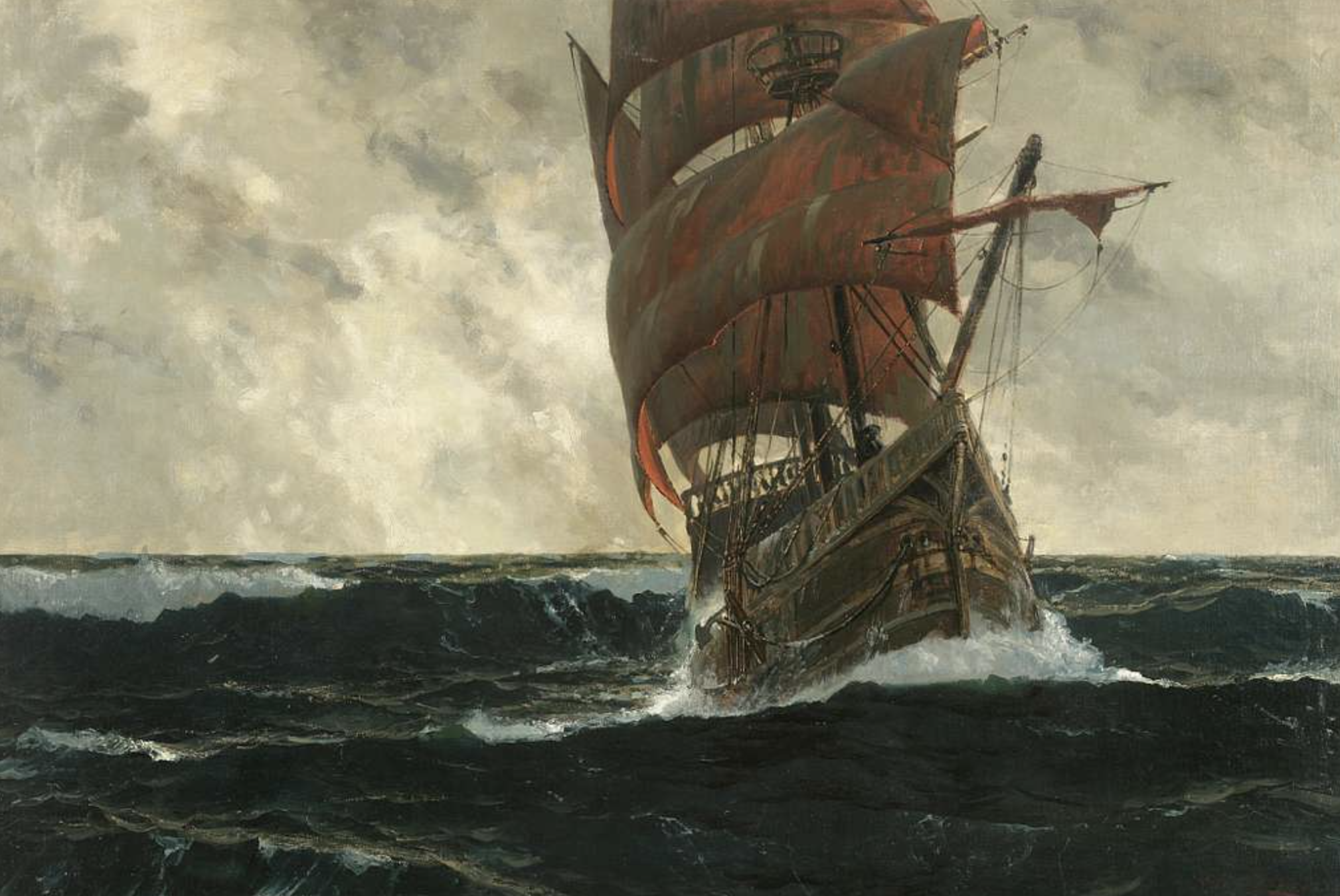
The Santa Maria at Sea, 1939 —Michael Zeno Diemer, German Painter
There was once this Italian dude with the improbable name of Amerigo Vespucci.
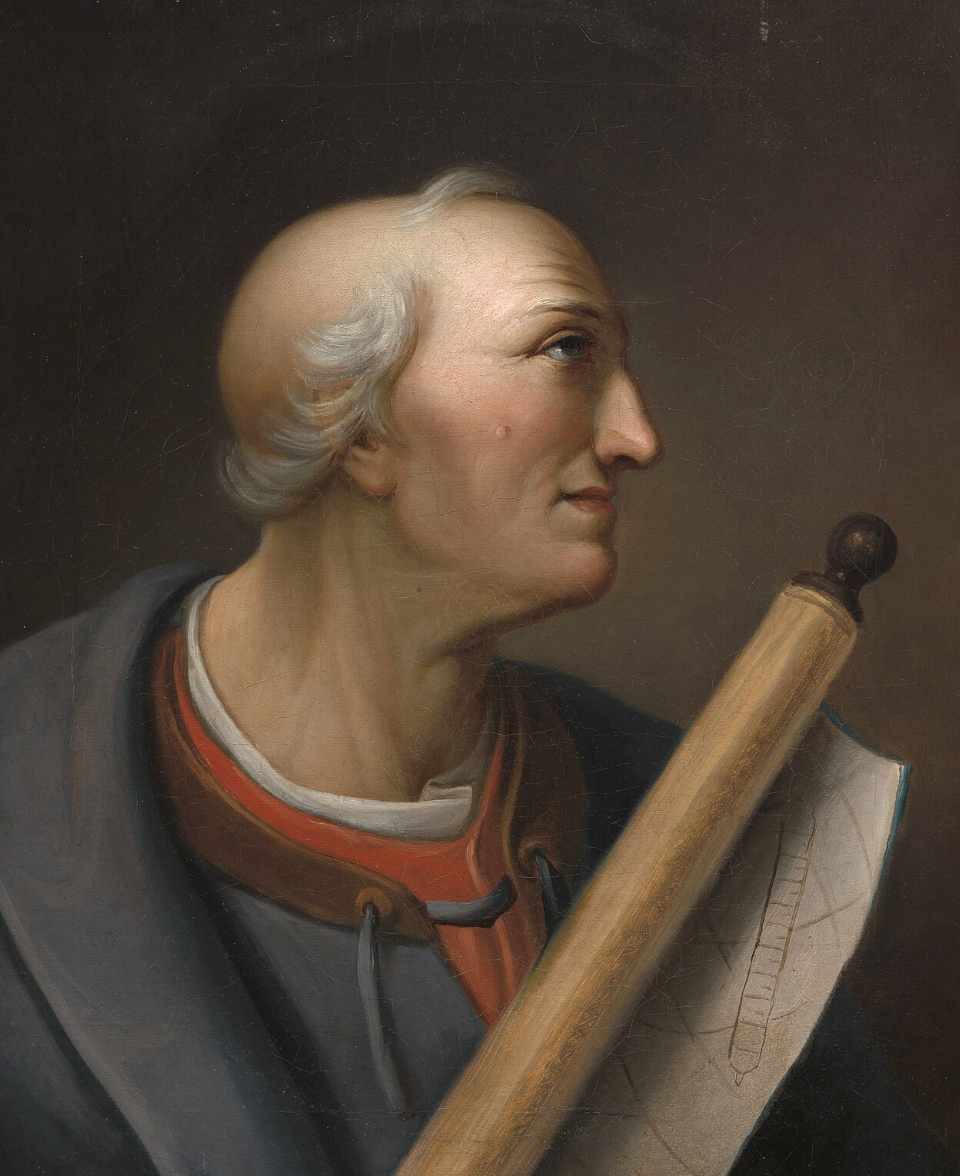
Amerigo Vespucci, 1816 -Charles Willson Peale, oil on canvas
He had the great privilege, hundreds of years ago, of taking two sailing voyages exploring the New World in the company of others. He seems to have been a gifted writer whose accounts of these journeys became extremely popular. Without the gift of TV or the Web, they became so well known that cartographers began to place a translation of his name on the vast (and largely unknown and unexplored) territories of the mysterious “West”.
And it came to pass that, without lifting anything but his pen, his name became the symbol of territories, whole continents that extended from Tierra del Fuego to the frozen shores of Hudson Bay. He did not have to be born rich, make and lose fortunes, become a TV celebrity to parlay his fame into becoming a famous politician who was elected the leader of the “Free Western World”. And now this new guy wants his name (of questionable heritage) to become synonymous with all the territories of that same new world even without ever even visiting them. But as we speak, his name is being put on lakes, seas, former states and whole neighboring countries!
No, Vespucci just got lucky at just the right time. Go figure. If he came back, would good old Amerigo be angry, ashamed, or simply amazed? Personally, I am guessing he would be embarrassed, mortified. I have to wonder if he might petition the rest of the world to get his name off these things and return them to the rightful owners and heirs. Then he could write his memoir and perhaps become even richer than the current “poseur”. Maybe he could buy him out and truly “save the world”. Or even better yet, sue him for “stealing” his idea and image, and damaging his reputation.
Heck, someone might even write a new “gospel” of Vespucci (especially since it took him only five hundred years or so to come back!).
Is life not stranger than fiction?
Seriously though, isn’t it time either to remove the names of those continents and countries (which seem to imply kinship and community and commonality) or to find some momentous way to actually bring them all together?
Perhaps it could happen by having a huge gathering (somewhere in “Central” America?), and inviting representatives from the remaining indigenous peoples to caucus and prepare their very own proposal?
I am betting that among the Incas, and Mayans, and Aztecs and the millions of smaller groups from South, Central, and Northern places, there is some great unifying and abiding theme or mysterious essence that has been in their cultures since human history began, that would be close to perfect. As I have come to understand it, they all have called themselves something that expresses or implies, “The People”, reminiscent of our proud revolutionary document, and the Constitution, said at our beginning: “We the People”.
What we did to our very first people (on all continents) need not be recounted here.
An exercise —if you “ruled the world”, metaphorically speaking, what name might you choose for the new “America”?
The End of the Innocence
By Clay Hipp
A song for two lovers, a lament for a republic
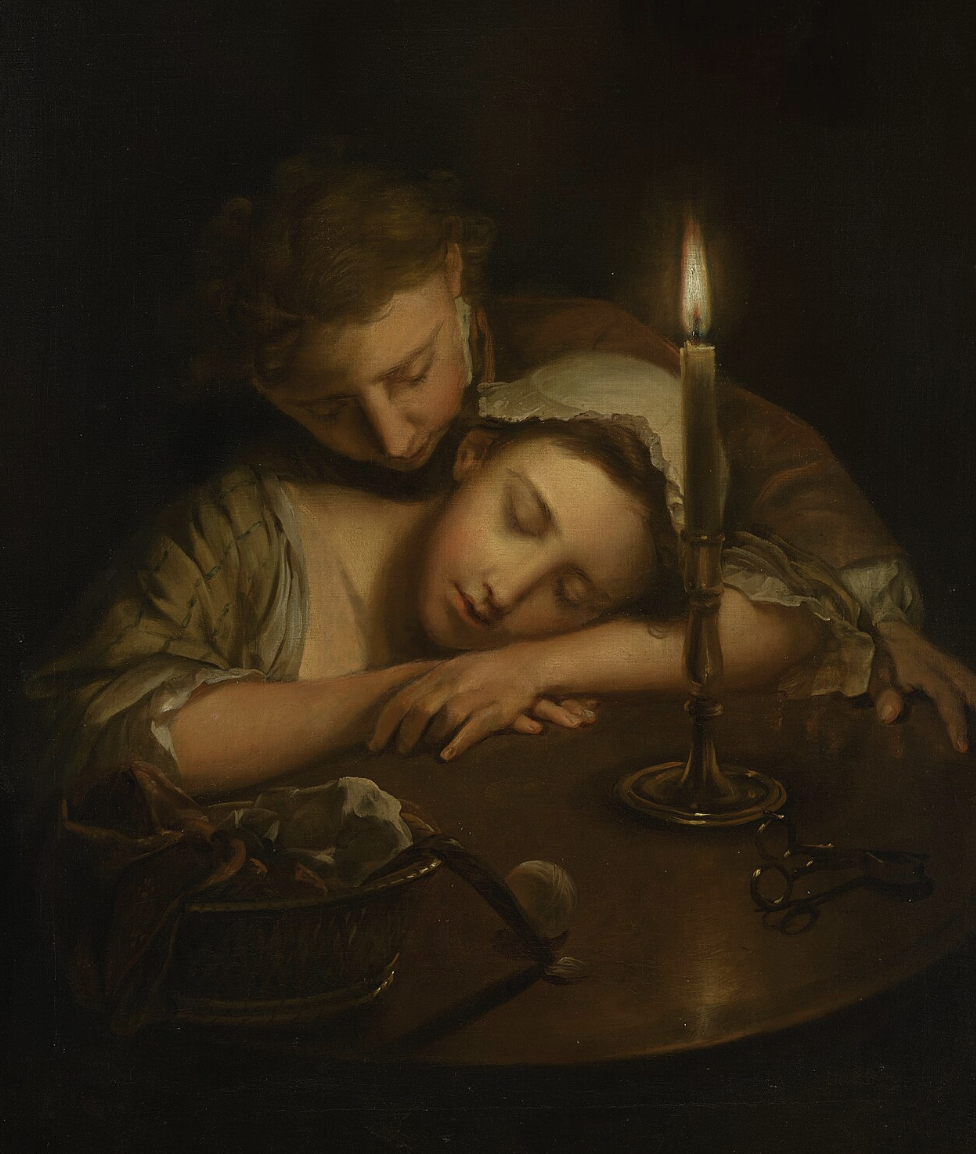
Two Lovers by Candlelight, oil —Phillipe Mercier, Berlin 1689 - 1760
This week, in my legal class, I assigned—and we struggled with—the 2010 Supreme Court case known as "Citizens United."
Over the last fifteen years, that decision has been largely responsible for radically changing the face and the functioning of our "democracy." In short, it declared that money is a form of speech, protected under the First Amendment—and paved the way for our political system to be dominate thereby. It also declared that corporations are people, too. For many, it has diminished the value of "one person, one vote" and threatened to derail the way we choose our elected leadership.
Once we read it together and analyzed the effect of that seemingly small (at the time) conclusion, we wrote about and discussed what it might mean for our shared reality. The conclusion, we decided, has yet to be reached—and the next couple of years may reveal it. Our Constitution might ultimately save us, or it might cease to hold its former meaning. For me, having taught about these things for a long time, it was harder than I expected to put words to my present state of mind, and to my fears about our collective future as a people.
You might not be surprised that I turned, instead, to a song, and told my students that its title alone symbolized my deepest concerns. It's called "The End of the Innocence," by a singer-songwriter named Don Henley. You might know him as one of the main composers behind The Eagles. He, along with help from Jackson Browne, wrote the iconic song "Desperado" (the Eagles' first big hit). "Innocence" was a popular piece in the '80s, and it featured the distinctive keyboard work of Bruce Hornsby.
The song is a story of two people in a relationship that might be ending but set in a time when the world around them is also at a tenuous moment in time. That felt about right for me. Let me show the reader why I referred to the song as “metaphorical”.
But I know a place where we can go
That’s still untouched by men
We’ll sit and watch the clouds roll by
And the tall grass wave in the wind
You can lay your head back on the ground
And let your hair fall all around me
Offer up your best defense
But this is the end
This is the end of the innocence
A casual reader of this passage might say something like, "Oh, isn't that sweet and beautiful and touching?" (Or perhaps something less kind, if you question the speaker's motives.) But what if we look at it another way? That reading grows clearer with each verse. My first big clue (actually, more than that). The very next verse:
O’beautiful, for spacious skies
But now those skies are threatening
They’re beating plowshares into swords
For this tired old man that we elected king
Armchair warriors often fail
And w'e’ve been poisoned by these fairy tales
I wish this were “metaphorical”. The truth has begun to be revealed. (By the way, this was written in the 1980’s. The parallel to today is stunning is it not?) Suddenly, the tall grass waves in the wind and two people spending a splendid moment together, now seems to have been a mirage or perhaps the calm before the storm or eye of the hurricane. We had been told that soon we must:
Offer up your (our) best defense
But (because) this is the end
This is the end of the innocence
Are you beginning to feel the power of the art of storytelling? Ready for the denouement—and, at the same time, a hint of a promise (a mere hope)?
Who knows how long this will last
Now we’ve come so far, so fast
But, somewhere back there in the dust
That same small town in each of us
I need to remember this
So baby give me just one kiss
And let me take a long last look
Before we say goodbye
The question for all of us (certainly for me)is must we say goodbye to it all or begin to put up our best defense. We are in control of one thing.
We must not let this be the end.
We have been innocent for much too long (and much to comfortable with our easy lifestyles) and the naïve belief that the great gifts that our Declaration and Constitution were self-correcting, and forever. We cannot be as Bob Dylan wished for us all:
“Stay Forever Young”
Let's overturn the bold, selfish word of the Supreme Court by proving that there is still power in the gift of "one person, one vote"—but only if we exercise it together, en masse, in defense of our precious Liberté.
The other song title I quoted to my class, in an attempt to reveal my angst, was Toby Keith's "Wish I Didn't Know Now (What I Didn’t Know Then)," from 1994—a clear sign of my own long-held, and perhaps naïve, innocence.
A New Student
By Clay Hipp
Back to the classroom, back to the joy of it
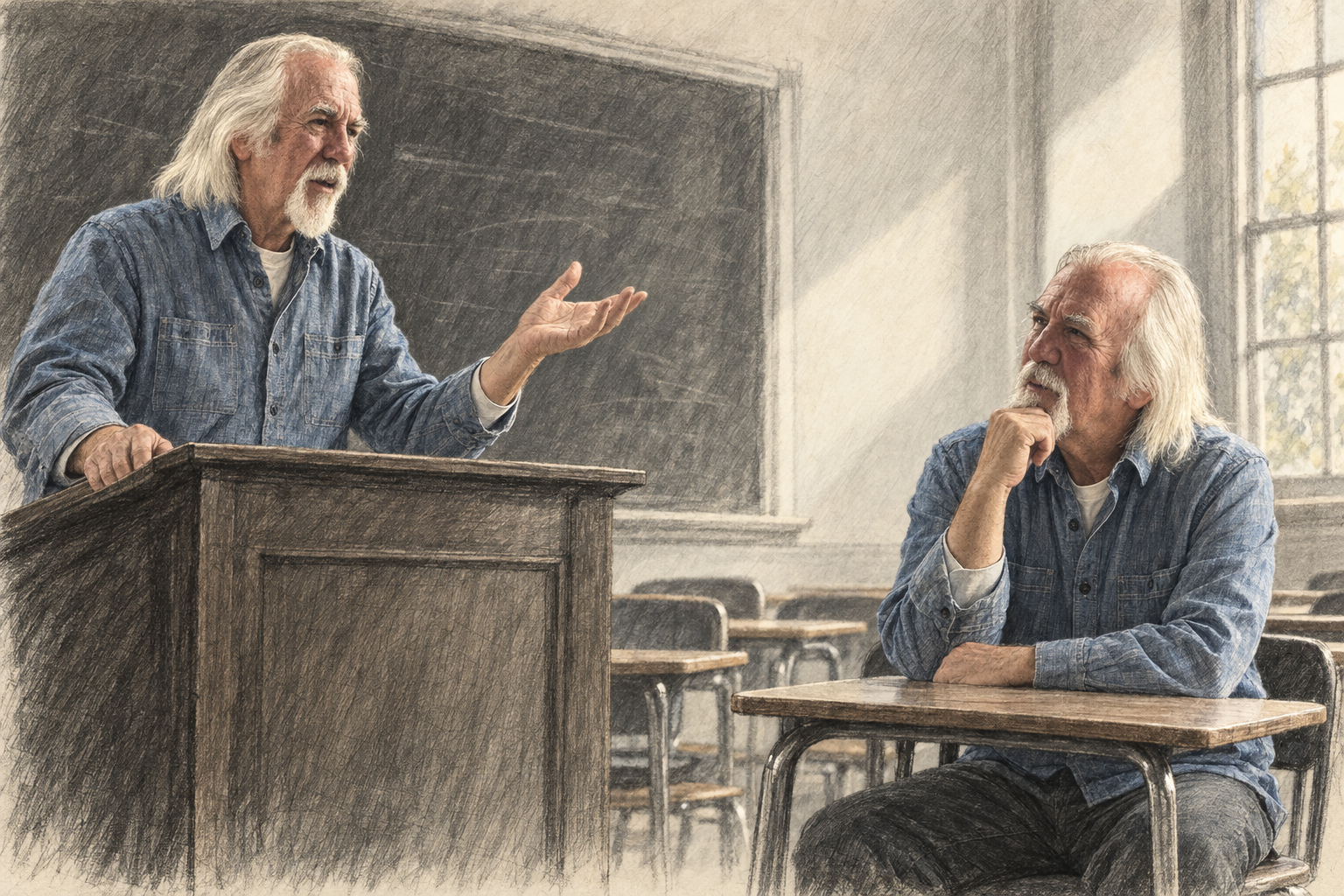
They say that you can't go home again. Maybe so—but one can always go back to school.
When I started my class this fall, I was surprised to find that one of the students stood out from the rest. Wake is largely a community of traditional students—young, energetic, typical—and he was clearly, as they say, "mature." My curiosity got the better of me, and I struck up a conversation with him after class. As it turned out, he already had a degree but had been away from school for a while and was going back part-time to take a few classes, with no particular goal in mind. I welcomed him and said, "Let me know if you need anything."
We talked from time to time, and I was impressed by his genuine love of knowledge and his curiosity. He seemed to have a wide range of interests. He was working as well as going to school, which limited our chances to talk much beyond the classroom, but his preparation and appropriate responses were welcomed. His wish not to stand out was plain, and he soon became simply one of the students, joining in before and after class as his time and energy allowed. The others seemed to like him.
Would that more of us had the luxury of going to school simply for the joy of learning.
Having only just returned to the classroom myself, I found that I had taken his lightness to heart, and I began to relax and to have a little fun of my own. At first I had taken the task much too seriously, and I was suffering some anxiety about how I was doing my "job." Then one day I woke up and realized that the "work" was truly interfering with my ability to experience teaching as a kind of "play." I had always been confident that my professional "knowledge" could carry me through—that I could turn it into a form of storytelling. So I resolved to make the classes as accessible as I could, without giving up my duty to lead the students where they had never gone before—and to do the same for myself, if I could.
Each week grew a little more relaxed as I settled into my preferred, modified "Socratic" style, and our exchanges and discussions grew less formal. As we approached mid-semester, and the issues grew deeper and called for greater analysis, I thought I could feel a new level of trust and confidence in the larger group. I was sensing that perhaps we were proceeding more like fellow students. It felt good, and it made me more confident as I tried to reinvent the class I had taught for so long. Much had changed in the legal environment in eight years, and I was beginning to feel like a translator of sorts. Because of the esoteric nature of the subject, we had to find a way of speaking that the others could begin to understand.
I was, in truth, a student myself. What a small—but significant—revelation.
Thanks for reading my little story. I am guessing that the more curious among you—you know who you are—are already saying, "That's all?" What about the fellow? Where did he go to school? What was his major? Do you think he'll make an "A"?
Well, for now I can tell you that he has multiple degrees, and yes, I believe he will—though I don't think it will matter much to him. He seems to be a generalist, interested in most everything. He is just at that point in life where he feels a bit in transition, ready for a change. To what? That, I think, is exactly the point. He has more questions than answers. He is only just beginning to "major" in life.
In truth, he is just a metaphor—and my alter ego.
Me and Wendell
By Clay Hipp
My hero remembered, an afternoon I will never forget

Wendell Berry — August 5, 1934 – August 31, 2026
Last week, to my chagrin, I learned that one of my all-time heroes had left us. Wendell Berry—an author many have called one of the greats of the twentieth century—died at his home in Kentucky at ninety-two.
A writer of fiction, poetry, and insightful social commentary, he was also a champion of sustainable farming and conservation. He was well on his way to becoming a university professor when he decided instead to move back to his ancestral hometown and become a farmer. He settled on an old place on the banks of the Kentucky River, where he raised sheep and cattle and grew crops, using draft horses instead of a tractor. He wrote in a small cabin, looking out on the stream through a single window.
I started reading his fiction in the eighties and never stopped. His subject always wrapped around a small town and its people. The first big piece was A Place on Earth. It was followed by other novels and short stories that, taken together, are almost like the Odyssey in miniature. We follow some characters from cradle to grave and watch them mature; others simply never change. He became a dependable source of a glimpse into real life—and of his own hard-won wisdom. After I learned that he was gone, I could think of little else, and I was moved to change the subject of my Thursday class—in law!—so that I could play for my students a fifteen-year-old video in which he was interviewed by the incomparable Bill Moyers. I highly recommend it.
Was I merely taken by his writing? I am happy to answer "no." I was fortunate enough to meet him in person three times: once when I heard him read the first chapter of a new novel in a small church near Asheville; once at a ministers' conference in north Florida, where I was accompanying a friend who IS a preacher; and finally—dare I say it—at his farm in Kentucky. I must tell you about that. Please forgive me.
I found that on a trip to Louisville I would pass within fifty miles of his farm. I sent him a handwritten letter; it was the only way to reach him. In this day and age he would have looked me up online, but he never owned a computer. I identified myself and asked, "Mr. Berry, do you ever accept visitors?" He replied promptly: "We receive guests on Sunday afternoons at 3:00." I wrote back at once and said, "I will be there on January 3rd, if that is all right." He simply affirmed that he would be honored to meet me.
His wife, Tanya, met me at the door. Mr. Berry wrote in pencil on yellow legal pads, and she typed them up on an old manual typewriter. "Wendell is in the kitchen having tea," she said. "You may go on back." He stood up, shook my hand, and offered me a cup, just as if I were a neighbor. We sat and talked for two hours. I do not remember much of it. I was awed. I am sure I must have told him where I had seen him before, and asked about Jayber Crow, the novel from which he had read that day. As we talked, two beautiful shepherd dogs paced outside the windows, plainly restless to go do some work. Finally he said, "Well, it is time to do some chores. You may take your leave, or come along with us—the dogs and me."
Guess what I did.
The rest was a blur, but I still hold a few clear memories. The land was frozen hard and the creeks were thickly iced. As we rode along, he said, with a wry smile and a twinkle in his eye:
“I guess you can see that I am trying to create an old-growth forest.”
We made two stops, each one a small revelation.
Standing beside a strong wire fence, he may have made some low sound—and from clear across the field came a passel of sheep. They were tight-packed, almost circular, and smack in the middle of them rose a long neck, extending several feet above the flock. I suddenly realized what I was looking at: a llama. Many farmers, Wendell explained, were using the animal to guard their yearling sheep. Next year the two-year-olds would be moved up to the steep pastures above the farmhouse.
At another wide pasture, running to a stand of hardwoods perhaps a hundred yards off, there came again—a whistle? Soon I heard, though I could not yet see, two very large animals headed our way. The pounding of their hooves on the frozen ground seemed almost to send a tremor up through my feet. They were both deep black and heavily muscled: the substitute for the tractor he never used or even owned. With these he plowed and mowed the whole of his pastures and fields. In one of his books I remember him recounting how hawks and ground animals would join him through the workday—something that never would have happened behind a loud, intimidating machine. It was a large part of what made him a citizen of the natural world, a brother to the creatures who shared it.
As I was preparing to leave, he handed me a very small paperback book. That night I discovered he had signed it. Unfortunately it has since disappeared—lost, most likely, in one of the two moves I have made since that day. I am sure it still exists somewhere; I do not need to hold it. I had already read it cover to cover. It described, in close detail, the brutally hard work of cutting tobacco—at least he ate very cold slices of watermelon under a great old oak at midday, halfway between dawn and dusk.
Need I say more?
Only this:
Would that each of us could know a relationship like this at least once. Look around you—that person may already exist. They need not be a famous soul.
“The Peace of Wild Things
When despair for the world grows in me
and I wake in the night at the least sound
in fear of what my life and my children’s lives may be,
I go and lie down where the wood drake
rests in his beauty on the water, and the great heron feeds.
I come into the peace of wild things
who do not tax their lives with forethought
of grief. I come into the presence of still water.
And I feel above me the day-blind stars
waiting with their light. For a time
I rest in the grace of the world, and am free.”
Breaking News, Just in
By Clay Hipp
A riddle for the students and a personal reckoning
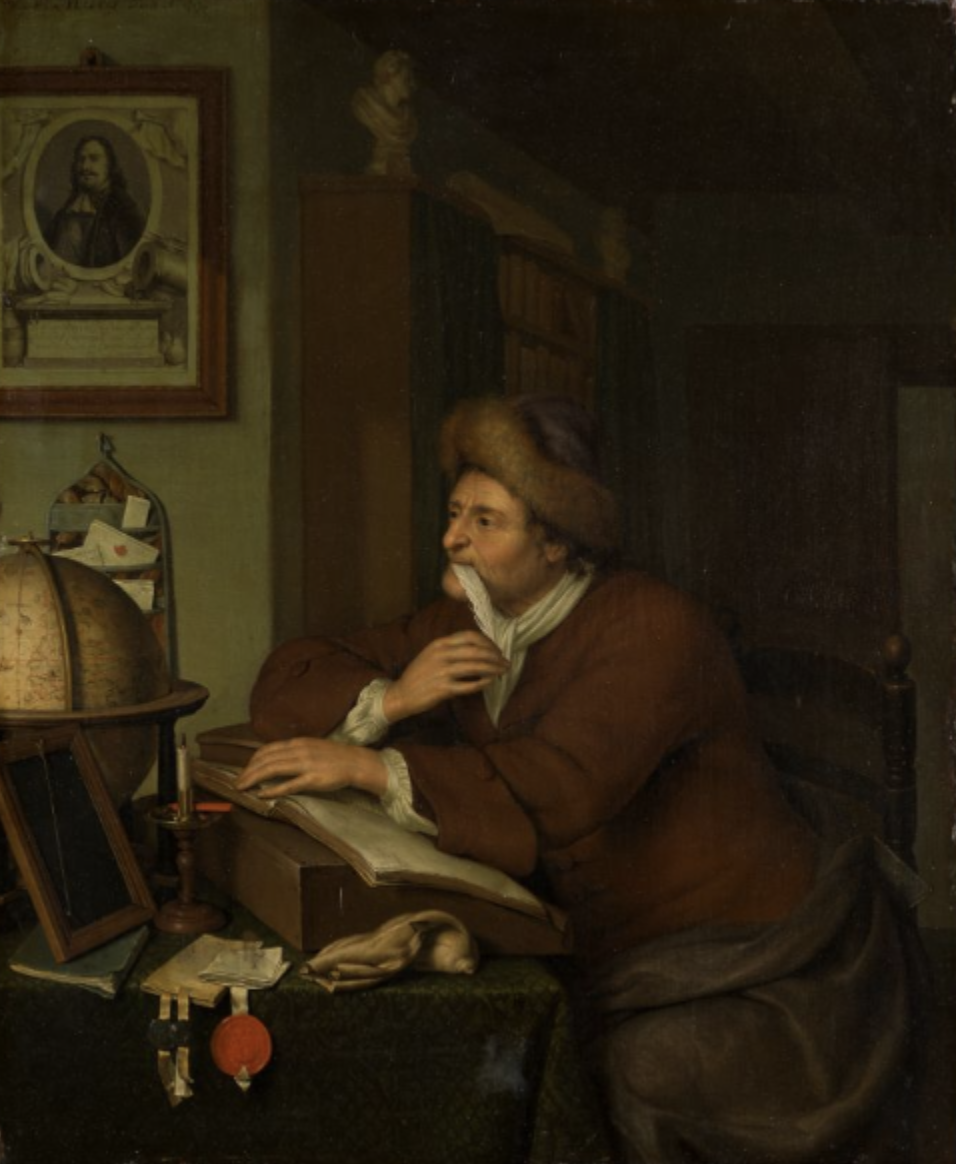
A Scholar at His Desk, 1652, Ferdinand Bol
I mentioned in a recently that I had been offered — and had accepted — an opportunity to return to the classroom. If you'll humor me, I'd like to offer the back story.
Some of you know that I retired from Wake Forest University’s School of Business several years ago. I was mostly ready. But immediately missed the teaching part. (The meetings and the bureaucracy and the committees, the end-of-semester exam grading? Not so much.) I missed the collegiality, too. In those first few years I often wished I could teach a class again but it never happened.
Then, suddenly and without warning, in the second week of August, an e-mail arrived from the dean of the business school: "Might you be interested in teaching a course this fall?"
I believe I replied, "Not only interested, but delighted." Two days later we were in Charlotte with some old Wake Forest friends, and one of them — a former dean himself — said, "You should call her." I did exactly as he prescribed and an hour later accepted the position in the car on the way home. The written offer came early the next week; I was delighted by the terms and signed it without delay.
Classes started the week after that. I was barely able to cobble together something resembling a syllabus. I met with two classes last week. Right place, right time — or so I thought.
The course is called The Legal Environment of Business, the mainstay of my teaching career. Piece of cake (or so I thought). And that was the very moment reality struck home: the legal environment of 2026 bears essentially no resemblance to the one that existed in 2018. I immediately knew I would have to reinvent the class on the fly.
On the first day, by way of introduction, I gave the students a riddle:
I have been teaching this course for forty years, but this is my first time.
"Think about it for the rest of class," I told them, "and tell me your solution." Then I promptly forgot my own promise. I dismissed the class and watched them file out with the obligatory, courteous "thank you" and "farewell." But two young women paused in front of me. "So what's the answer?" one asked. "To what?" I said. "The answer," she repeated. Seeing my troubled expression, they tried again: "To the riddle! We want to know." I apologized and asked them to remind me at the start of the next class. They were kind enough not to press the issue.
Two days later, I offered them two ways to interpret the statement. The first — obvious by now — was the time away from the lectern. The second, more important, was clearer to me than to them: the class you would have attended in 2018 is obsolete. Since Covid — and amid sweeping change across the executive branch, Congress, and the Supreme Court — the way we govern and make public policy at the national level has altered how we create law itself, and how we order our relationship to one another and to regulation.
“Of course”, I said, “you have no way of processing what I have just said and it will be my duty to help you to understand the radical changes that we face, and must react to as a people, and hopefully to find solutions for the common good.”
It was at that moment that I realized I would become a student too. The class would be my teacher; the changed world, our syllabus.
When that class ended, I knew we were only at the beginning of the quest. My personal and professional life was altered . And I was, bit by bit, beginning to see a way forward. Please wish me good fortune as I try to navigate — at least — the surface of those troubled waters.
Perhaps I'll share some of the particulars as they arise and seem worthy.
A Life in Words and Music
By Clay Hipp
How folk music found a South Carolina boy in the summer of '64
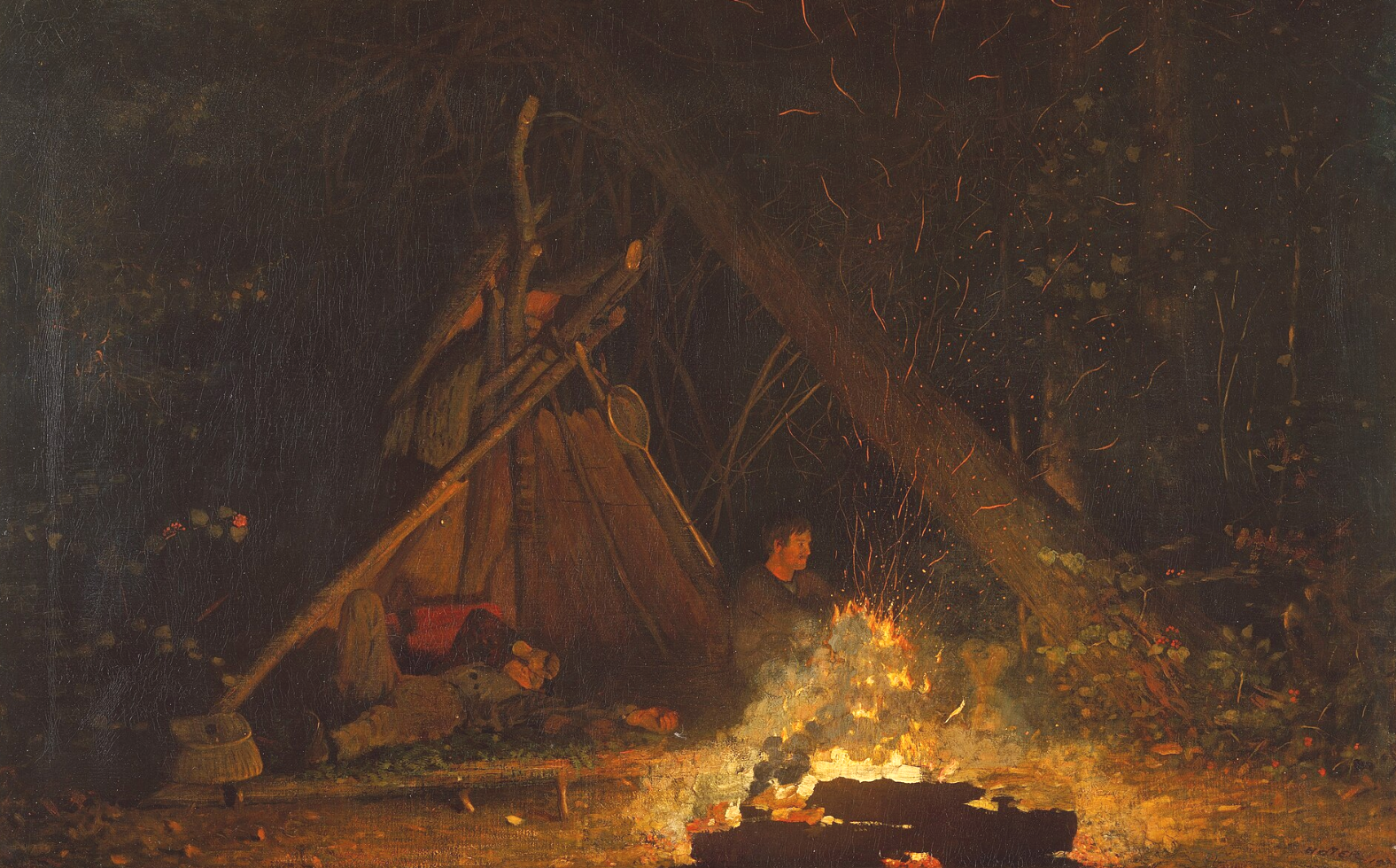
Campfire, 1880 - Winslow Homer
Answer the question—what got you started in your love for songs?
I was a folky in the sixties. I was learning to play the instrument of the times—a gut-strung six-string guitar. The first stirrings of rock and roll in the late fifties had had their fling on the hit-parade radio shows; Elvis and, later, the Beatles turned up on Ed Sullivan.
And then, suddenly, folk music. The summer of 1964: a guitar, summer camps, campfires, Bob Dylan coming over the airwaves, beautiful romantic songs built on three easy chords.
The first big revelation
The world was suddenly full of accessible tunes and lyrics, played on guitars with as few as three easy chords. They called it "folk music." Why?
Because it came from us, was sung by us, and we played it to—and with—our fellow human beings.
I was on a college campus in Columbia, the capital of South Carolina, just fifty-two miles from my little hometown, attending what was for me a big event: a gathering of high school students from all over the state. We came together for a week in July to meet in small groups, attend large assemblies, sing, and yes, worship. We were Methodists—the church of my mother and of Pop, her very fine minister father. I was full of my graduating self, fresh from the beach with my bleached-blond hair (sun-induced, with a little help from lemon juice). A decent athlete, MVP of my baseball team, I was truly full of myself. The new kid in town.
On the way to the dining hall for lunch, I passed someone carrying a true "boombox," out of which poured a genuinely magical song with odd lyrics. My first dose of Peter, Paul and Mary, lending their fine harmonies to a song written by the great Pete Seeger (with Lee Hays). "If I Had a Hammer." The rhythm was compelling, the three-part harmony ethereal. I had no clue it was my very first protest song:
“If I had a hammer
I’d hammer in the morning
I’d hammer in the evening
All over this land
I’d hammer out danger
I’d hammer out a warning
I’d hammer out love between
My brothers and my sisters
All over this land”
Before the summer was over, I had learned the chords, more or less mastered the rhythm, and memorized the words. I played it with a new friend on banjo at yet another youth gathering up in the Smokies. It was a minor hit with a couple of young ladies.
The hook had been set too deeply to remove.
An hour-long weekly Saturday-night TV show was a huge development. It was called Hootenanny—which became the word itself for gatherings of singers and players of the new music. Everyone could join in, somehow. The flower-child era had begun.
Curiously, I first learned Bob Dylan's music not from his own recordings but from covers by Peter, Paul and Mary. After "If I Had a Hammer," I fell hard for one of the quintessential protest songs:
“How many roads must a man walk down
Before you call him a man?
How many seas must a white dove sail
Before she sleeps in the sand?
Yes, and how many times must the cannonballs fly
Before they’re forever banned?
The answer, my friend, is blowin’; in the wind
The answer is blowin’; in the wind”
The chords were easy. I memorized the words and made it my first "theme song." The poetry was sound, the message clear. What more could a budding folk singer need? Besides, it felt cool to be joining the "movement."
Some of the ones who shaped it
Folk: Woody Guthrie, Pete Seeger, the Kingston Trio, the New Christy Minstrels, the Brothers Four, Dylan, Joan Baez, Peter, Paul and Mary, Simon and Garfunkel—the list could go on and on.
Folk rock: Crosby, Stills and Nash; the Byrds.
That cast, almost literally, began to define the depth and breadth of the explosion of popular music—in quality and quantity—for the coming five decades. I have been extremely fortunate to live inside that revolutionary time. Timing, as they say, is everything.
The only way I can really show you how it felt is to let you listen. A beginning of a playlist:
"If I Had a Hammer"
"Blowin' in the Wind"
"The Times They Are a-Changin'" (Dylan)
"We Shall Overcome" (Joan Baez)
"A Change Is Gonna Come" (Sam Cooke)
"Where Have All the Flowers Gone" (Pete Seeger, covered by many)
"Requiem for the Masses" (the Association)
"Ohio" (CSNY)
Simon and Garfunkel
the Byrds
"Massachusetts"
And this one, long my private "national anthem," from the king of folk songs, the great Woody Guthrie:
This land is your land, and this land is my land
From California to the New York island
From the redwood forest to the Gulf Stream waters
This land was made for you and me
As I went walking that ribbon of highway
I saw above me that endless skyway
Saw below me that golden valley
This land was made for you and me
I roamed and rambled and I followed my footsteps
To the sparkling sands of her diamond deserts
All around me a voice was sounding
This land was made for you and me
When the sun comes shining, then I was strolling
And the wheat fields waving and the dust clouds rolling
The voice was chanting as the fog was lifting
This land was made for you and me
The chorus, all by itself, is one of the finest sing-alongs ever written.
I was seventeen when the hook went in—seventeen and full of myself, certain I had the world by the tail. It still catches me off guard, how a few bars can transport me back to that summer as if I'd never left. What I have now that I didn't have then is the long view: the gift of knowing, more or less, how the story went.
That is the strange mercy of these old songs. They don't stay behind you where you found them. They grow up alongside you, quietly, and hand you back your own memories when you need them most—which, I have learned, is more and more often the older you get. I find myself longing for that time now, though in a gentler key than I once did.
But maybe that is the whole gift of growing older: you finally get to stand back far enough to see the arc of your own life, and to look on it with something like tenderness.
I'll play them all one day on Words That Sing.
Crossroads
By Clay Hipp
Every road we've walked, and the grace of not walking alone
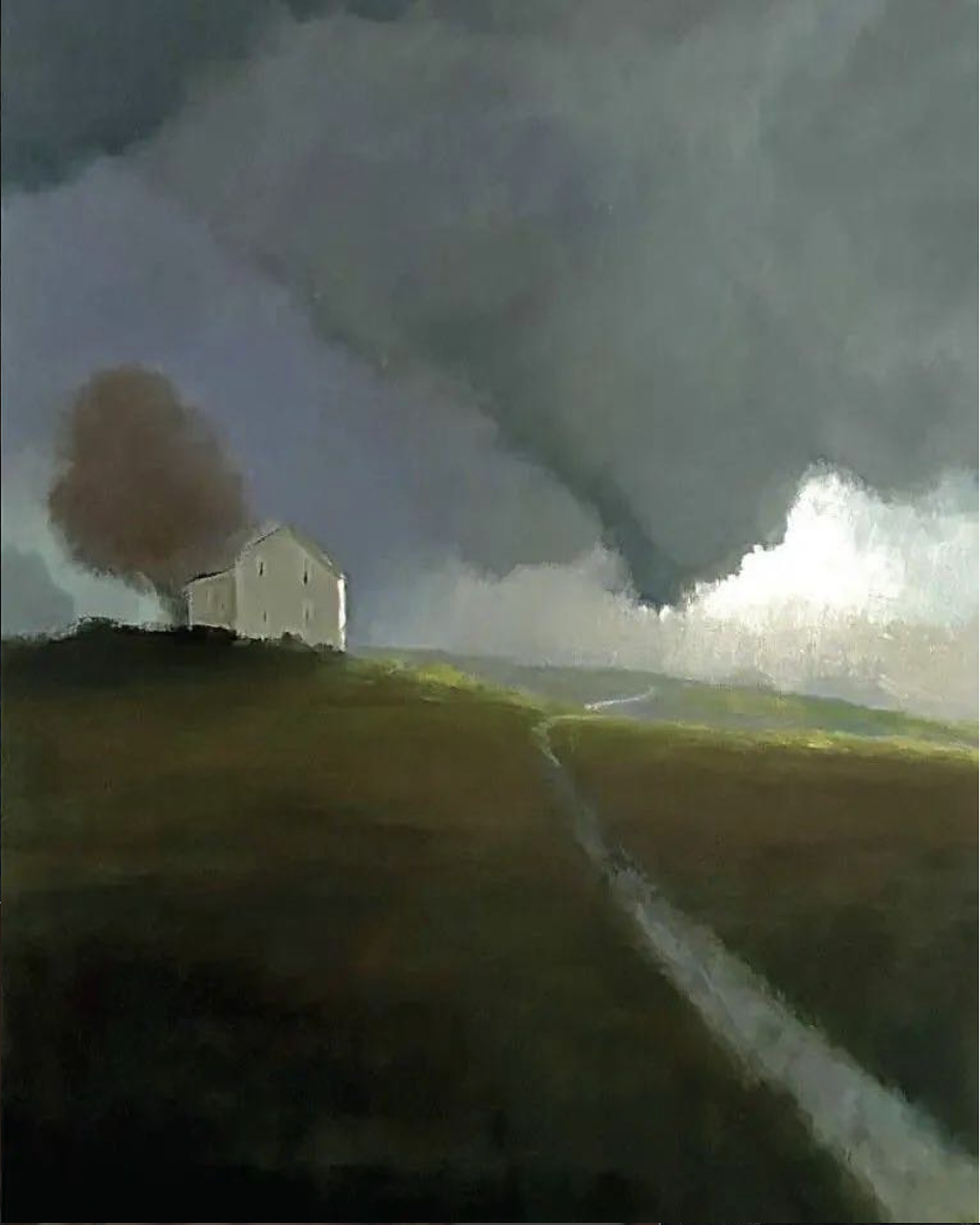
Stormcloud, 2024— Jan Waldron
Last week on Words That Sing I uncovered (rediscovered?) a song I must have known. I cared a great deal for the artist and his music, and this one sat right there on an album in my own collection. If you heard the show, it was the final selection, and we were blown away when we listened… and then listened again.
I cannot bear to leave it without sharing the poetry and a few thoughts. Not all songs are created equal. For me, this one comes awfully close to the thing I have been talking to you about from the very first — a poet singing about our very deepest selves. Perhaps the epitome of two arts melded into a single whole.
The author sets the stage:
I’ve got nothing on my mind
Nothing to remember
Nothing to forget
And I’ve got nothing to regret
But I’m all tied up on the inside
No one knows quite what I’ve got
And I know that on the outside
What I used to be
I’m not
Anymore
Reflection and Admission
You know I’ve heard about people like me
But I never made the connection
They walk one road to set them free
And find they’ve gone the wrong direction
But there’s no need for turning back
Cause all roads lead to where I stand
And I believe I’ll walk them all
No matter what I may have planned
A Plea for Empathy and Understanding
Can you remember who I was?
Can you still feel it?
Can you find my pain?
Can you heal it?
Then lay your hands upon me now
And cast this darkness from my soul
You alone can light my way
You alone can make me whole
Once again
A Shared Journey — We Are All in This Together; Relationships Are Everything
We’ve walked both sides of every street
Through all kinds of windy weather
But that was never our defeat
As long as we could walk together
So there’s no need for turning back
Cause all roads lead to where we stand
And I believe we’ll walk them all
No matter what we may have planned.
--Don McLean, Crossroads
The Poet's Gift
I dare not pretend to add to or embellish what the poet has given us. I am sure you can discover it all on your own — in something so powerfully told.
If, as I have hinted, mind is indeed memory, I shan't be forgetting this one any time soon… no matter what I might have planned.
Might you find your own story somewhere in these lines? Can you deny the emotional power of poetry?
I believe, more and more, in the wisdom of song.
New Kids in Town
By Clay Hipp
A letter to the young, a dare worth taking
I have had the extreme privilege of sharing the classroom with thousands of bright, talented undergraduates at three institutions of "higher learning" for four decades. It would be wrong to judge them solely on their intellect. They are real, feeling young adults from many backgrounds and cultures, just learning to look around, see the world, and form their own perspectives. They see the wonders and the flaws — and yet it seems to me that they do not consider themselves to be in a position to create change where it is needed.
We know from experience that when people feel unempowered or neglected, one common way of coping with that seeming insignificance is to withdraw into their own small worlds. They may also ignore advice from anyone who shows a lack of respect for their "personhood."
These conditions need to change, and right now. That is what motivated the letter below.
I offer it to you for what it is worth.
Enter the Young
— after the song by The Association
This is an open letter to all those between eighteen and thirty. (Yes, I am speaking to you.) The time is here; the time is now. Are you truly willing to let this moment pass you by without raising your voice — without asserting your ability and your right to create a future you will be proud of? Fifty or so years from now, you will look back and ask: How did we get here? What just happened? What role did I play?
Enter the young….
“Some are walkin’, some are ridin’;
Here they come, yeah
Some are flyin’, some just glidin’;
Released after years of being kept in hidin’;
They’re climbin’ up the ladder rung by rung
(Enter the young)
Yeah, here they come
Oh, some question some decisions
Here they come
Some with facts and some with visions
Of a place and multiply without the use of divisions
To win a prize that no one’s ever won
(Here they come, yeah)
Well, some are laughin’, some are cryin’,
Here they come
And some are doin’, some are tryin’,
Some are sellin’, some are buyin’,
Some are livin, some are dyin’,
But demandin’; recognition one by one
Enter the young, yeah
Yeah, they’ve learned to think
Enter the young, yeah
More than you think they think
Not only learned to think but to care
Not only learned to think but to dare.”
— Lyrics by Terry Kirkman, performed by The Association (1966)
It would please me more than you can know for you to read these lyrics, listen to the song, and feel the challenge. Then, if it moves you, make it your anthem. Become one of those promising young heroes and heroines. Take up the banner of freedom and citizenship, and begin the work of creating the country you can believe in — the one you need in order to live well, and to teach this generation and the next about the challenge that never ends.
First and foremost:
Register to vote … and VOTE.
How does one decide? Choose a side: one has "special interests," the other "special ideals." Each has its political goals; try to identify them honestly. Neither possesses "the truth." If you cannot choose, look toward the middle. There are more and more candidates who may be "affiliated" but who do not fully identify with their own party's platform. And then there are the true independents — a very interesting bunch as well. Better to listen to prominent voices from each, and to notice whose interests are more in tune with your own instincts and ideals. Listen to those who seem willing to talk with the other side, and to reach for real solutions to our shared problems and needs.
Listen to your heart as much as your head. Listen to love.
The song above was written and performed in the mid-1960s, about a different generation. My generation. We have not done such a great job. We have not looked after you, or after our world, as well as we should have. We started out much the way you do now. We achieved much. We answered the call of a young president who lost his life in service to us, and wrote a bold new law about our "Civil Rights" as individuals — we took to the streets to show our support. We both served in and protested our part in the war in Vietnam — and some of us died in protest. We came to see that our planet was suffering threats to its environment, and we created the Endangered Species Act and the Environmental Protection Agency. There was a renewed sense of promise.
But we also failed to see the harm in our willing embrace of an extreme individualism and the "freedom" of an unfettered marketplace. (A songwriter friend calls it the "Land of the Bottom Line.") A clash of philosophies over the reach of a large and growing federal government began to divide us.
What do we do to restore our fragile Union?
Help us out….
“Enter the young (yeah)
Yeah, they’ve learned how to think
Enter the young (yeah)
More than you think, they think
Not only learned to think but to care
Not only learned to think but to dare
Enter the young”
Only the young — you and yours — may be the saviors of your own fragile world now. Sing it to yourselves, to your friends, your family, your neighbors. Sing it to the sky. When you sing, you make the world a better place.
Think more, and care as much. I, for one, respect your gifts and your abilities.
I only ask that you use them well. I dare you….
Note to members of the Orlando Gatito Society: if you have young-adult children, if you teach them, if you regularly cross paths with them — please consider forwarding this post if you feel it's appropriate. You might even suggest they sign up for the Society's posts. I would greatly appreciate it; Also, Orlando would encourage it. He almost certainly shares our concerns.
It’s A Great Day to Be Alive
By Clay Hipp
To love the day, shadows and all
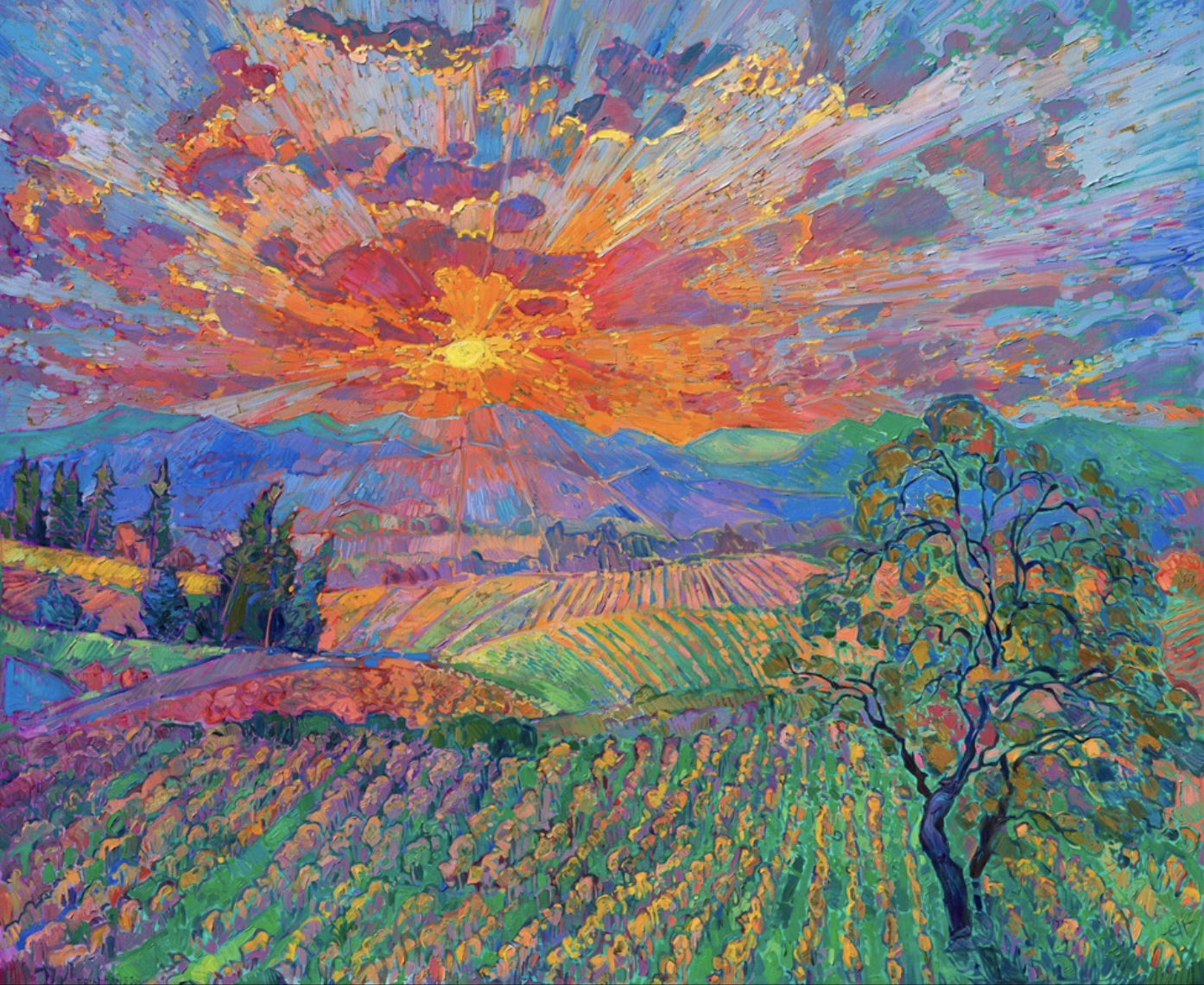
Willamette Golds, 2026, Erin Hanson, American
Last week I featured Darrell Scott on Words That Sing. His songwriting is terribly accomplished — complete, musically and lyrically — and his body of work takes time to explore. I have seen him live regularly. One time was very special.
He was playing in a small concert room at Merlefest. As you may know, thousands attend every year, and if a well-known artist is performing in a limited space, one had better get there before the doors close. I failed. A friend and I stood in the hall, listening through a side door that someone was holding open — probably against the rules. Not unusually, he was finishing his set with one of his most celebratory pieces.
He lets the listener know the theme right away, in a chorus repeated throughout:
“And it’s a great day to be alive,
I know the sun’s still shinin’; when I close my eyes,
There’s some hard times in the neighborhood,
But why can’t every day be just this good?”
When you hear it played and sung, the energy and emotion of the singer comes through to the listener in a very powerful way. It is, for me, impossible not to be moved. But behind the celebration is a dose of reality. And yet, and yet. . . . The question asked of each of us is inescapable.
Do you have an answering call?
I used this song for years with my undergraduate classes — law classes! How in the hell, you might say? Well, I kept it in waiting for just the right moment.
Semesters are long, and no matter how stimulating the subject matter, or how creatively presented by the lecturer, attention and energy diminish. Sometimes, to match the mood — returning from spring break, or facing exams and paper deadlines in the last week of classes — I would say, "All right, close your notebooks. It's time for a sing-along." I would crank up the speakers and watch the faces as they looked at each other or shrugged their shoulders.
At the end of each verse, I would raise my hand like a conductor and say, "Here is your part." As I sang along, almost no one joined in. But with each verse, a brave one or two came in, to the amusement of their peers. As the chorus played itself out, the atmosphere had changed significantly. If you wish to know how it truly went down, you will have to talk with some former students. I will say that over the years a positive remark or two showed up in my evaluations — no outright "pans."
After playing and conducting, and depending on the perceived mood, I usually offered a short soliloquy urging them to take the song to heart. Listen to it or hum it, I told them, depending on how you're feeling — celebratory, or in need of a lift and with an expectation: that you always to greet me around campus with some reference to the message…..and a smile.
But I must tell you the rest of the song. It holds something very important, very human.
Deep into it — after the humor and surprise — one finds this:
“Sometimes it’s lonely,
Sometimes it’s only me,
And the shadows that fill this room.
Sometimes I’m fallin’;
Desperately callin’;
Howlin’ at the moon”
While these lines seem to take us far away from where the title leads, it is actually right here that Scott's kernel of truth is revealed:
A great day to be alive is not a day without shadows. It is a day lived wide awake to all of it.
Scott is no Pollyanna. He knows those lonely rooms intimately — the shadows, the falling, the desperate calling. And yet I think it is in these liminal spaces, where light and dark meet, that we begin to wake up to the beauty of being alive.
It reminds me of an old phrase — amor fati, the love of one's fate. It is attributed to Nietzsche, though the sentiment reaches back through the Stoics to Marcus Aurelius, who counseled us to accept — even to welcome — whatever the universe hands down. That is the thread they share across the centuries: an idea meant to help us meet whatever life throws our way by embracing all of it as part of the cosmic dance of existence, where mystery and reality meet in the whole of human experience.
It is something another artist, Don McLean, encapsulates so brilliantly in a verse of "Crossroads":
But there's no need for turning back '
Cause all roads lead to where I stand
And I believe I'll walk them all
No matter what I may have planned
This is not resignation, nor gritted teeth against the future, but something nearer to an embrace: the willingness to take a life whole, light and shadow both, and call them not just good, but necessary. Nietzsche writes, "I want to learn more and more to see as beautiful what is necessary in things; then I shall be one of those who makes things beautiful."
Not the light in spite of the dark, and not the dark merely softened by the light, but the two held together in a kind of mystical balance — because that balance is the very thing that makes us alive. To understand joy, we must know pain. Yet these are not obstacles to the mystery of being here. They are the mystery.
This is the real lesson I wanted to hand my students the day I made them close their notebooks and asked them to sing along: that we only grow when we are challenged, that we only come alive when something shakes us loose from the doldrums of mere existence — and music does this better than nearly anything — into the full, aching fact of being here.
So when the song asks its question, I hope you have an answering call. Not because every day is good, but because you've decided, shadows and all, to love the one you're living.
Walking Into a Different World
By Clay Hipp
A walk toward stillness, a glimpse of blue fire
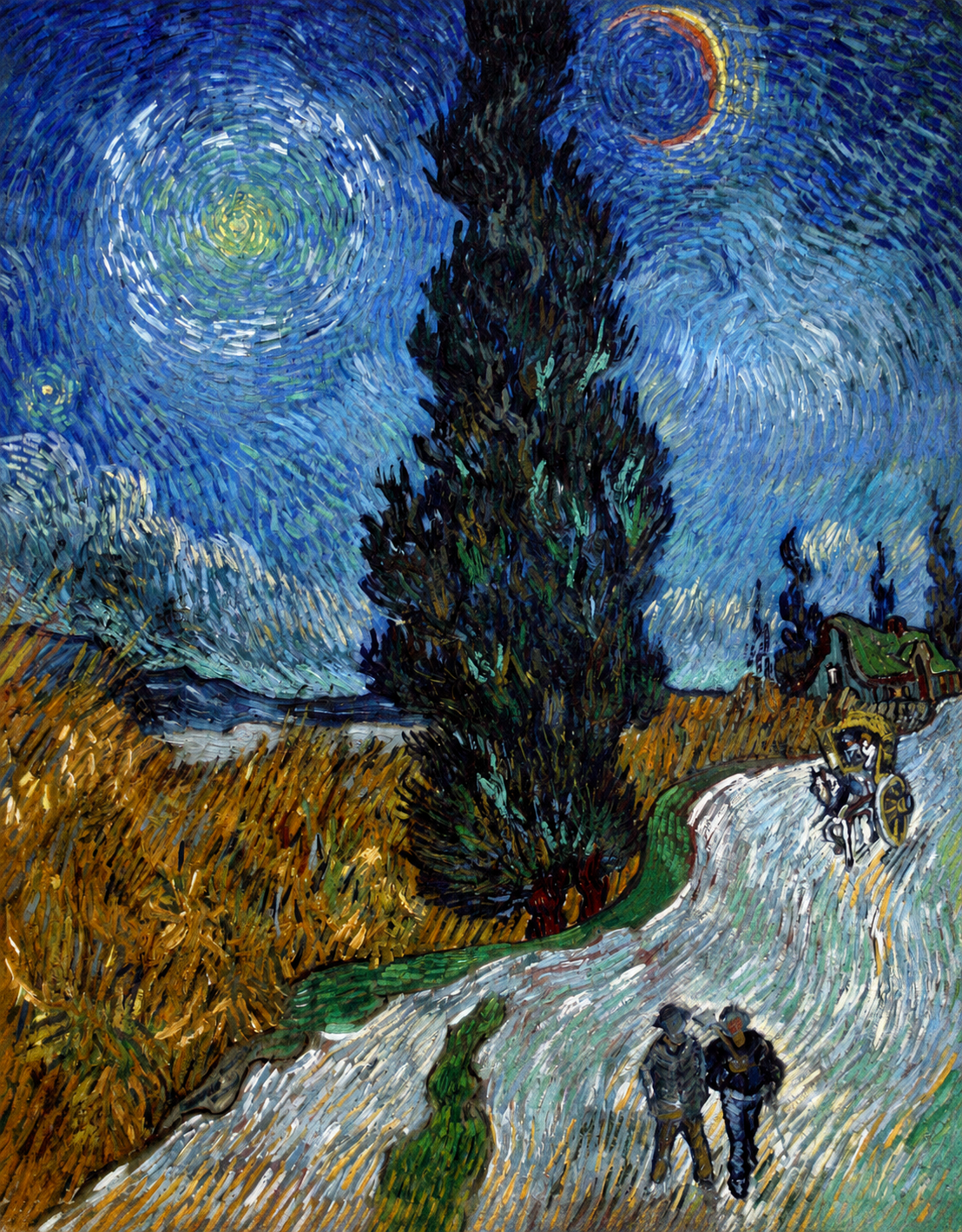
Road with Cypress and Star, 1890, Vincent van Gogh
Walking can be a form of meditation if you let it. It can also be a fine form of exercise for almost anyone, if done regularly. That's not a bad pairing. I have a friend who says that the combination helps him think better, that he comes up with solutions to problems he has been wrestling with. Good for him. I tend to believe, however, that when he talks about coming up with solutions, what he is experiencing is greater creativity. If so, it is his mind that is helping, rather than his rational brain.
If one allows them to, gives them room, they work together beautifully. Some research suggests strongly that those who make the best decisions are those who regularly free themselves from performing tasks and simply close the door and look out the window. (Some of us might say they are "wasting time.") You see, our brains and minds are both wonderful, but they operate differently.
Thinking exercises the brain, contemplation the mind.
One who truly thinks better while walking is still "out there" in the rational world. One who contemplates while walking is freeing the mind to go where it pleases to find inspiration. Perhaps, for some, it reaches a different level of consciousness.
I ran for years before changing to walking, but the distance remained the same — four to five miles, five times a week. For much of that time, I ran alone or with a few friends. I was never fast enough to experience what is called "runners' high," but I came to believe that it is real for those who did. I am told it is triggered by the body's release of chemicals called endorphins.
I mostly thought that I was not having much fun and could only yearn to sit down and have a drink of water. I did it because I knew that it was good for me. At some point, it became something I simply could not give up. The thirty years or so have served me well. I have been incredibly fortunate in my long history of good health. I credit all the time outside in the natural world, breathing good air and soaking up vitamin D. My heart and lungs can still climb hills and proceed at a good pace without becoming winded.
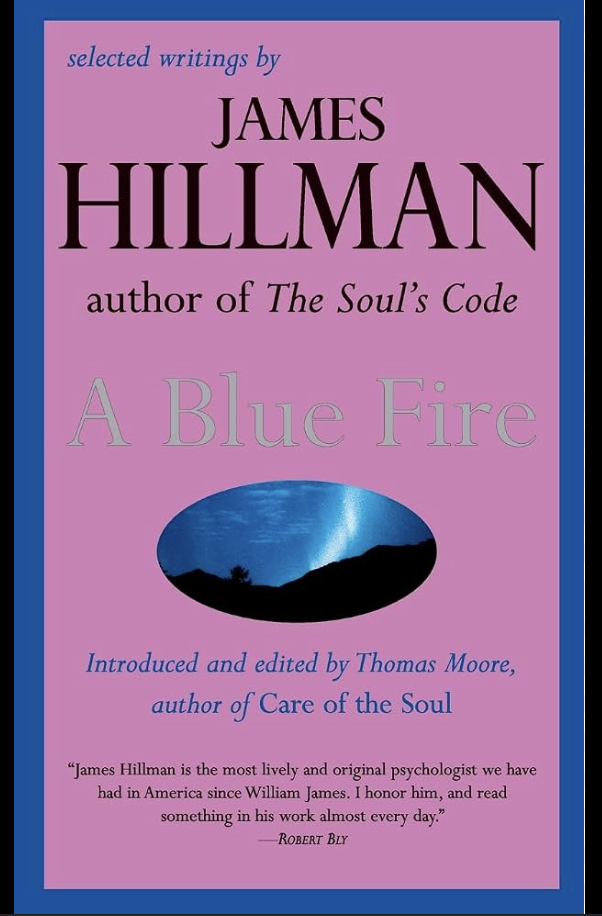
Back to walking. I have dabbled in learning about and practicing meditation. In my forties, I got a little more serious. When I changed universities, I inherited an old, traditional, roomy, high-ceilinged office in, of all places, the building that also housed the chapel. It was very quiet and private. I could hardly think of a better time. I would come in early in the morning and simply "sit" for a half hour or so. Someone had suggested a new book with the provocative title A Blue Fire. In short, it suggested that if one truly emptied his mind and became more "conscious," meditation could take you, literally, to a place you had "never gone before" — without chemicals.
Of course I put little stock in the idea. I have never been a "woo-woo" kind of guy. But as I read the book, I remembered my year in New Mexico and how much the idea of Native American spirituality had drawn me — the sweat lodges, the places of high energy, the sacred mountains, and even the vision quests. And so I decided, "What the heck, maybe I'll find something." Lo and behold, after about a month or so of serious quiet time — of just sitting for a while — I felt surrounded by a shimmering blue light. It lasted for a few glorious minutes.
Later, after reflection, I simply decided that I had never been truly "conscious" before. Conscious of what? I still don't know. Of being alive, for sure, but of something that needed exploring, the unknown.
Of "nothingness," no — rather of "somethingness."
As a result, I have never lost the idea about "consciousness." I taught in several business schools, and almost all classes and discussions among faculty groups were about things like efficiency and productivity — nearly all of it could be described as rationally-based decision making. Creativity got lip service, but it did not lead to publications and promotions. There were, of course, a few exceptions, but since creativity cannot be taught, it got little "serious" attention.
Interestingly, one of our greatest writers and teachers of mindfulness, Jon Kabat-Zinn, has been consulted and hired by major corporations in Silicon Valley and elsewhere to spend long hours with employee groups — teaching meditation to help them learn more creative ways of being. Many of those hours are spent "away from their desks," just sitting and looking out the window. Better to close your door, though — "someone" might get the wrong idea if they see you "twiddling your thumbs."
Perhaps you might be tempted to walk more. It costs no more than about thirty minutes a day of your precious time (that you might heretofore have been "wasting"). You might just walk into a new and healthier life, or a more rewarding future.
Heart and mind are fine partners, and they, for me, represent a better way of problem solving — and of just plain "living."
Metaphorical Death
By Clay Hipp
When a song ends, what leaves with it
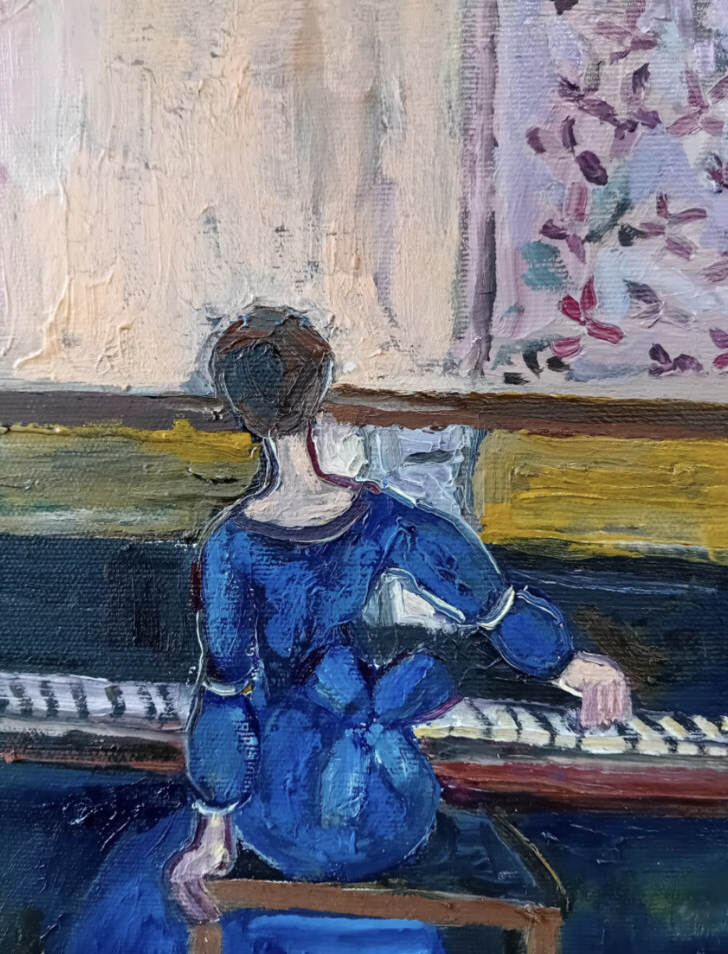
Music 2, Aisté Bugailiškytė, Lithuanian
If you joined us this weekend for "Words That Sing," you heard a set of songs by a very fine — and very poetic — artist named Don McLean. He is best known for a wild, sprawling piece called "American Pie." Many people know it by a single phrase that names the song's theme: "the day the music died." I once called that line ominous. It conjured other ideas for me — "the universal language," the "music of the spheres" — and set my mind wondering: what if that truly happened?
If we treat those phrases as more than metaphor — as our human attempt to search out the true nature of that thing we call "creation" — what would the death of music portend? What might it mean, elementally speaking? Might it mean the end of the world as we know it?
It seems only human to mark moments in time, to celebrate them or to grieve them. Think of Christmas Day, or Easter Sunday. We seem to need symbolism to explain things — to ourselves, and to one another.
That is where my thoughts went. The man who wrote that song was deeply moved by a historical event — the untimely death of one of his favorite musicians — and he lived with it for a decade or more before setting it down in music, trying to describe the long stretch that followed (the nineteen-sixties), both for himself and for those around him. Something had ceased to exist for him, and the music he remembered was heading in a very different direction. Was he, perhaps, reborn in the writing?
I once experienced a loss of my own. A musician whose songs had filled my life was killed in a traffic accident. I had gone to his concerts a half-dozen times and owned every one of his records. He was not merely a superb musician but a master storyteller — his songs told tales of human triumph and of no small amount of loss. He was funny and caring, and he gave himself to a series of charitable causes, one of them his own, dedicated to ending world hunger and sustained by the proceeds from his concerts and records.
Following his death in 1981, there was an emptiness in me that was filled only when I found another group whose music was different but every bit as humane, and every bit as beautiful, with stories of its own to tell.
It never occurred to me that, when Harry was taken away, some very real part of his music went with him.
Is music so integral to life that it is essential to our consciousness, both individual and shared? Where does it go, or does it simply return from whence it came?
“I can’t remember if I cried,
when I read about his widowed bride,
but something touched me
deep inside.
The day the music died.”
- Don McLean, American Pie
What if each of us is an original piece of music? If so, then the listeners play a part — an integral part — in our song. They hear our themes. They decide whether the key is right, whether we ring in harmony or in dissonance. The music is not fully realized without the other.
And if it doesn't sound right? That is the beauty of it: we are always free to begin again — to compose another movement, another song.
To rewrite the music of our lives….
Just Enough
By Clay Hipp
A life measured in mornings, not milestones

"Blue Whispering Day," Choy Moo Kheong, Singaporean artist, 2022
The word vacation comes from the Latin vacatio — freedom, exemption, a release from duty. It traces back to the root vacare, a verb meaning to be empty, to be free from work, to be unoccupied.
I have been thinking lately about that word. We have a big vacation coming up in October at the "shore." We will be meeting a few good friends from other states — people we met at the beachfront lodge where we will all be staying again. None of us is much of a beach person — Joanie comes the closest — but we all so love the surf: the sound of the waves, the way the ocean changes by the hour. Each morning several of us greet the ever-changing sky as dawn breaks and leads us through its display of clouds and colors. We have each left our homes, and whatever daily routine we left behind. We are truly on vacation.
What has become of that idea in the crush of our pursuit of progress and success? Are we truly in control of our own destiny, or have we adopted the "conventional wisdom" of perfect decisions made by markets?
“All the lies come at you in a million ways
Some you hear and some you tell yourself
And they say that virtue is a pile of gold
And that weapons are a nation’s wealth”
—Bob Franke, "A Still, Small Voice."
Has that truly become our national idea of a virtuous life?
Need some evidence? Consider the new definition of vacation. One source:
"A true vacation has transformed from an untethered sanctuary of rest into a hyper-connected, curated commodity. Where downtime once meant total psychological detachment from daily labor, modern breaks are routinely invaded by constant digital pings, performance pressure, and the urge to document rather than experience.
The Death of Unplugging: In-flight Wi-Fi, global satellite data, and remote workplace cultures mean work now travels in your pocket.
The "Workation" Compromise: Blending work and travel creates a blurred middle ground that delivers neither productive focus nor true physical repair.
The Burden of Curation: Social media turns leisure into a visual performance, forcing travelers to hunt for aesthetic perfection rather than personal ease. — Philip Ogley, Medium
There is plenty online about what this is doing to our psyches and our personal lives, if you care to pursue it. My concerns run more to our mental and spiritual conditions.
Over the last fifty years or so we have been sold a new definition of living well, and we have bought it wholesale. We have paid, and are still paying, the price. You might say, "Yeah, but you're retired — easy for you to say." You'd be exactly right. But we earned what we have. We grew up in a time when we and most of our friends understood the concept of "just enough." We knew very few of us would become rich. We believed in Social Security and employer-managed retirement plans. We believed in our country and what it did for us, and on our behalf. We took regular vacations — mostly to places that would seem "mundane" to many now, but that involved no airfare and no exorbitant lodging.
I avoided being rich in several significant ways, and I have few regrets. The life I led to get here gave me many intangible gifts — one of which was time with family and friends. I once held two jobs at the same time: teaching at a fine university and being a weekend farmer. When I brought in my first real harvest, I told several people it was the richest I had ever felt. I just broke even, financially, for twelve years. But it was worth it.
It is even more mundane than that. Over those years I became adept at cooking — having, for a long stretch, to shop daily and prepare the evening meal, mostly from scratch. Across a whole life of teaching, I've told friends that my entire day is better for the "mini-vacation" of that hour. I lose myself in the preparation, choosing spices and herbs, building a dish out of nothing.
So please consider taking a true vacation soon, and refuse to let anything take its pleasures from you.
We must get our minds around the idea that we are not getting paid for our leisure time — we are surrendering it.
Once it's gone, we are not going to get it back.
Are we wise enough to take the definition of vacation to heart, and truly act upon it?
A Still Small Voice
By Clay Hipp
A song remembered, a question carried forward
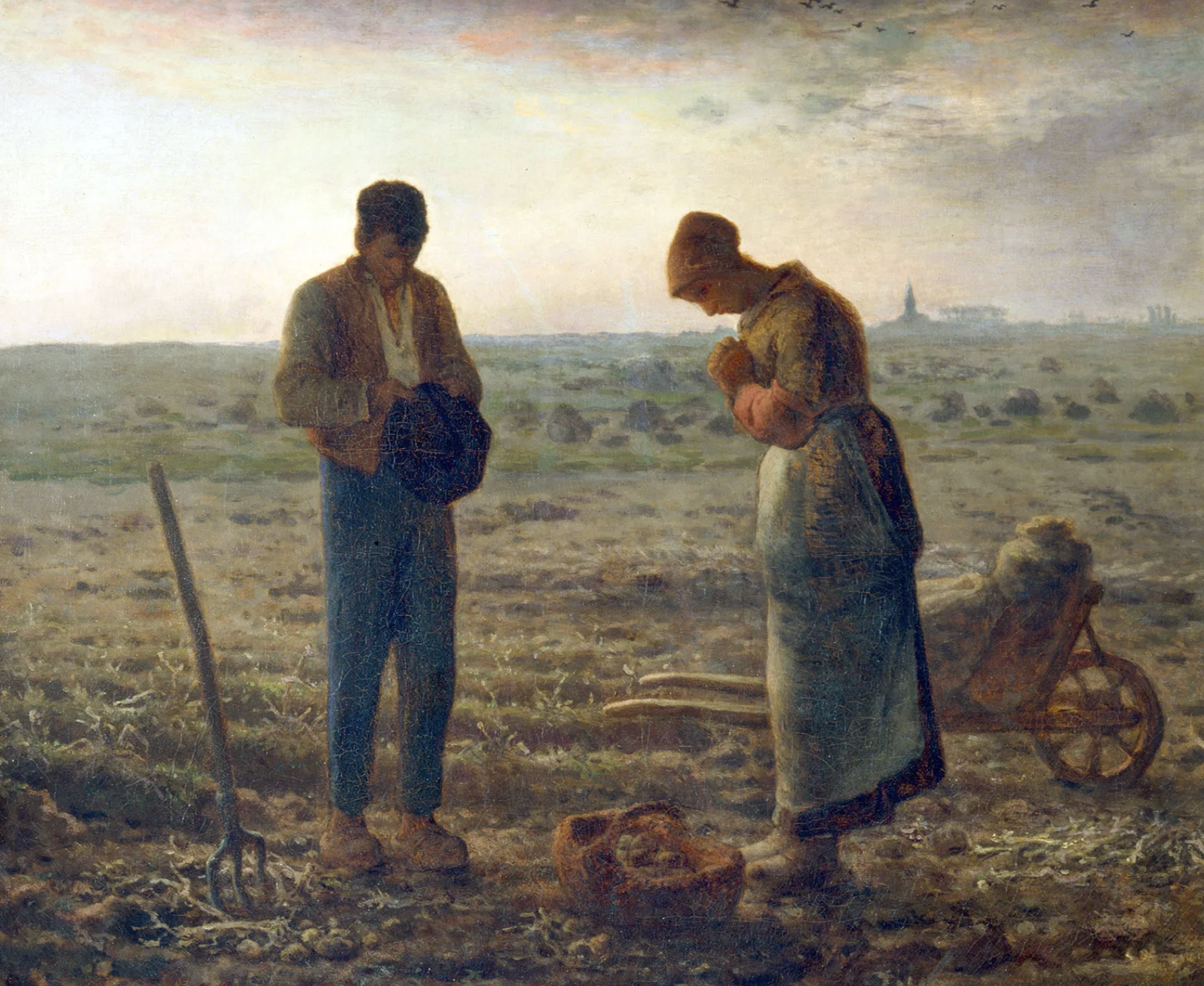
The Angelus, 1857–1859 — Jean-François Millet, French
Almost immediately after posting Sunday's Journal offering, this song came to mind. It was easy to know why. In fact, I think my very own still small voice gave it to me. (That is what we mean, isn't it, when we say that something "came to mind.")
Bob Franke was a songwriter who came through town back when we hosted a music series called Fiddle and Bow. He had an intriguing voice and a real gift for writing, and this is one of his most memorable offerings.
I listened to it again the other night, as though for the first time, and pondered the words for a good long while — remembering hearing it live, wondering just what to make of it. I was not exactly in my most "religious" period back then, but the idea of a still small voice was awfully appealing.
Now my contemplative self kicked in, and I found myself wondering what Franke meant when he wrote it. Let's read the lyrics together and try to figure out what they might say to you.
“In a still small voice in the middle of the night
Brother Martin heard the simple truth
And he followed its pleading though it led to a crossroads
Parting in the days of my youth
From the heart of my city came a single scream
And I heard it through all the white noise
And the papers told me that they’d killed the dream
But they never killed the still small voice”
In the 1960s, Martin Luther King heard that voice and led people peacefully down a road that seemed to be opening toward a better place — a better American reality, or at least the possibility of a peaceful coexistence. His dream ended in an act of hate and violence. Some have suggested the issue was bigger than race, that he was killed because he was about to speak out against the war in Vietnam. That does not seem so far-fetched. Certainly those in high places pushing the President were aware that Dr. King had influenced him strongly toward the Civil Rights Act. Might he yet have spoken to the President's better angel? We will never know. But we do know what came next. Another assassination changed the whole shape of the Democratic nomination. The election gave us a nominee who lost, in the end, to a man who would later be threatened with impeachment and resign.
What if King had lived, and Vietnam had never happened? Why are these small voices given so little attention, and granted so little power?
“All the lies come at you in a million ways
Some you hear and some you tell yourself
And they say that virtue is a pile of gold
And that weapons are a nation’s wealth
But when kings stand naked in their ugly schemes
Will the poor of this world rejoice?
Will they sell their children down a bloody stream?
Or will they listen to a still small voice?
That same era helped usher in the deregulation of the marketplace. Whether one praised that philosophy or not, time has shown us how the idea — and its manifestation — has led, and still is leading, to a radical change in the way we govern ourselves.
“Now the one-eyed bandit in your living room,
Will convince you that you have no time.
It will swear to take you on your one free ride,
While it’s looking for your last dime.
But the light of heaven is a simple gift,
You can see it when you make that choice.
It will shine like riches in your inmost heart,
But it will speak in a still small voice.”
We must each, now, begin to decide our future. The choice is ours to make. Do we choose yet another era of letting the marketplace make our choices for us — or can each of us listen to whatever our still small voice, however we define it, tells us is the proper path for the country as a whole, divided or unified? Is a personal "pile of gold" the answer? Are power and individuality to rule us — or some better reality? What does your inner music tell you?
“Oh, the sky will open when the trumpet sounds,
And the thunder will shake these walls,
And these stones so silent as they ring us ‘round,
They will shatter when they hear that call,
And these chains will clatter when they hit the ground,
And the people “make a joyful noise”,
It will be in a still small voice.”
M.L. King's was a prophetic voice. So, I tend to think, was Bob Franke's. It seems to me these times could use a prophetic voice — to inspire and to lead us, both at once. But from whence will that voice, or those voices, come? What did the Old Testament prophets do — predict the future, or point out our faults and tell us what would likely happen if we did not change our ways? I think the latter.
The trouble is that we have adopted a political system in which we ourselves choose our leaders. Is that system likely to produce prophetic voices? Dr. King was silenced, possibly for his politics. Bernie Sanders — whatever you make of his views, which the opposition calls "socialist" — saw his own party work against his campaign, almost certainly because the leadership judged him "unelectable," and chose another candidate, who then lost to someone who has transformed the political landscape, perhaps forever.
Is there a prophetic voice out there somewhere, crying in the wilderness? If you hear it, listen carefully.
The still small voice has no single source.
Some think it is simply within us.
My hope is that we can find the answer and sing together. Our personal faith journeys seek, and find. And perhaps, if enough of us listen, our collective conscience will carry the message to everyone.
Personally, mine is saying:
“And these chains will clatter when they hit the ground
And the people make a joyful noise”
The Miracle of Mind and Memory
By Clay Hipp
The mystery of consciousness, the sacredness of being alive
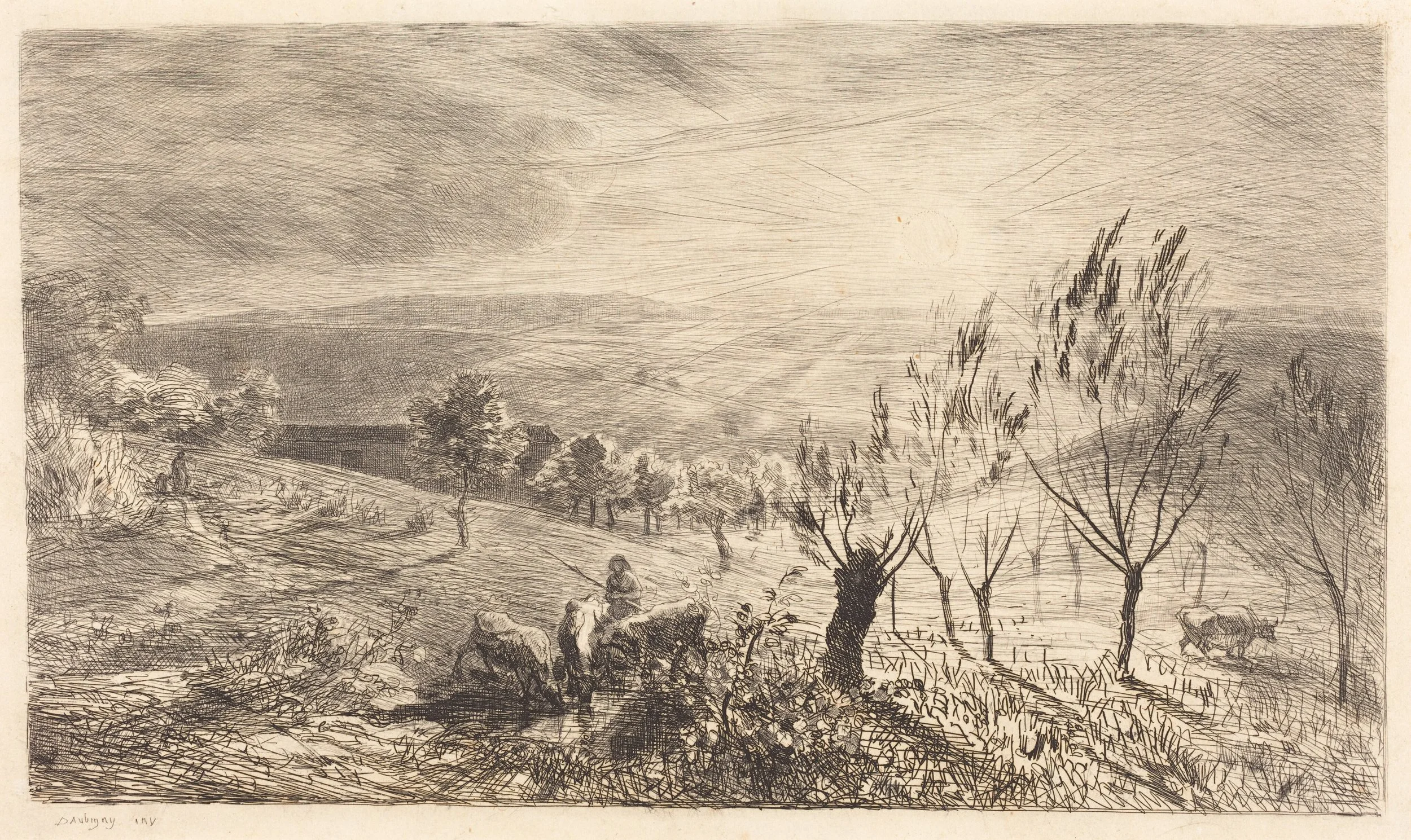
Sunrise (Le Lever du soleil), 1850—Charles-François Daubigny, French
"Mind Is Memory.” —Unknown
"Life Is a Miracle." —Wendell Berry
What is one supposed to make of these two statements? For me, one seems to lead to the other—or is simply a reflection of the other.
To deal with Berry’s claim first: to believe in miracles creates, for me, yet another step. Now I must contemplate the mystery of it all.
My experience with the mystery of life itself is that I have reached some very personal conclusions. Three things feel “sacred”: the land, the people, and music. But there is also an overarching sense of sacredness, and that is the gift of consciousness.
I explore it through meditation, contemplation, or mindfulness. I tend to think that these are all simply words attempting to describe one’s search for answers about the meaning of life itself.
We seek to experience something of the miracle.
Whatever one calls this special time of very personal silence is fine with me. I have come to prefer "mindfulness" because it hints at becoming more conscious of our existence and of the big questions.
My best time is the hour between five and six because my mind is more susceptible to being still and listening. Over time, my most sacred moment has become "first light," when dawn is just breaking and the first bird sings to announce its presence—and a brand-new day.
It is the awareness of living that is of highest importance to me.
One of our finest practitioners and teachers of the therapeutic value of mindfulness, Jon Kabat-Zinn, suggests a process he calls a "full-body scan." One sits for at least thirty minutes in slow, mindful, intentional concentration on the body.
I have found it most helpful in two ways: first, simply identifying any trouble spots and, second, becoming more aware that we are indeed "alive."
Kabat-Zinn's book, Full Catastrophe Living, is huge but very fine.
Consciousness is a very active area of research these days, attracting some of our finest scientists, who offer various and conflicting theories about what consciousness is and what its "source" might be.
If this topic interests you and, like me, you have a hard time understanding primary sources, read the very fine exploration and distillation of current research offered by Michael Pollan in A World Appears: A Journey into Consciousness.
If one needs a huge point to ponder, a great friend recently said to us:
"The whole world is conscious."
He meant all of our physical existence—including plants, small insects, and even stone.
Berry's statement is the title of a very small book in which he challenges a conclusive position taken by one of our great biologists, E. O. Wilson.
Wilson is famous for his work in a field known as sociobiology. Simply stated, he posits that all human behavior can be explained by our evolution as we became "human animals." He even states that there is no such thing as true altruism. We may seem to act unselfishly, but we are always seeking personal benefit.
In his book, Berry argues that life's mysteries cannot be fully explained by data and that treating science as a replacement for the humanities and religion leaves us morally and spiritually adrift.
Berry is quick to tell us that he has not read Wilson's book fully, but that he simply could not let that concept of humanity stand unchallenged.
Almost everything I contemplate these days has to do with trying to appreciate, honor, and value what I consider sacred.
If eight decades might teach us something, it is that we simply do not know what comes next. We must cherish what we have and the gifts we have been given, and live for now without worrying too much about what happens when it ends.
A great Vietnamese monk named Thich Nhat Hanh wrote widely about the universal value of contemplation and the practice of living it in everything we do. He considered something as simple as walking to be a form of meditation. One of his books is entitled Peace Is Every Step.
In one of his many works, he tells a wonderful story—probably apocryphal—about an old monk teaching a small group of budding young monks.
To get things going, he asks the class a question:
"What is the lifespan of a human being?"
After a period of silence, one ventures:
"A hundred years?"
He silently notes the response and turns back to the class. Another suggests:
"One day?"
He receives it in the same way.
Finally, a very small voice says:
"Master, one breath?"
The old monk says:
"That is correct."
And then he moves back to the lesson.
Humbling—but the point is made and inescapable.
If you choose to pursue Kabat-Zinn's body scan—I have found it truly enlightening, and a grand way to enter a state of mindfulness without having to "practice, practice, practice" that some teachers seem to require—do one thing for me.
Begin by breathing deeply and gently while pretending that the breath goes straight to the lungs and heart. Be intent on the expansion of the lungs and the slow, methodical beat of the heart muscle.
Next, feel the flow of oxygen to the brain and your open mind, and then the clearing of some of the distracting thoughts.
I have found it curiously helpful to pretend that I am breathing through the very top of my head.
But most of all:
Take note of the evidence that you are alive.
In the Bright Orange Light
By Clay Hipp
A dear companion remembered
In case you missed it, yesterday, July 21, was Orlando Gatito Day. It was declared locally and, so far, has not been recognized nationally—in memory of “the Little Orange Man.”
Perhaps that title is not quite catchy enough. No worry; I am working on building some momentum. At least he has his own society….
As it is, he lives in memory. I hope you think of him when you read the inspired words in this Journal.
Our Orlando was not a “lap cat,” but rather one who truly enjoyed proximity. Most of the time, wherever we were was where he wanted to be—on the couch beside me as I was reading (if he wanted scratching, he let me know), on the welcoming back porch when we ate or simply sat, or in the long grass of the yard, quite often beneath a muscadine vine for shade.
For more about him, please read his full story.
He was working on his “autobiography,” and I have been attempting to “translate” it over the last two years. Whereas we called him “the Little Orange Man,” to the best I can tell, we were the “long-leggeds.” He probably thought we were merely a strange variety of cat with whom he had somehow fallen in. There seems to be no feline vocabulary for what we are.
Here is the opening paragraph from the first draft:
That was not my name when I was very little. I do not think I had a name. I remember being in a place with my mother. It seemed dusty and dirty, and I think now it may have been a small building with no people.
There were six of us “kittens.” When we were able, we went through a crack into a space outside with scruffy grass and a few flowers. Beings of some kind lived in a larger building and came and went, but they did not seem to notice us or care that we were sometimes outside.
We would go out to “do our business,” as people sometimes say, and then go back inside to lie with Mother and suck milk from her tummy. The rest of the time, we explored the inside, but there was not much to see, so we rolled around and played with one another.
Sometimes we would see another animal, almost the size of us little ones, but it moved quickly, and we could not catch it to play with.
In any case, his life inspired us—and particularly inspired my “creative” writing.
I recently discovered two attempts at poetry. You are free to call them anything you please. I only hope his continued consciousness has received them in the same spirit in which they were given to me.
I offer these two pieces in his honor.
For Orlando
A wandering pilgrim of the world, not “olde,”
Found a great treasure in a sea of asphalt.
It was tarnished and dusty but, with care, emerged as
Purest gold.
Accident preceded discovery, saved a life, and revealed…
Grace.
Three lives were melded and changed for the good
In a small little “hood.”
Who could have seen such a future shared?
And if they had, would they have believed
In the miracle paired?
Over time, they shared bread and cheese and toasted life
With a grateful glass,
And basked in the bright orange light.
The little one was a man of few words but many virtues.
The treasure compounded and laid up wealth,
And grew in complexity and promoted best health.
ECH
A Paraphrase
After James Taylor
There was a young Cat-boy who lived in the Hood.
Joanie and Bumbi were his loyal companions….
So, goodnight, you moonlit crazies,
And you puppies who’ve returned to your homes….
He works very little and sleeps in the shadows,
And waits for his supper and his pleasures to change.
And as the moon rises, he sits on the front steps,
Thinking about ice cream and rooms full of cheer.
Reclosing his eyes as he slips into dreams,
He sings out a song that is soft, but it’s clear—
As if maybe someone could hear.
ECH
So, we held no large celebration. We are not quite ready yet—perhaps in a few more years. I hope we will have a kitten or two by then.
As it is, he lives in memory.
Thank you for honoring this attempt….
Do Something Different
By Clay Hipp
A question asked with a smile, a country worth the asking
Stump Speaking, 1853, George Caleb Bingham—American,
All right, I am mad as hell, and I am not going to take it anymore!
No, that is not what I meant to say — so why did I? Frustration, I guess. I am ready to talk antidotes. Here, I think, is the problem. We are all so fed up with seeing the country falling apart, piece by piece, every day, that we let out our frustrations by peppering our conversations with anecdotal examples of what "those people" are doing to the country (on one side or the other).
Where is the middle ground, and how do we find it — or, better yet, CREATE it, or nurture what is already there? There is only one way. Treat all, every one, of our daily encounters as if they matter. Those around us are all that we truly have. We are the country and the world. Do you, do I, smile and make eye contact as we pass among our friends and neighbors and all those we pass judgment on so easily (either of little worth, or worse)? What gives us the right to accept or reject the other? If we only cared, and acted like it, we would let them know, somehow, that we acknowledge their existence.
Have you not been surprised, on occasion, that someone has the same wants and needs as you — just in a different context? The same hurts and desires and joyous moments? Maybe it just seems to be a waste of time, when we already "know" (or merely assume) their unworthiness.
What can we do? Simple. Tell yourself:
My goal today is, to the best of my ability, to make each person's day better than it would have been without this moment.
The larger goal: to stop thinking only of how bad this is and dwelling on the likely end result. Now, take charge of your, and our, destiny. The next election day must be our major concern. Our DUTY as citizens is not to "ask what our country can do for us, but what we can do for our country." First and foremost, do not even consider sitting it out in despair. Even if you are tired, or afraid, or under the weather, or disgusted with the whole thing — show up!! Take a friend (to make sure that they do show up). Vote early or by mail if you must, but on that day, please sit in wonder at what we have — and what we have to lose.
Sit on your front porch, or in front of the country store, wherever you find yourself, and ask everyone (with a smile), "Have you voted yet?" If they fail to respond, or show hostility, just pretend it did not happen.
From now until that day, never surrender your hope for yourself and others, and remember that there is still "goodness" in this world.
Never stop believing
There is goodness in the world
There is goodness in the world
There is goodness in the world
I see children marching
There is goodness in the world
I listen to them speaking
There is goodness in the world
When we finally do the right thing
—John Gorka
This next is my new theme song — the good, the bad (not the ugly). This November might just turn out to be a birthday celebration that went awry on the Fourth.
Words heard under the "Wisdom Tree":
Sometimes you just don't feel like tryin',
Too many politicians lyin',
Too many hungry babies cryin',
Too many random bullets flyin'.
This can't be our destination,
This could be a better nation,
Time to set the big horse racin',
We can change the situation.
Trains are leavin' from the station,
Need a brand new generation,
This could be a celebration now.
—David Mallett (one of my favorite, and wisest, songwriters, late from the state of Maine)
This SHOULD be a celebration of what we have been and can be again — and only we have the power to:
- MAKE IT SO-
(thank you for reminding me, Captain Picard).
Hope it was OK to write this and offer it to you. Sometimes things inside need to be released, if not actually let go, quite yet.
Nostalgia—A Riff
By Clay Hipp
what the lyricists know, that the philosophers don't
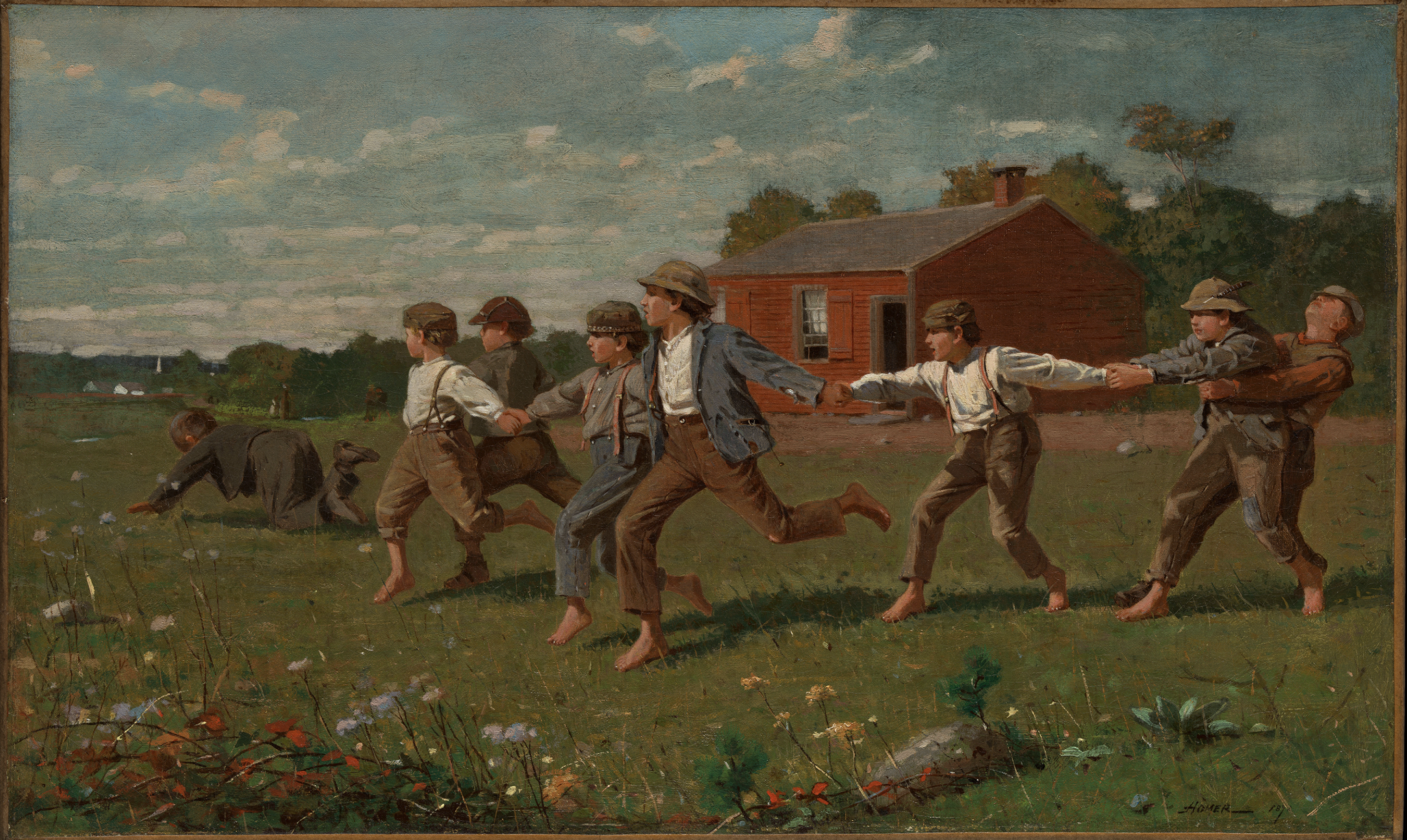
Snap the Whip, 1872 — Winslow Homer, American Painter
I have ambivalent feelings about that word—nostalgia. It can mean simply “wallowing in the past,” which is usually not a good thing. Pining for yesterday gets us nowhere. But when we live in memory for a while and extract the essential truths and the good, then we might just find a way to move forward—together, united.
So these days, when I am feeling betwixt and between about a word or a concept, I no longer consult the linguists and philosophers. Instead, I go sit under the “wisdom tree” and contemplate the words of poets and lyricists. They understand that I am not necessarily seeking answers, but a deeper understanding of life and its confounding dilemmas, offered by people of experience—people just like you and me.
Let's think nostalgic thoughts together.
More than once lately, a feeling of deep grief has almost brought me down—not personal grief exactly, but grief over our mutual loss of “The Way We Were.”
What were we?
Memories
Light the corners of my mind
Misty watercolor memories
Of the way we were
Scattered pictures
Of the smiles we left behind
Smiles we gave to one another
For the way we were
Can it be that it was all so simple then?
Or has time rewritten every line?
If we had the chance to do it all again
Tell me, would we? Could we?
— "The Way We Were." Music by Marvin Hamlisch, lyrics by Alan and Marilyn Bergman, 1973
Those words speak directly to the two sides of nostalgia: the tenderness of remembering and the danger of believing that everything was simpler then. Still, to that final question—would we, could we?—I offer a resounding “yes.”
I have the advantage over many of you. I was born in 1946, one year after my father returned from the war. I was among the very first "baby boomers." Things did seem so much simpler then. Consider what we had: the afterglow of helping the world defeat Hitler, the reopening of the economy, the promise to make everyone's lives better, soldiers getting college educations under the GI Bill. We were all "winners"; we were united (most of us). I know, of course, that the country I remember was not experienced in the same way by everyone. What seemed safe and full of promise to some of us was neither safe nor promising for others. Nostalgia must make room for that truth, or it becomes merely another way of rewriting every line. A famous general became our president, and we were told that the country would be kept “safe” from the growing Soviet communist threat.
Radio gave way to TV. We all watched the same shows and were thrilled by Elvis and the Beatles on The Ed Sullivan Show on Sunday night, and by the wonderful world of Walt Disney. We built superhighways and reveled in our yearly anticipation of new car models. Athletics were still just games — high school, college, and the pros, with identifiable rosters, magical names, and stadiums in exotic cities. (Jackie Robinson, Willie Mays, and Mickey Mantle were names known by everyone; the Dodgers and the Yankees met in crosstown World Series.)
Perhaps what I miss is not the past itself, but the feeling that we once inhabited more of the same world. We knew many of the same stories, sang many of the same songs, and gathered—however imperfectly—around some of the same tables.
Those were the days, my friend. We thought they'd never end.
During the late 1970’s, the great songwriter Harry Chapin wrote:
Remember when the music
Came from wooden boxes strung with silver wire
And as we sang the words it would set our minds on fire
For we believed in things, and so we’d sing
Remember when the music
Brought us all together to stand inside the rain
And as we joined our hands we’d meet in the refrain
For we had dreams to live, and we had hopes to give
Don’t you remember when the music
Was the best of what we dreamed of for our children’s time?
And as we sang we worked for we knew time was just a line
A gift we saved, a gift the future gave
Remember when the music
Brought the night across the valley as the day went down
And as we’d hum the melody we’d be safe inside the sound
And so we’d sleep, for we had dreams to keep”
I know if you have been with me on this site, you have heard this song before, but… it keeps me going.
On Friday night I offered a piece by the progressive rock band Kansas called "Song for America." It is long and beautiful and surprising — well worth your time. After praising the discovery of our "promised land" and telling the tale of the pioneers, sea to shining sea, it suddenly turns pensive, and the final verses mirror the possible world of today.
“Highways scar the mountainsides, buildings to the sky
People all around
Houses stand in endless rows, sea to shining sea
People all around
So we rule this land, and here we stand
Upon our paradise
Dreaming of a place, our weary race
Is ready to arise”
So we—you and I, and those who represent us—rule this land. Here we stand upon our paradise, yet still dream of another place from which our weary race might ARISE.
There is the paradox again. We have inherited abundance and beauty, yet remain restless, divided, and unable to fulfill the promise we continually make to ourselves. Perhaps nostalgia is useful only when it reminds us not merely of what was, but of what we once believed could be.
Still, we must place some hope in the dream—not the dream as we nostalgically remember it, perfect and pristine, but the unfinished dream as it might yet become.
“Remember when the music
Brought the night across the valley as the day went down
And as we’d hum the melody we’d be safe inside the sound
And so we’d sleep, for we had dreams to keep”
— Reprise from Harry Chapin’s “Remember When the Music”
Nostalgia alone looks backward. Hope takes what memory has preserved and carries it toward a place we have not yet reached. And so I leave you beneath the wisdom tree with one more song:
Somewhere over the rainbow way up high
In the land that I heard of once, once in a lullaby
Somewhere over the rainbow, skies are blue
And the dreams that you dare to dream really do come true
Someday, I’ll wish upon a star
And wake up where the clouds are far behind me
Where troubles melt like lemon drops
Away above the chimney tops
That’s where you’ll find me
Somewhere over the rainbow, skies are blue
And the dreams that you dare to dream really do come true
If happy little blue birds fly above the rainbow
Why, oh, why can’t I?
— "Over the Rainbow." Sung by Judy Garland, Music by Harold Arlen, lyrics by E.Y. "Yip" Harburg, 1939.
Still, one must hope—not for the return of a past that was never as perfect as memory suggests, but for the fulfillment of a promise we have not yet kept.
Harry Chapin remembered a time when music brought us together, when we had “dreams to live” and “hopes to give.” Perhaps the music still can. Perhaps memory, when honestly held, can remind us not only of what has been lost, but of what remains worth recovering.
Nostalgia alone looks backward. Hope takes what memory has preserved and carries it toward a place we have not yet reached.
Somewhere over the rainbow, the song tells us, the dreams we dare to dream may yet come true.
Perhaps we cannot return to the way we were—and perhaps we should not wish to. But we can remember what was generous, hopeful, and life-giving, carry it forward, and widen the circle so that more of us may finally stand within it.
Why can’t we?
Canon in D
By Clay Hipp
Reflections on gratitude, mystery, and the strange gift of being seen
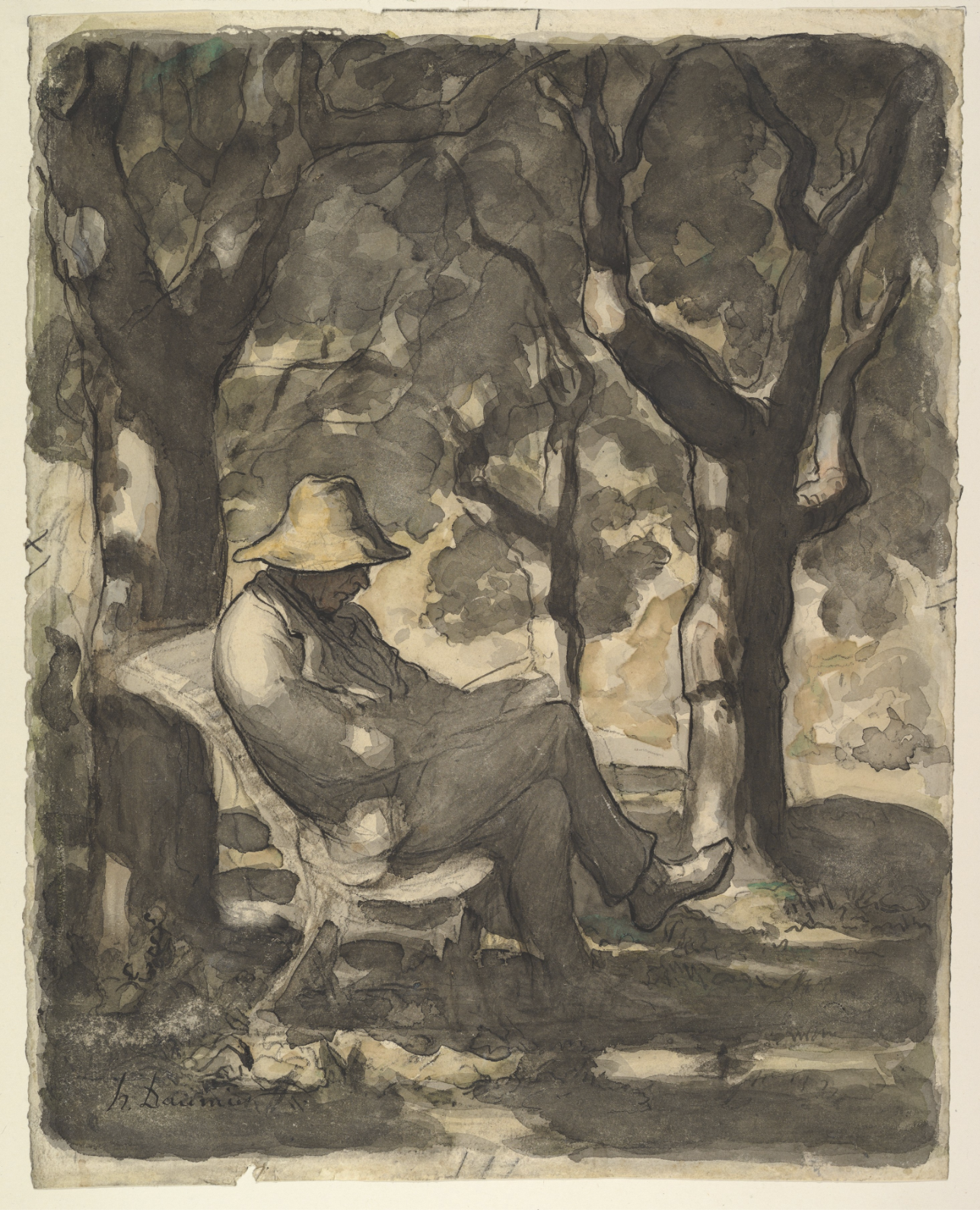
A Man Reading in a Garden, 1865, Honoré Daumier, French
Friday Morning, July 3, 2026
What does one say when rendered speechless and then brought to tears?
That is what happened, in more ways than one, on my birthday.
It all started the day before, on the 2nd. We went to breakfast at our favorite little neighborhood café. I got a phone call from my youngest son, who lives in Chile. In muffled tones, he let me know that he was in the hospital. A procedure would determine the reason for chest pains. He would let me know.
As we were leaving, Joanie received a message letting her know that her mother had been rushed to the ER and hospitalized. She was waiting for an MRI.
For the rest of the day, we waited for outcomes.
Fortunately, each turned out well, save for my son’s fully blocked artery, which was successfully cleaned out and stented. News like this does not land lightly. The words “successful” and “released from the hospital” are wonderful words, but they arrive only after other, more frightening words have wreaked their havoc on mind and soul.
Late that same afternoon, I received a terse e-mail ending a five-year relationship with a friend.
What a lead-up.
I hardly slept that evening and woke up groggy and disoriented. Coffee helped somewhat, and finally I was able to have a decent conversation with Saint Joan.
After a while, she led me into our small dining room for a surprise birthday gift. On my computer was a handwritten card directly from her. Along the wall, on a sideboard, were hundreds of photographs and much memorabilia from my eight decades.
After we had sampled them, she opened my computer to reveal a folder, hidden until that moment, full of e-mail messages. Quietly, behind the scenes, she had written to people from different corners of my life — family, old friends, former students, colleagues, companions from various chapters — asking them to send words, memories, stories, songs, whatever they wished to offer.
And they did.
One after another, the messages arrived, each from its own angle of affection and remembrance. They talked of diverse things: a classroom, a meal, a trip, a kindness, a conversation, a song, a phrase I had long forgotten. More than a few brought me to tears, Joanie as well, until we could read no more for the moment.
As I read and read, I quite often thought, “Who is this person they are writing about? I hope that I can become more like him over the next decades.”
Somehow he seemed made up.
It is grand, and also quite unsettling, to realize that people may have carried around some version of you that you yourself have never met. I am not being modest. This is how it felt. I kept thinking, “They do not really know who I am.”
But then another possibility began to work on me.
Perhaps they know something I do not.
Not the whole of me, of course (do we ever really know our full selves?). I think it is difficult because we live too close. We know our confusion, failures of nerve, impatience, selfishness; the unfinished work — the inner weather no one else can see. From the inside, our lives often feel partial, improvised, and unclear.
But in those moments, reading those beautiful, funny, heart-wrenching e-mails, I realized that people saw me from another angle.
They remember a sentence I’d forgotten. A class I barely recall. A meal. A concert we attended. An e-mail I wrote over class break. A conversation in a café. A book placed in their hands. A question asked at the right (or wrong) time. A kindness given when needed. A moment that, to me, was just a moment passing, but to them, somehow, became a part of who I was.
What a strange gift.
Beautiful, but strange.
It is one thing to live your life. It is another thing to have it sung back to you.
I will say this: it was the perfect antidote for what happened on the 2nd. The contrast between the two days, and the emotional tide that came in and was now going out, left me spent — awash in gratitude and emotions I did not have words for.
Right now, I am listening to Pachelbel’s Canon in D.
Yes, that one. The wedding one. It became so popular in the ’70s, and played and covered so often, that for many it became trite and actually derided by some. A shame.
If one reads about its structure, one might be fascinated to learn that the strings and continuo play repeating harmonies over a basso continuo that repeats over and over throughout the calming and almost mesmerizing composition.
Underneath all those soaring strings, there is a bass line. Eight notes. It simply repeats — over and over, from the first measure to the last, never changing, never hurrying. Everything beautiful in the piece happens on top of something that holds.
Maybe a life is a little like that.
There is some line underneath us, some pattern of character or habit or hope, some way of returning to the world, that repeats so faithfully we may hardly notice it ourselves. We get up, make coffee, read, cook, teach, listen imperfectly, ask our questions, fail one another, repair what we can, and begin again.
The bass line is not dramatic. It does not say, “Look at me.” It simply holds.
But then others enter.
They bring their own melodies. They remember the phrase, the meal, the class, the song, the invitation, the argument, the book, the joke, the hours together at the table. They take something from that steady line and carry it forward in a way one could never have predicted.
And suddenly, on one’s eightieth birthday, one hears not only the bass line one has been trying, imperfectly, to keep, but all the music that has risen from it in other people.
No wonder it was overwhelming.
Martin Buber wrote about the difference between I-It and I-Thou — between treating another person as an object to be measured, used, or categorized, and meeting that person as a living presence. I have always loved that distinction, though I cannot claim always to have lived up to it.
But what these letters gave me was not praise, exactly. Praise can be dismissed. Compliments can be batted away by any reasonably skilled old crank.
This was harder.
These letters were acts of recognition. They were people saying, in one way or another: you met me. You saw me. You gave me something, and I carried it forward.
That is not easy to take in.
It may be easier to believe the harsh word than the generous one. Easier to believe the broken relationship than the hundreds of remembered kindnesses. Easier to believe one’s private accounting than the testimony of those who have stood nearby.
Perhaps this is why we need others. Not to inflate us, but to show us what we cannot see from the inside. We know the turmoil and the unfinished work. They see the shape our trying has made.
If you have not listened to the Canon lately, or ever, give it a try. I just heard a piano version by the contemporary artist George Winston. I had a female colleague in New Mexico who had a CD with a dozen or so versions. She told me that her mystical “key” was D.
OK, who am I to argue with that?
A question: what do you consider your greatest birthday gift ever?
I need look no further.
The time and effort put in by my uber-caring Joan, and all the thoughtful and eloquent responses from friends and family, have value beyond measure. They gave me something I did not know I needed. They allowed me, for a little while, to hear my own life from where they stood.
I am still not sure I recognize the person they described.
But perhaps I do not need to argue with them. Perhaps I need to receive him, with gratitude, as one receives a melody one did not know had been playing.
I would like to grow up to be more like the man they saw — and to be worthy of the generosity with which they saw him.
What am I to do when they have a significant birthday?
Message: each of us may have our greatest value through the eyes of others. Think of that when you encounter those around you. At the very least, acknowledge their existence. Give them a greeting. And if you ask, “How are you?” mean it.
You may be offering them a glimpse of themselves they could not otherwise see.
You may be helping them hear the music of their own life.
That is what I am trying to do now, imperfectly, at eighty. And that, I think, was the greatest gift I received on my birthday: the gift of being seen.