
The Accidental Wine Lesson
Dear Reader,
OK, time for a break from philosophy.
Let’s turn to another subject I like to pontificate on—wine.
Joanie’s sister stayed with us last weekend and I prepared a nice, light dinner for us to share as we caught up on the latest news. We sat down to a lovely meal of homemade crab cakes, crunchy, oiled and salted roasted potatoes, and my famous creamy coleslaw that had been slowly marinating for the last hour or so.
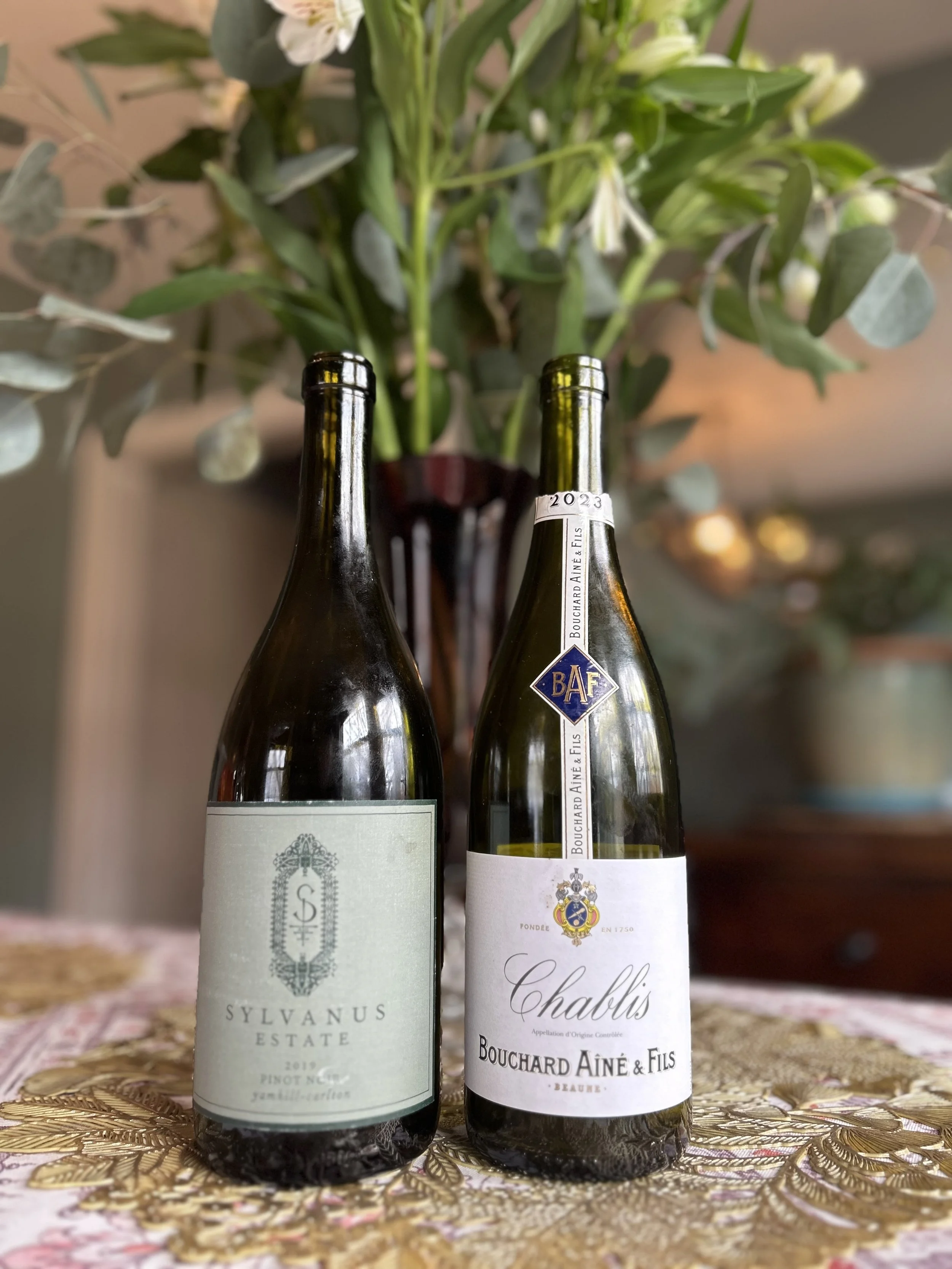
Before the meal began, I poured a small glass of Chablis (shuh-blee—it’s French; you’re welcome), paired with silky shreds of salmon and avocado perched atop fresh sushi rolls. The Chablis showed its classic profile: mouthwatering green apple acidity, a flick of sea salt and lemon, giving way to a creamy, rich finish. As a good friend who often visits our table said recently, “I want to find myself with more Chablis in my glass.” Hear, hear!
As it turns out, sister Carol really likes my food and was delighted with the choices (she also has a growing interest in wine.) As we sipped the white, I explained that the Chablis was a Burgundy wine grown in the northernmost part of the region. Its crispness, I told her, comes from the difficulty of ripening the grapes in that cooler climate and from the limestone-rich soil.
She stopped me, a confused expression on her face, “Wait a minute. I thought Burgundy was a red wine.”
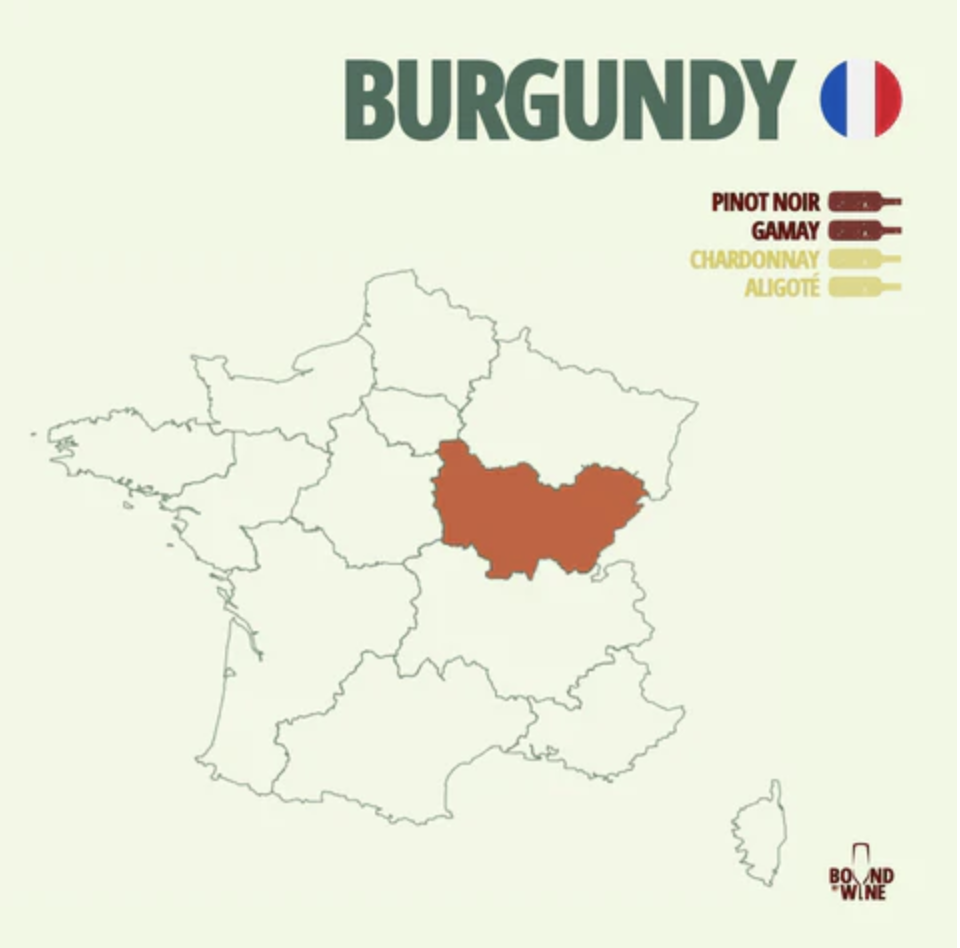
I explained that people who enjoy wine but have only a layperson’s (or laywoman’s!) knowledge of its more esoteric niceties are often confused by the terminology. The problem is that most people encounter “Burgundy” first as a red wine—specifically Pinot Noir. Pinot Noir is a red grape, but Burgundy itself is a region, just as Bordeaux is.
So, the wine she was drinking was actually Chardonnay, and (almost) every white wine labeled Burgundy will be made from that grape. At this point, I noticed her eyes beginning to glaze over—an entirely common reaction when one first encounters the complexity of French wine.
We decided it was time to move to the table and enjoy the second course. With it, we served a very nice Pinot Noir from Oregon.
Uh oh.
She looked puzzled again. “They grow Pinot Noir in Oregon? I thought it was a Burgundy.”
Let the games begin.
“Here’s the problem,” I said. “The French system of designated regional names is hundreds of years in the making. It’s complex and extremely difficult for a layperson to master. The French are fiercely proud of their regional identity, and that extends to the wines traditionally grown, made, and consumed there.”
The wines we had been discussing are described as Burgundian. If you get into the study and enjoyment of fine wine, you may come to prefer Burgundy over Bordeaux—or vice versa. For the French, though, this goes far deeper than mere preference.
“OK,” she said. “So are Pinot Noir and Chardonnay grown in Bordeaux too, just called different names because of where they’re grown?”
“Oh my—absolutely not,” I replied.
The reasons are complicated but essential. And by the way, never ask that question in the presence of a Burgundian (more on that later).
“So what grapes are grown in Bordeaux?”
“Thank you,” I said. “That’s an easier question.”
Most people associate Bordeaux with Cabernet Sauvignon, and many Bordeaux wines are indeed based on that grape. But, like Burgundy, Bordeaux has subregions where other reds dominate. Within the region, growers are permitted to cultivate and blend five (possibly six) grape varieties. The two most prominent besides Cabernet Sauvignon are Merlot and Cabernet Franc.
To complicate matters further, there is also white Bordeaux, made from the closely related varieties Sauvignon Blanc and Sémillon. Merlot dominates in Pomerol, where one of the most famous wines in the world—Château Pétrus—is made entirely from Merlot.
Enough?
Consider this: beyond these famous regions lie nine additional major regions and many smaller ones. Surrounding them all are so-called “country wines” (vin de pays).
Finally, Carol spoke again.
“I don’t quite understand. Does someone tell them they must grow only certain grapes, or have they just always chosen their favorites?”
Oh my. Another can of earthworms.
Rather than get wordy, I said simply that within these important regions, grape varieties are regulated.
“Wait—do you mean by law?”
“Yes,” I said, “but it’s not quite that simple.”
Here is a brief summary related to your question (from the web):
The Institut National de l’Origine et de la Qualité (INAO) regulates which grape varieties may be grown in each French wine region. Established in 1935, this governmental body enforces the Appellation d’Origine Contrôlée (AOC/AOP) system, which sets legally binding rules governing grape varieties, yields, and production methods to protect regional authenticity and terroir.
“Wait,” she said. “I thought the French valued liberty—perhaps more than we do. Why would they tolerate that? It sounds like socialism. And what exactly is ‘terroir’? It sounds frightening. Why would anyone want to protect it?”
Whoa. Too many questions. Too many mysteries.
So I said, simply:
“All right, I hear you. But in reality, this system developed over centuries and emerged largely from the growers themselves. Much of it is about maintaining quality and regional identity.”
“OK,” she said. “But do they do that in California?”
“Simply put, no. And I don’t think you want another essay explaining why. Might we stop, have dessert, and recover? I promise to protect you—at least for now—from the dreaded terroir.”
She agreed, not reluctantly.
As I reflected on the conversation, it struck me that it had been a very fruitful exchange. I meet many people who enjoy wine but feel frustrated by it—too many varietals, confusing labels, marketing claims, not to mention vocabulary. There is also a sense of intimidation. And then, of course, there are the snobs among us who enjoy showing off their expertise in obnoxious ways. You know who I mean.
All of this got me thinking about how I might help.
Here’s my current idea: I’ve been considering using the midweek post for lighter—dare I say more populist—topics, while saving heavier ruminations for Sundays. This could be one such vehicle.
Without making too much of it, I must admit that I’ve been a “wino” for more decades than I care to admit. I’ve studied, sampled, explored, and extolled the subject with great interest. We’ve traveled extensively throughout Europe and the United States, taught courses for community and curriculum (and pure pleasure), and hosted regular tastings in our home. All of which is to say—I have much to share.

One of my more popular offerings was a short course for over-21 business students called Deciphering a Wine List for Fun and Profit. I told them they should take it whether they liked wine or not—just in case, at their first important business dinner, the boss hands them the wine list and says, “Why don’t you choose something appropriate for the food?”
They could then reply with confidence:
“Certainly, sir—or madam. Domestic or imported?”
I suspect the course’s popularity had something to do with the syllabus promising a tasting at the final session: two whites, two reds, and a rosé.
So here’s my proposal. As part of this blog, I’d like to offer short, accessible pieces—like my conversation with sister Carol—sprinkled throughout the months.
We could do it experimentally, test the waters (turned to vino), and gather your feedback. If there’s interest, we might even create short video sessions at the table, talking about food pairings and how we talk about wine. It’s not a language that should feel foreign.
Until then—
In vino veritas.