
The Life and Times of a Homespun Golf Game
(Chapter One)
If I told you the truth, you would not have wanted to grow up there. A small, textile town in the Piedmont of South Carolina.
The banner of the weekly Whitmire News claimed 2,000 residents (dream on); the main street was four blocks long with two churches, two gas stations, two pharmacies (one with a soda fountain), one grocery store, a hardware store, and a “dime store,” a hometown bank, a post office, and one place to eat (it had a name, but since it had no competitor, the person at the register answered the phone saying simply, “Café!”).
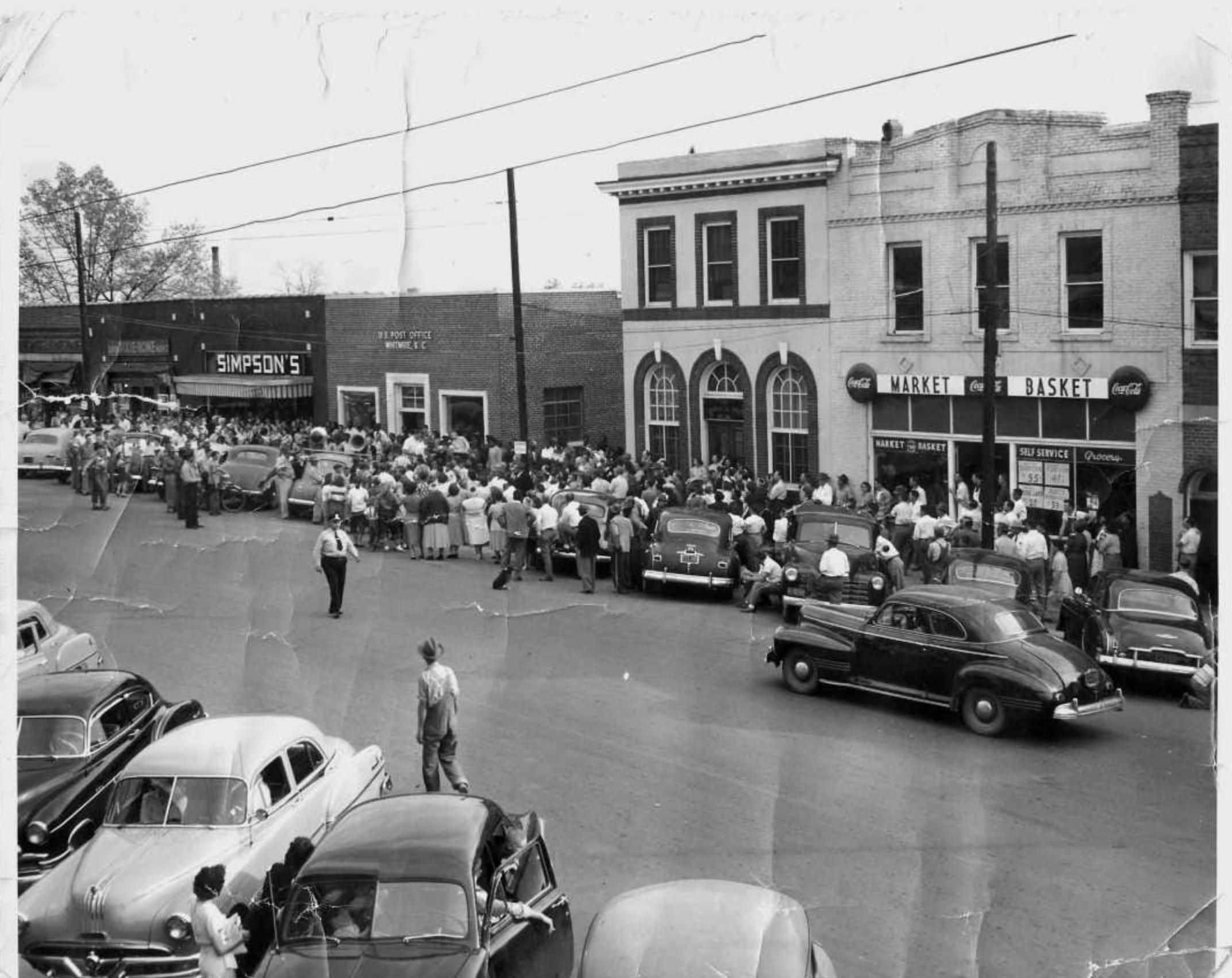
Downtown Whitmire, South Carolina Circa 1950’s
Nearly half of the people worked for JP Stevens, the cotton mill—the rest taught school, ran businesses, or were town employees; two doctors who ran the clinic and made house calls; a lawyer. You drove either a Chevy or a Ford (and drank either Coke or Pepsi) because that’s all we had and if a person drove a Dodge, they were considered uppity. For everything other than essentials, you drove at least seventeen miles—or fifty if it was a big deal.
After it had become clear that cotton did not adapt well to the red clay soils of the South Carolina “upcountry,” the Piedmont of the Carolinas evolved into textile towns. Virtually every town became a mill town, processing raw cotton (from low-country farms) into thread and woven cloth. Whitmire and the Stevens plant were home to spinning machines. If you entered the cavernous interior, you were enveloped in a small storm of white lint from the spinning process that turned raw cotton into huge balls of thread. We did not know it yet, but this cloud was inhaled by lifetime employees who developed emphysema and “brown lung” later in life. The noise was a deafening clatter, and many became hard of hearing. They worked in one of three eight-hour shifts, covering the full twenty-four hours of the day. They lived in small frame houses built by, and rented from, JP Stevens. It was known as the “mill village.” Life was basic and hard.
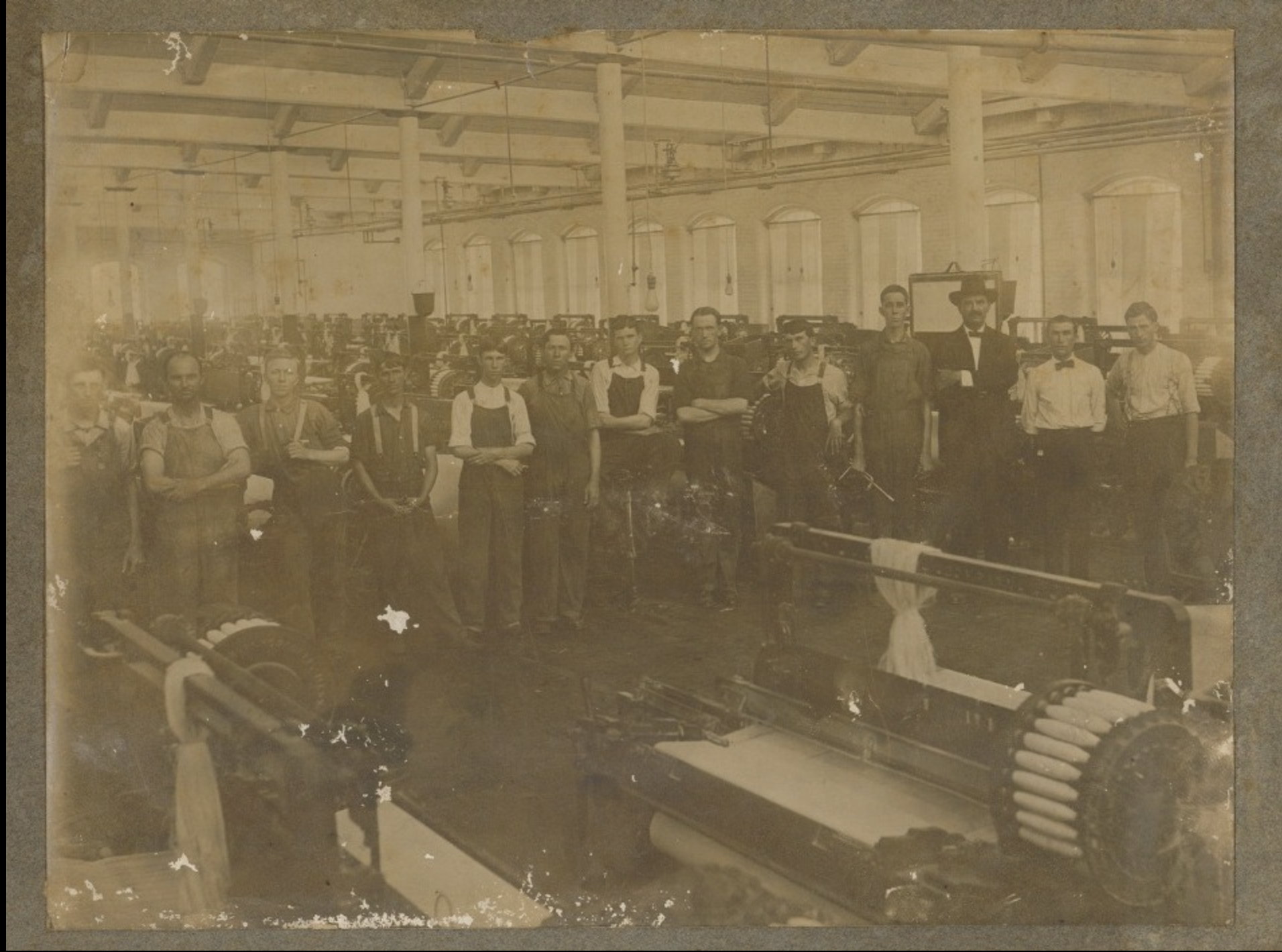
J.P. Stevens & Co. Mill Workers in Whitmire, SC
There was one major saving grace. In addition to paying the wages that drove the “economy,” JP built tennis courts and a nine-hole golf course that everyone played for free. We did not even realize that we were missing a country club—we were country. All other sports were school teams and fairly well-developed little leagues (in truth, we did not have enough kids to field a league. We played all our games in a larger town seventeen miles away.
I, a “towny” (because I did not live in the village), was the son of a schoolteacher and a father who originally worked for the family business—a Humble Oil, Esso gas station, a precursor of Exxon. Yet, I too was a beneficiary of living in a “company town.”
As a direct result of the gift I had been given, I played golf from around the age of eight and developed a very natural, free-flowing swing that repeated with no conscious effort—a swing formed, nurtured, and tested on a rolling, nine-hole track in the Piedmont of South Carolina. Situated on the banks of the Enoree River, there were no sand traps, and, in retrospect, the greens and fairways were adequate at best, subject to the changing seasons and the lack of a true groundskeeper (though I had nothing to compare them to). We did not know what we were doing; we just played and found what worked.
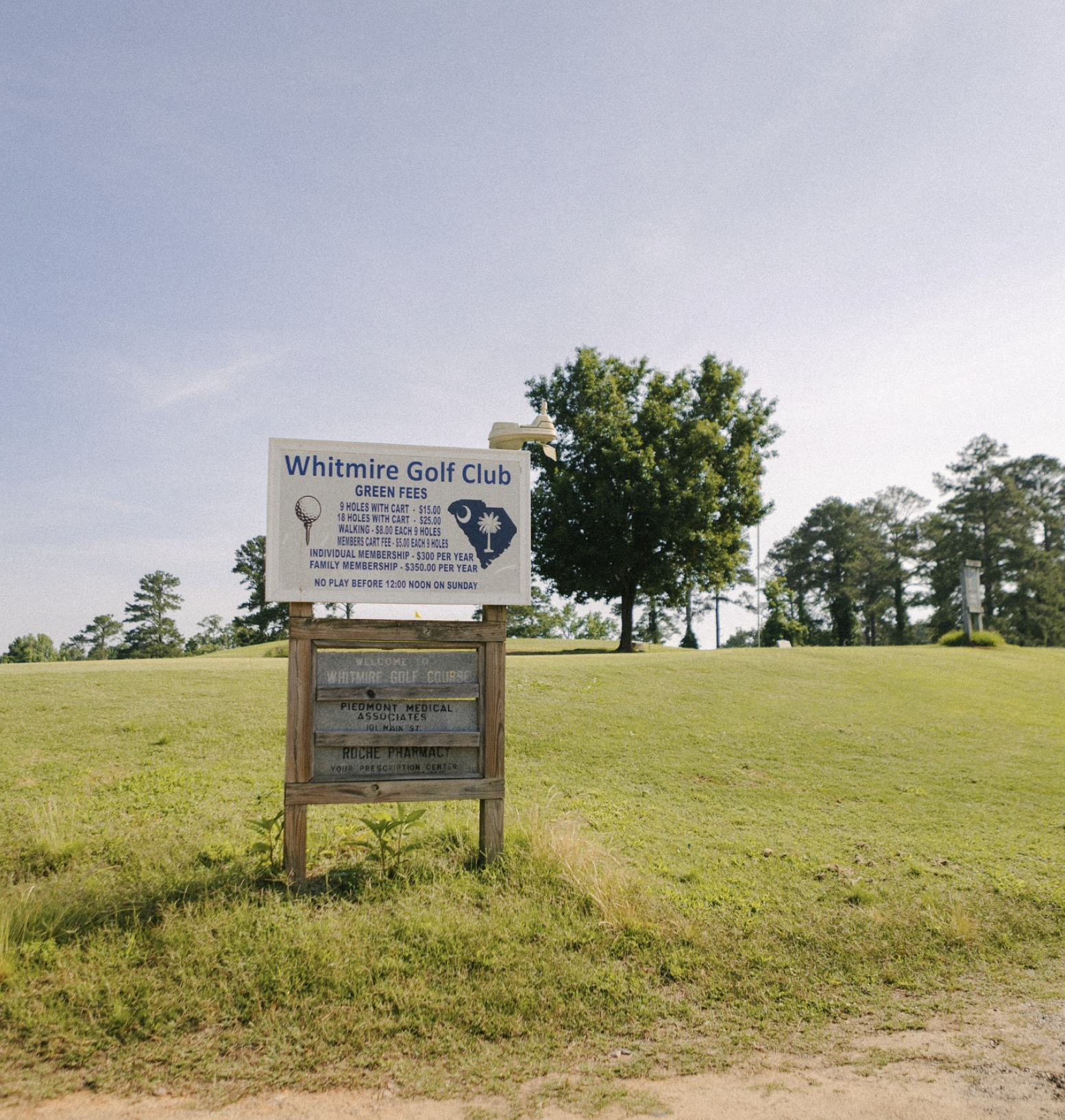
The course had been built in the thirties by the owners of the cotton mill. There was no clubhouse, no first-tee starter, but everyone in the town of roughly sixteen hundred residents could play for free with no starting time.
The course had no pro, but several experienced players to pair with if they were not hard at work. There was no “sporting goods” store, so clubs were either handed down or ordered from the postmaster, who charged no fee to obtain equipment from an unnamed source. You picked them up from the trunk of his car. (I have no idea whether he marked them up, but it did not matter—we were playing in the wilderness.) I began with a hand-me-down set from my father. He gave no history of the clubs or his proficiency in the game.
My friends and I learned from simply playing. I now think that might have been the best way. We played the course and certainly compared our games with each other, but I remember no rivalry. Occasionally, we would pick up a game with an old guy or two. Being young and strong, it was quite a surprise when one seemingly ancient fellow beat us with his short game. I would come to covet his skills later on.
One can get pretty good simply by playing. We made lots of pars, probably some birdies on the easier holes, and could regularly hit drives over a large corner pine at the dogleg par five. I never bothered to actually measure, but based on the length of the hole and the short approach if one successfully negotiated the lonesome pine, one might conclude that we, as pre-teens, were hitting it 250. When we got tired of the layout, we would play it backwards, much to the dismay of our elders.
Much later, in the twenty-first century, I discovered a young professional named Kevin Morikawa. He was an extremely creative shot maker. He seemed like a player on the rise. I read about him and discovered that he learned the game early from a teacher who did not think much of the practice tee. Rather, he took his young student to the course, where he made him play shots from several fairway positions on each hole. They talked strategy, club choice, and side-hill lies. He learned the game by playing under real conditions. Looking back, that seems to be a better way of discovering the game itself. It certainly worked for him—a future British Open champ.
My memory tells me that due to our regularity of play and ever-increasing knowledge of the course and its eccentricities, we measured ourselves against par. It would not surprise me to learn that as we grew in stature and into the game, we often came close to par—never realizing how fine a thing that was.
I do not even remember what our scores were. We played the course because it was what we had, and, since in the fifties there was no reliable state or national source of sports news, we had nothing to compare our experience with. The game was the thing (along with our baseball, football, and basketball). It was a small town. In order to field teams, everyone played every sport. We had no city leagues and drove seventeen miles to nearby Clinton for little and pony league competition.
So, for this one person, regardless of the context, the “game” was an absolute luxury (and I had a lot to learn about the beauty of personal accomplishment.)
Playing is the word, whether golf or any of the other sports. Small town life taught me that organized physical activities are much like life—cooperation, ups and downs, successes and failures, testing your capacity to adjust to ever changing challenges, and that “tomorrow is another day.”