
Breaking News, Just in
By Clay Hipp
A riddle for the students and a personal reckoning
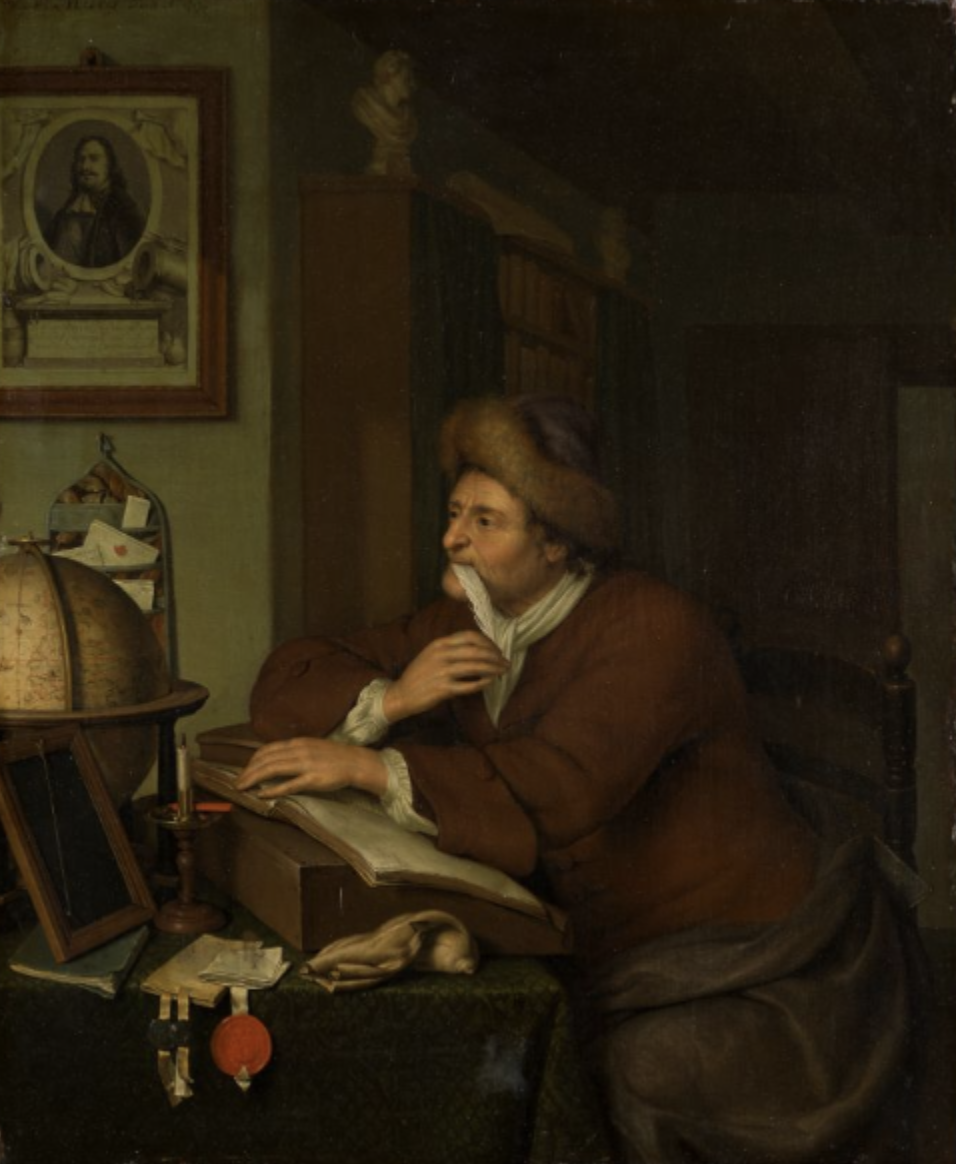
A Scholar at His Desk, 1652, Ferdinand Bol
I mentioned in a recently that I had been offered — and had accepted — an opportunity to return to the classroom. If you'll humor me, I'd like to offer the back story.
Some of you know that I retired from Wake Forest University’s School of Business several years ago. I was mostly ready. But immediately missed the teaching part. (The meetings and the bureaucracy and the committees, the end-of-semester exam grading? Not so much.) I missed the collegiality, too. In those first few years I often wished I could teach a class again but it never happened.
Then, suddenly and without warning, in the second week of August, an e-mail arrived from the dean of the business school: "Might you be interested in teaching a course this fall?"
I believe I replied, "Not only interested, but delighted." Two days later we were in Charlotte with some old Wake Forest friends, and one of them — a former dean himself — said, "You should call her." I did exactly as he prescribed and an hour later accepted the position in the car on the way home. The written offer came early the next week; I was delighted by the terms and signed it without delay.
Classes started the week after that. I was barely able to cobble together something resembling a syllabus. I met with two classes last week. Right place, right time — or so I thought.
The course is called The Legal Environment of Business, the mainstay of my teaching career. Piece of cake (or so I thought). And that was the very moment reality struck home: the legal environment of 2026 bears essentially no resemblance to the one that existed in 2018. I immediately knew I would have to reinvent the class on the fly.
On the first day, by way of introduction, I gave the students a riddle:
I have been teaching this course for forty years, but this is my first time.
"Think about it for the rest of class," I told them, "and tell me your solution." Then I promptly forgot my own promise. I dismissed the class and watched them file out with the obligatory, courteous "thank you" and "farewell." But two young women paused in front of me. "So what's the answer?" one asked. "To what?" I said. "The answer," she repeated. Seeing my troubled expression, they tried again: "To the riddle! We want to know." I apologized and asked them to remind me at the start of the next class. They were kind enough not to press the issue.
Two days later, I offered them two ways to interpret the statement. The first — obvious by now — was the time away from the lectern. The second, more important, was clearer to me than to them: the class you would have attended in 2018 is obsolete. Since Covid — and amid sweeping change across the executive branch, Congress, and the Supreme Court — the way we govern and make public policy at the national level has altered how we create law itself, and how we order our relationship to one another and to regulation.
“Of course”, I said, “you have no way of processing what I have just said and it will be my duty to help you to understand the radical changes that we face, and must react to as a people, and hopefully to find solutions for the common good.”
It was at that moment that I realized I would become a student too. The class would be my teacher; the changed world, our syllabus.
When that class ended, I knew we were only at the beginning of the quest. My personal and professional life was altered . And I was, bit by bit, beginning to see a way forward. Please wish me good fortune as I try to navigate — at least — the surface of those troubled waters.
Perhaps I'll share some of the particulars as they arise and seem worthy.