
Everything Worth Saving
By Clay Hipp
Solnit’s quiet challenge, a reason to begin
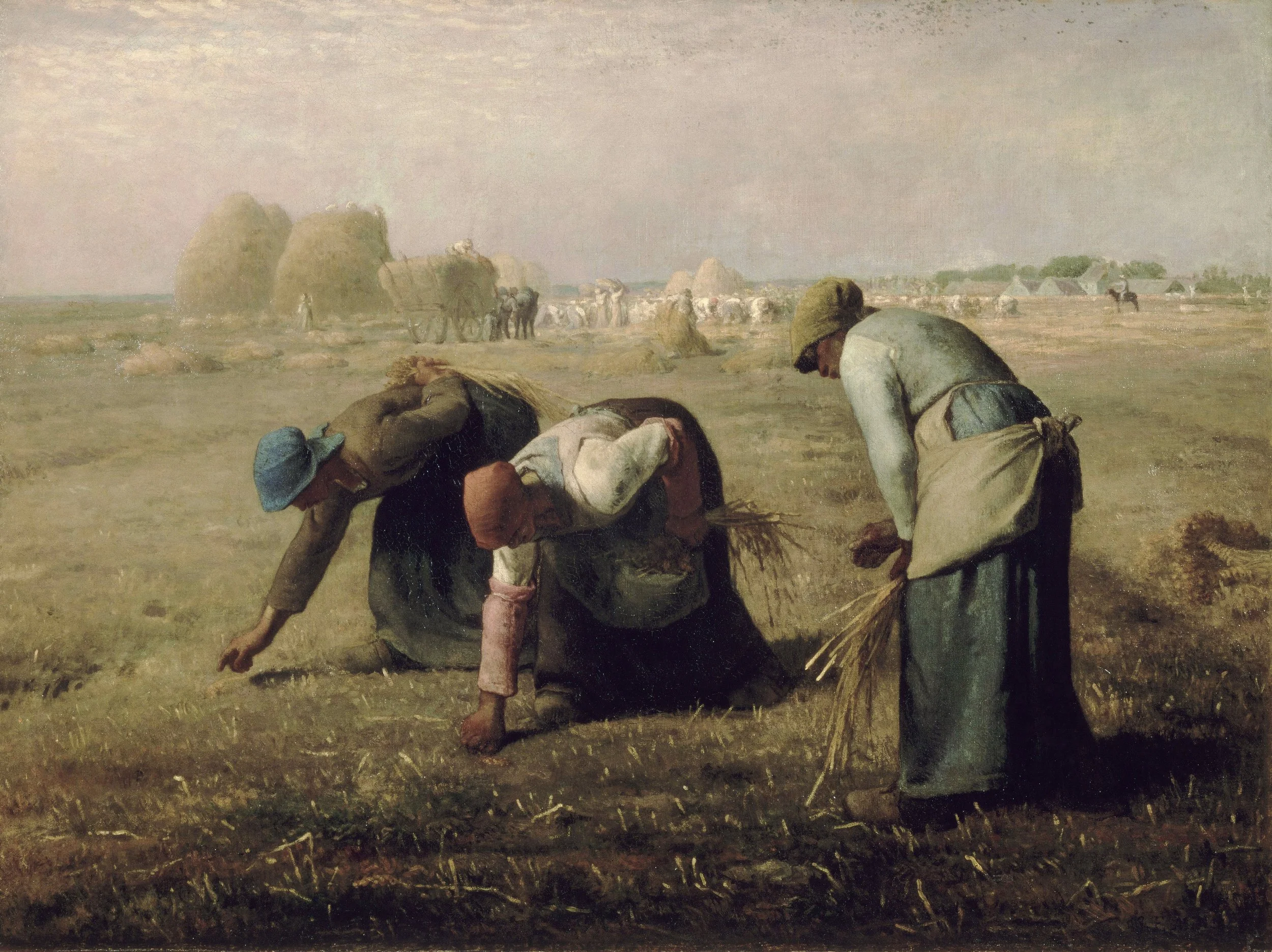
The Gleaners, Jean-François Millet, 1857
I have no interest whatsoever in being an "influencer." In fact, I think it is becoming a dirty word — one created by our market-based economy and, yes, our society.
It is rooted in inflated egos that seek favor not by improving the lives of those around them, but by gaining personal benefits at others' expense.
Look around you as you "consume" the news. The word pops up everywhere. We are so insecure about almost everything that we are willing to take advice from anyone with even an ounce of fame or fortune.
The problem? We are giving up independent thinking.
We want simple answers to difficult questions — and in the process, we seem perfectly content to be manipulated. The result? We become a part of the machine. And the machine cares nothing about our individual wellbeing; it cares only about conformity, so that we can be led by the collective nose ring. Wisdom, in this world, is merely conventional — accepting things as they are, because radical change is hard.
The single most impactful "influencer" of our modern age was Milton Friedman, of the famous Chicago School of economics. He was, in essence, a deeply fundamental thinker — simple in the most dangerous sense of the word. He announced what he considered an essential rule of economics:
"The sole social responsibility of business is to increase its profits while engaging in open and free competition, without deception or fraud."
He argued that corporate executives are agents of shareholders, and that their duty is to maximize shareholder value — not to pursue social goals. He published this in the New York Times in 1970, and found a very receptive market for his idea. It simplified everything: individuals and businesses need not be distracted by moral considerations in their decision-making. It appealed to the American ideal of individualism. It has been the prevailing gospel ever since. We bought it because it is easier to accept than to contemplate another way — even as we know, somewhere in our bones, that it is the root cause of many of our deepest problems.
If we are going to create a new, kinder world, we must first learn to visualize what it might look like — to actually care about one another. For me, one major first step is to stop watching, or to give up altogether on, the everyday news as handed down by our major media outlets. They are, in the end, corporate influencers who must make money to survive. That means attracting and keeping audiences — which means telling us only what they think we want to hear, whether good or bad, rather than offering the balanced, honest content our Constitution is supposedly protecting.
I have a suggestion. I knew the name, but until recently had not read her work. Please consider picking up The Beginning Comes After the End, by Rebecca Solnit. One reviewer puts it this way:
"The book shines a light on the vibrant world often hidden within our own seemingly gloomier one — a world that has embraced ideas of interconnection, ecological care, and political equality. It's not a naïve book — Solnit is keenly aware of the challenges we're all facing — but it provides a stabilizing counterweight to the feeling that the world, of late, has spun dangerously off-kilter."
Watch also the interview Solnit gave with David Marchese in the New York Times, in which she clearly and accessibly explains the title and its message. He asks a question that seems written for exactly this moment:
"When people are reading the news and it's making them feel as if they're barreling into a grim dystopian future, what additional context should they have that would help them complete the picture and show them that there are deeper currents of positive change happening?"
Does that not sound like exactly what we need — and precisely how many of us are feeling right now?
In that same interview, Solnit offers a thought I haven't been able to shake:
"One of the great weaknesses of our era is that we get lone superhero movies that suggest that our big problems are solved by muscly guys in spandex, when actually the world mostly gets changed through collective effort."
The counter to what ails us, she argues, has always been civil society — not a single savior, not an Übermensch, but the slow, patient work of people caring for one another. She invokes Thich Nhat Hanh, who said before he died that "the next Buddha will be the Sangha" — the community of practitioners. Maybe changing the world looks more like caregiving than warfare. Too many of us still expect it to look like war.
It has turned my mind around. Perhaps it will do the same for you. Perhaps we can begin to escape a world that is wholly political — all the way down to the ugly bottom. The great, reasonable middle — the people who represent good sense and genuine caring — just might become the true source of wisdom, as it always has been. But that middle must live it, speak it aloud, and use the power of the ballot.
"Everything we can save is worth saving. Everything we can do is worth doing. We've already lost a lot, but we don't have to lose everything. We don't have to surrender."
Let us start today to seek that new beginning — the one waiting out there, hidden behind the dangerous belief that this is the end. There is already too much pie-in-the-sky, revolutionary talk being tossed around. Solnit is not an out-of-touch, egoistic influencer. She is a true thinker who has spent years working on these problems, and who speaks directly to who we are and who we might still become.
Want a ray of light? Read Solnit. Watch the interview. Then go do something — together.