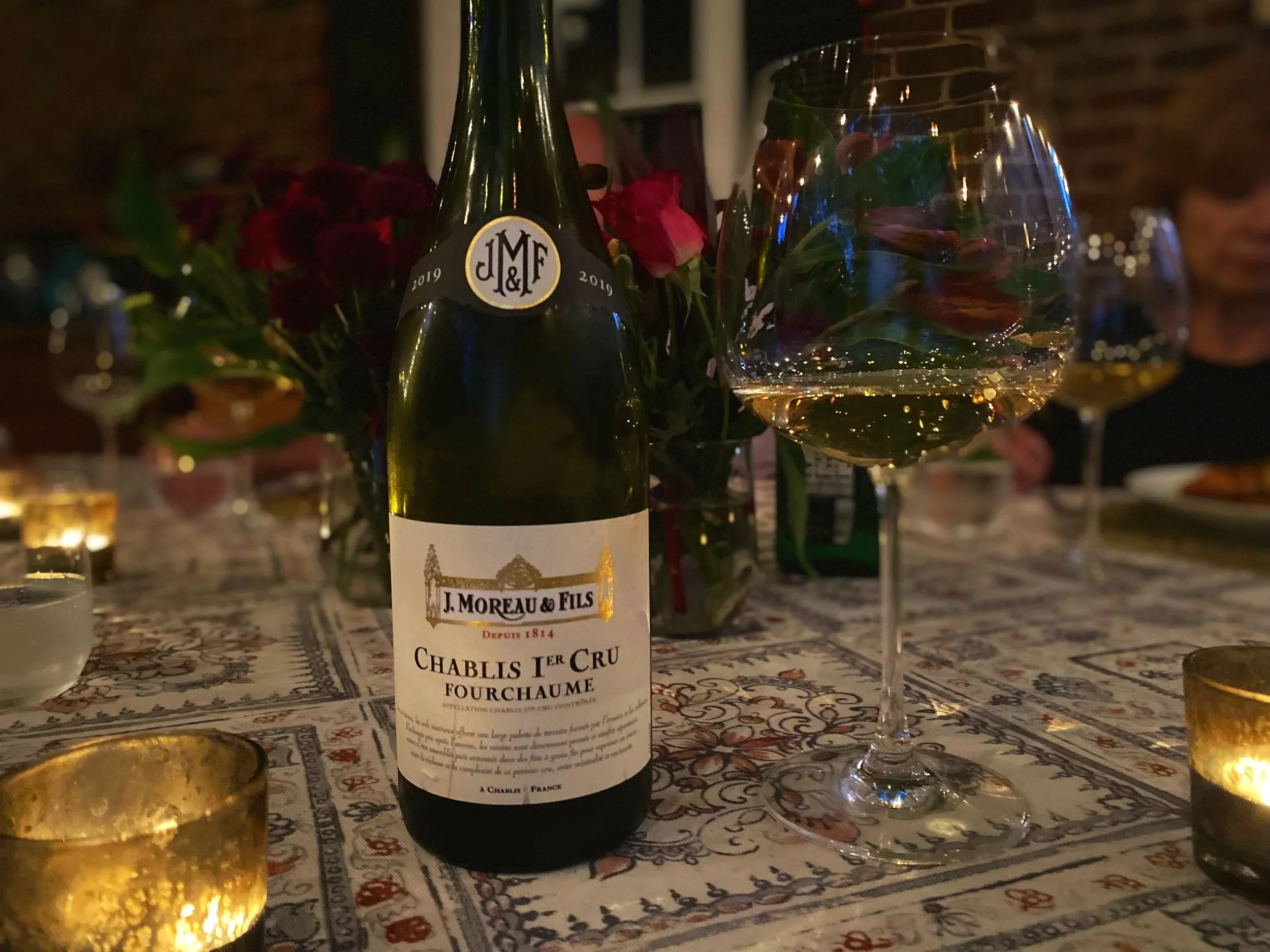
A Picture Worth A Thousand Words
The journey from a single image to a lifetime of discovery, friendship, and presence at the table.
by Clay Hipp
Dear Reader,
"A Picture Is Worth a Thousand Words”,
well, I can do better than that. If I wrote a book about it, it would be named:
'From Dry as A Bone to Soaking Wet — in a Decade'.
Being a journey to a thousand bottles,
fifty years of good friends communing around the table,
many miles of travel to pastoral places with rows and rows of bright green and red,
and eighteen years of soirées with home-cooked cuisine, flowers and candles,
and a crystal glass reflecting the light and a shining face.
After returning from Southeast Asia and entering graduate school, a friend said, "I am going to teach you wine appreciation 101."
You see, I grew up in a Baptist home, went to a small men's college, did not join a fraternity, and entered the army after ROTC. Somehow, I never drank a drop. My first beer was at the officers' club at Fort Eustis, Virginia. In Vietnam, I wanted so badly to get drunk — but a beer and a half was all that I could stomach.
Yeah, I know. Sounds like a fairy tale.
The friend said, "Why don't you come on over and we can get started?" Unfortunately for me, he drank mostly Bordeaux — one of the most tannic, herbal red wines, with very little fruit. I could barely even swallow. I said, "Be patient with me. Let's try again next week."
When I arrived, he was on the phone and motioned for me to sit down in his empty den.
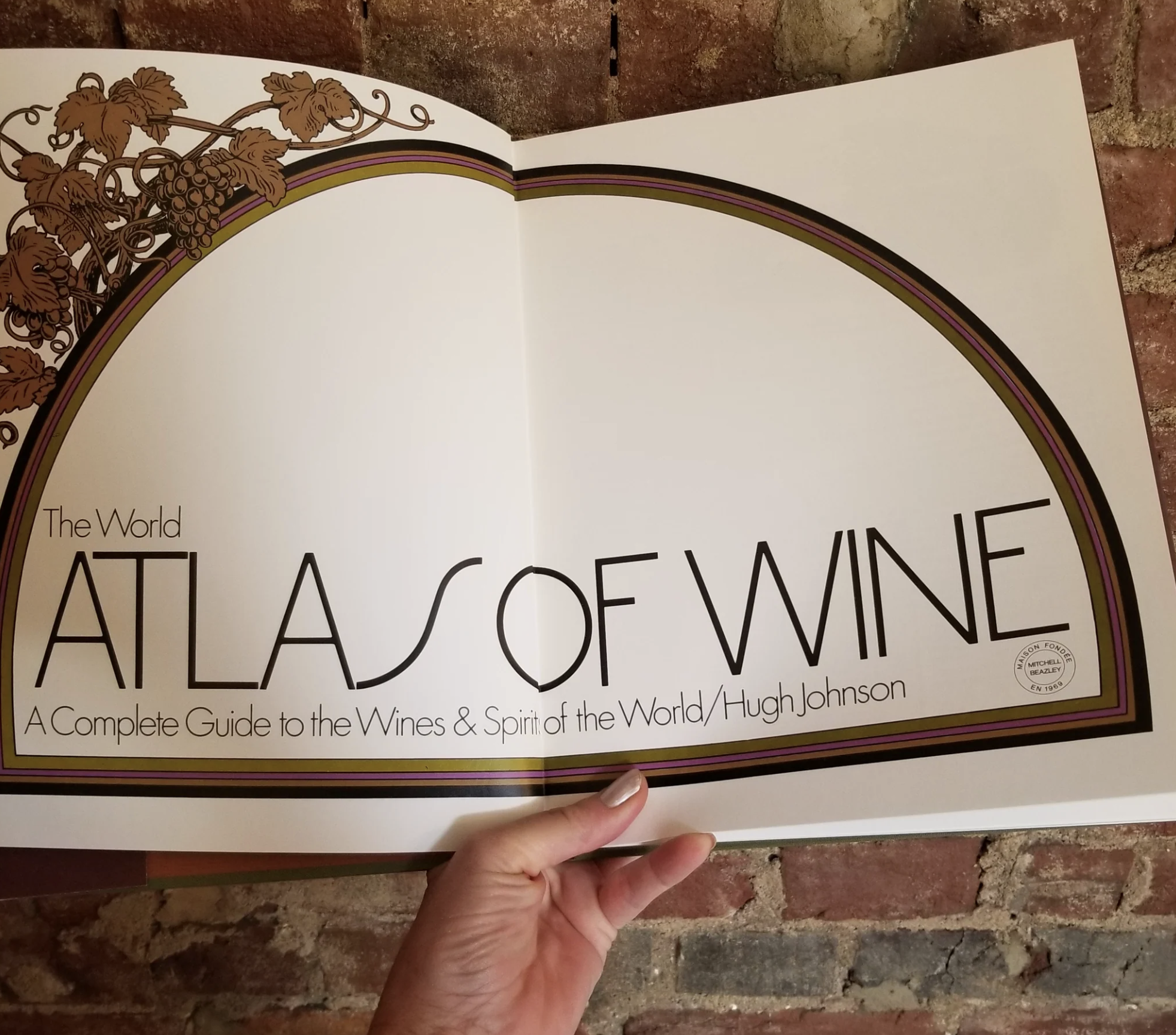
There was the traditional coffee table on which, of course, there was a very large tome. On the cover was a globe, a bottle, three beautiful glasses of different shapes and sizes filled with various colors of liquid, and a bunch of dark grapes. As I sat waiting (turned into about a half hour), I thumbed through the pages, visiting country after country.
It was a beautiful book with pictures and topographical maps and well-crafted commentaries. I came to a chapter entitled Burgundy.
As I turned the first page, I was taken by a photo of a wine barrel turned on end being used as a table. The scene was dimly lit with candles as the main source of light. On it stood a bottle, next to which was a delicate wine glass half-filled with a green-gold liquid. It must have been cool in the room (a cellar probably) because the glass was fogged up, and a single, large drop was tracing its way down the side.
“I sat transfixed. I could not take my eyes off the aesthetics of the scene. I remember thinking: “I must find out what and where this is.”
My mind's eye recalled the green-gold color and the dim candlelight filtering through, and I was haunted for days. I checked, and the book was not cheap. Fortunately, Christmas was coming, and a copy showed up under the tree. It must have weighed several pounds. I devoured it for days (I was out of school for a couple of weeks).
Here is what I learned.
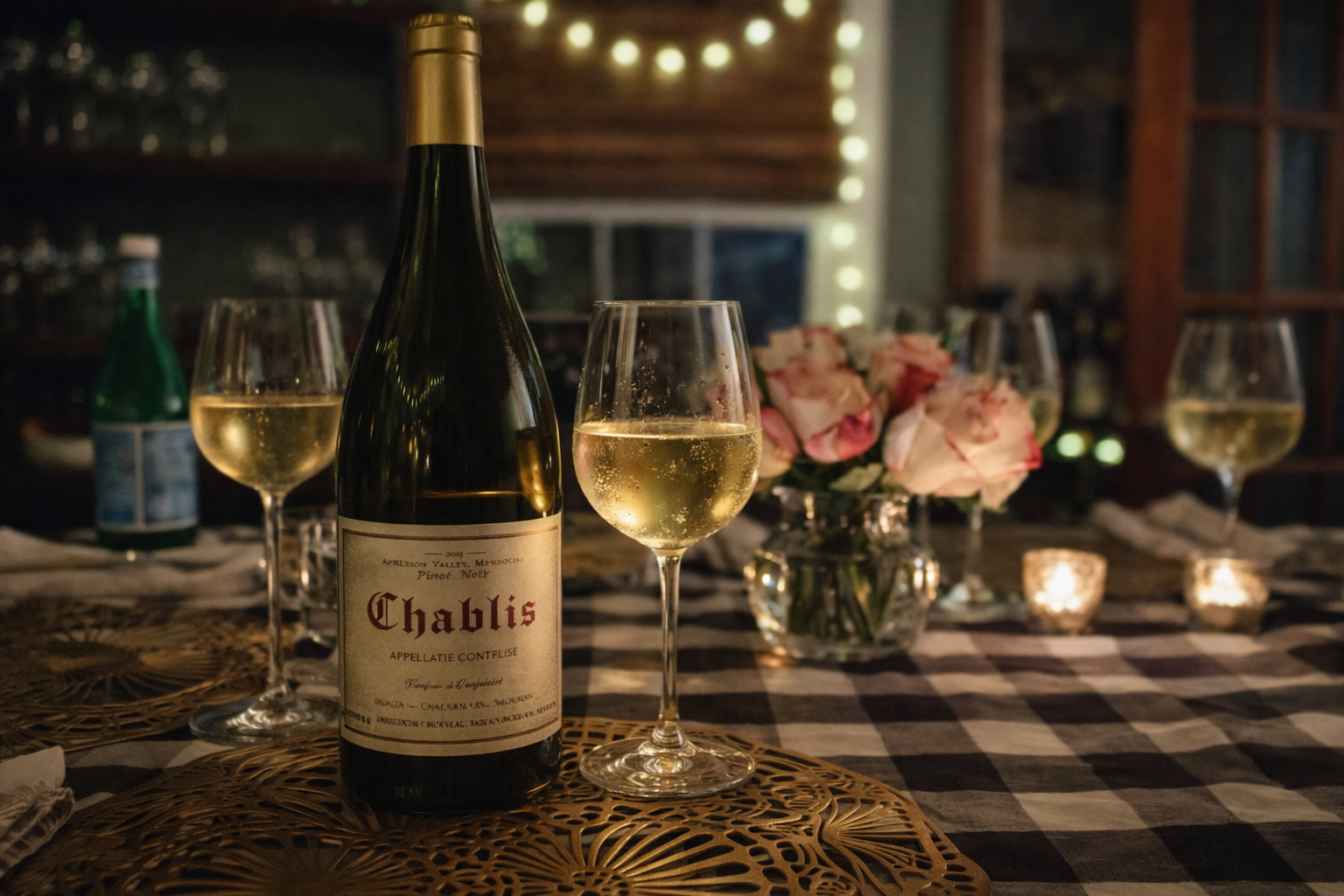
The wine was a white Burgundy from a sub-region named Chablis. The color was typical of Chardonnay, but especially from that region — the northernmost, coolest place. I searched the map and found out that the best vineyards were on south-facing slopes that collected and held the sparse heat of the sun. I think that I memorized the names of the nine "Premier Cru" vineyards.
My friend told me not to get my hopes up. Chablis was limited, and the per-bottle prices were shocking. Being a student on the GI Bill, I could only dream.
I dreamed.
All this is to say that I was "hooked." I had hardly tasted a single bottle, but the idea of wine was sweet in my mind, even though the prospect of swallowing was daunting. The magic of the book was that it was a true "atlas." It took one on a virtual tour from country to country. And because the maps showed contours, the sights — though flat — suggested what walking the properties would feel like. Though I was still completely wine "illiterate," the road was clear and the journey had begun.
I still had several years left of school, and soon the relative "freedom" of academia opened up.
The next decade was filled with opportunity. Before it was over, I had made myself something of an expert (on paper and in theory, that is). Because of the low demand for wine (the industry was still recovering from Prohibition), the reasonable cost of land, and before the boom of the eighties, one could drink both European and domestic vintages at prices that today's consumers would swoon over. Very fine California Cabernets and Chardonnays could be had for as little as five dollars a bottle.
This made it possible for me and my friends to buy and taste like kings and queens.
Before 1980 came, I had taken trips to California and Europe, furthering my experience by visiting the wineries for free tastings without ever having to purchase. If this sounds like paradise to one who cares about the elixir, they are right.
By the close of my first decade, I could boast a decent "cellar," which grew quickly to a thousand bottles or so (yes, I can do the math). When folks would ask, "What are you going to do with that much?" I came to say (with a twinkle in my eye), "When one has a bottle with dinner each night, that is only a three-year supply."
One miraculous picture created a lifetime of pleasure and the ability to share a glass and reflect on the places I have visited and the wonderful wine people I have gotten to know.
They — who have toiled in the "dirt" — created precious memories for our (and their) benefit, out in the open air with the sights and sounds of numerous animals (neighbors) of the sky and forest.
In the last eighteen years, that gift of the soil and the sun overhead has been paired with a love of the table and the communion that happens there. We adore cooking and sharing and having a safe and comfortable environment in which to retreat from a world not so embracing. A place to grow and become closer. A place to have actual encounters. A place where the world is not so created by mankind but still imbued with the essence of where we came from.
It is a place of true "presence" — one full of human voices, not artificial sounds. It nourishes our bodies and souls.
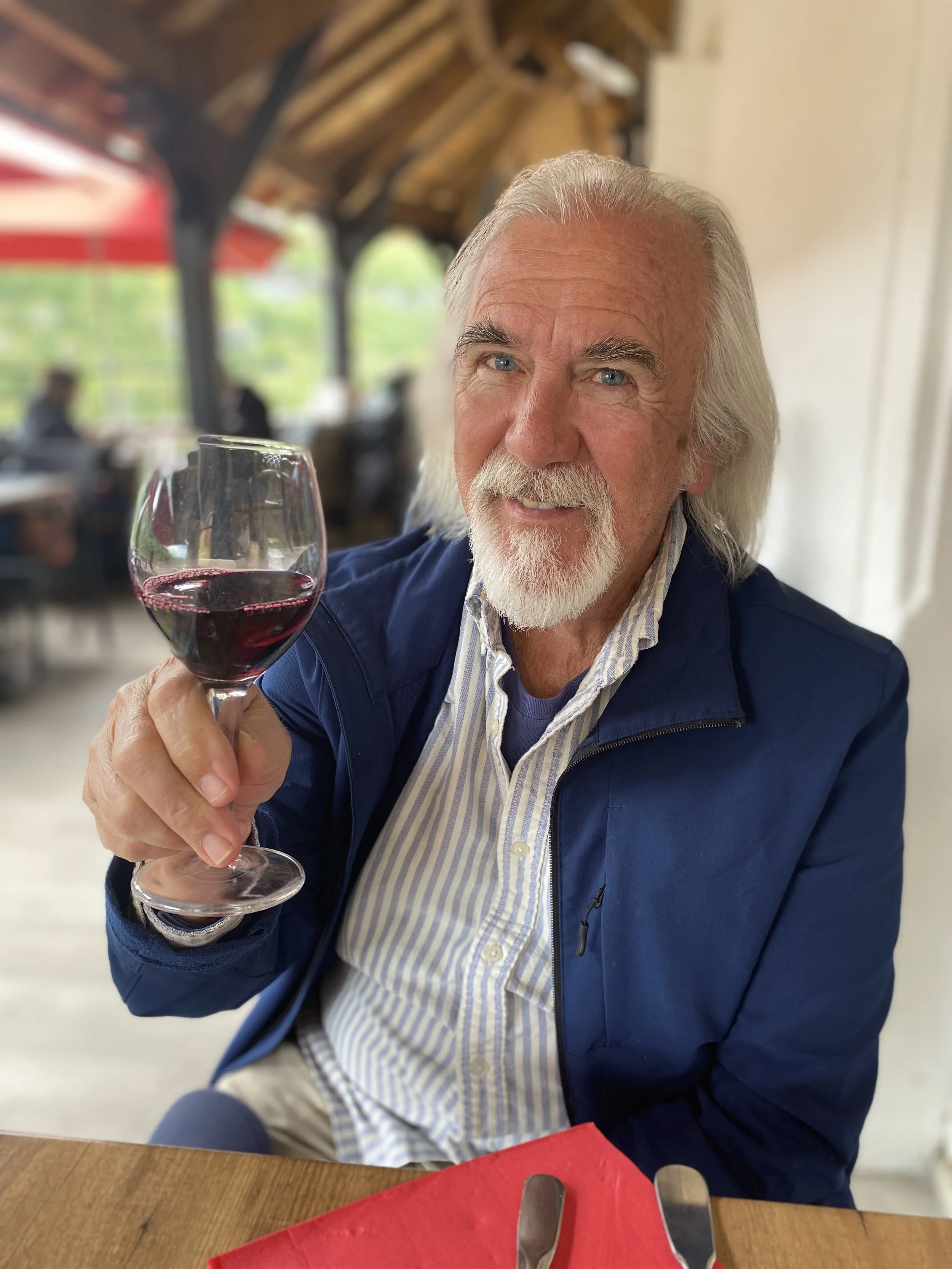
Would that we could raise a glass to each and every one of you and find that we are not as different as it might seem.
Wine, when made by caring stewards of the earth, is one of the most natural beverages that exist. Each grape contains sugar and juice inside, and natural yeasts on its skin (which add enticing flavors and aromas). Fermentation occurs with no help from us — creating alcohol and carbon dioxide (which help stave off spoilage and keep it fresh). It is the stuff of magic.
Our ancestors have been making it, and praising it in song, for five thousand years.
- ✦ -
And so, I raise a glass of golden Chablis to you, my dear reader:
in salute to episode one in a "story of a life" and…
— For pictures that open doors
— To the friends who invite us through them and
— To the worlds we might discover on the other side
May you find many kindred spirits along the way — and may you know the joy of presence at the table that such gatherings bring.
Santé!