
The Story of a Life
Taking Your Own Advice
How listening deeply changes everything
by Clay Hipp
Dear Reader,
For the last two Fridays, I have posted a two-part show on Words That Sing, my music blog.
The subject was "The Story of a Life"—featuring a group of songs that explore our past, present, and future in order to better appreciate how we, over time, "create" our own human existence.
My purpose was to show how the lyrics of songwriters might guide our thinking and perhaps engage in some reflection to see how things are going.
Now, I find myself thinking of little else.
Perhaps you have not (yet) bought into my idea that poetry in general, and song lyrics in particular, are where true "wisdom" lies. We can accumulate tons of knowledge from reading non-fiction, and much inspiration from novels and short stories, but "poetry speaks to us in mysterious ways unlike the others." I am no expert at literary criticism.
If you want to explore my bold statement, turn to the myriad writers who will be more than glad to offer their erudite opinions. My thoughts are instinctual.
Here is my point:
Words are all we have to attempt to express our ideas. More is not necessarily a good thing. Take any subject. Choose your favorite writing approach and style.
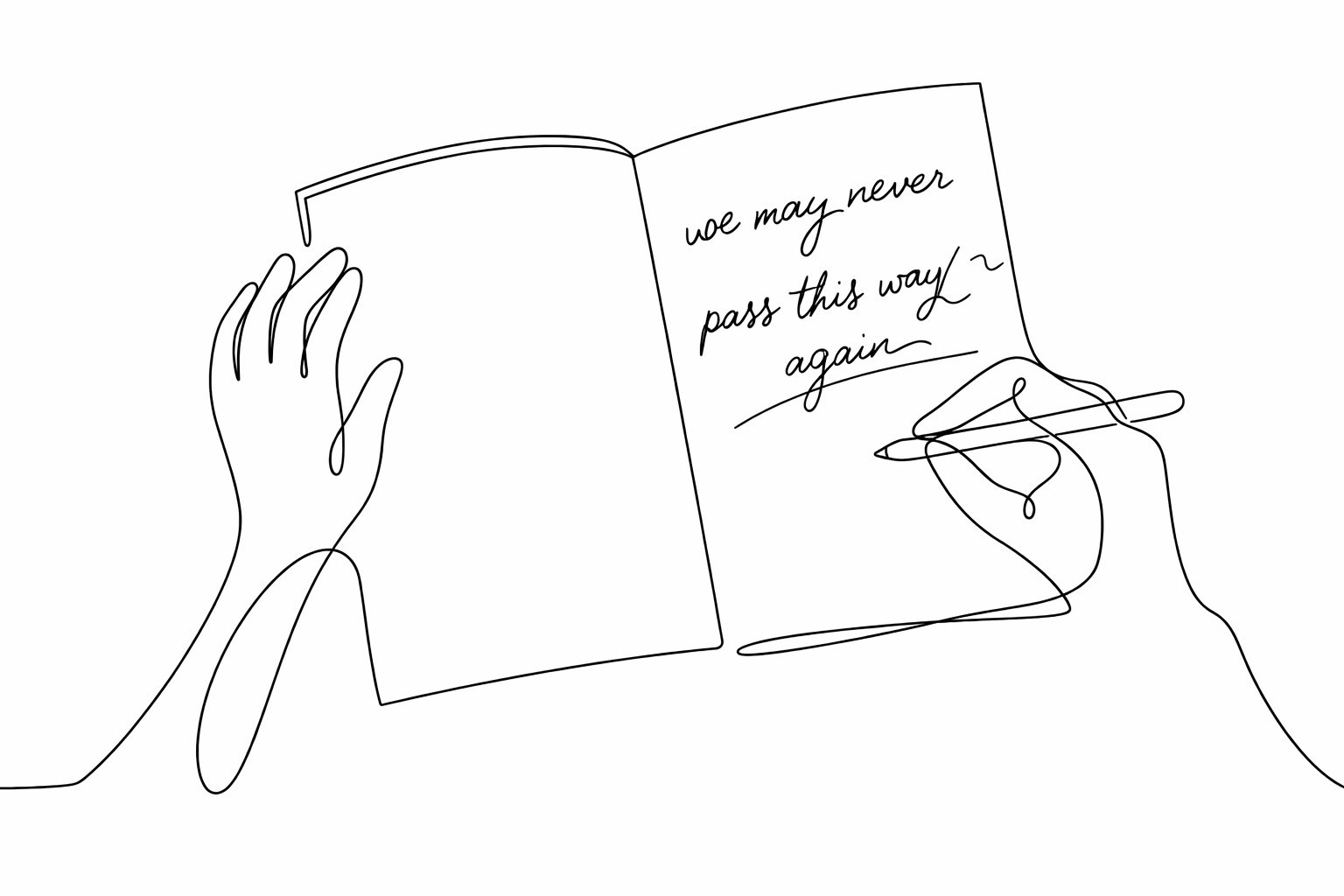
“A great poet can sum up a page of your verbiage in a single verse. ”
The great poetic voice "suggests," with enough spaces among the words, to engage your very mind, your consciousness, and to encourage reflection. The poet is not tempted to "prove" anything or presume to speak truth. That part is left to the creative reader.
My admiration for song is suggested therein, but with another huge enhancement.
Music is also a form of language.
A song delivers lyrics to the mind in yet another "mode" and, probably, to different parts of our brains. One need not "think" in order to receive the melodies and harmonies; they are simply delivered aurally.
If one is astute enough—or if we listen a second time—we begin to notice the interplay between the two.
This phenomenon is something we must spend more time on down the musical road.
For now, I will just say that experiencing the poetry this way can be a revelation to anyone who just "likes" songs. There is certainly nothing wrong with that.
I merely suggest that experiencing music and poetry this way is worth the effort.
Let me offer a corollary.
I recently read a book written by someone who spent a decade or so as a guard at a major museum of art. As he spent more and more time in the presence of beautiful paintings, he began to experience them in a new way.
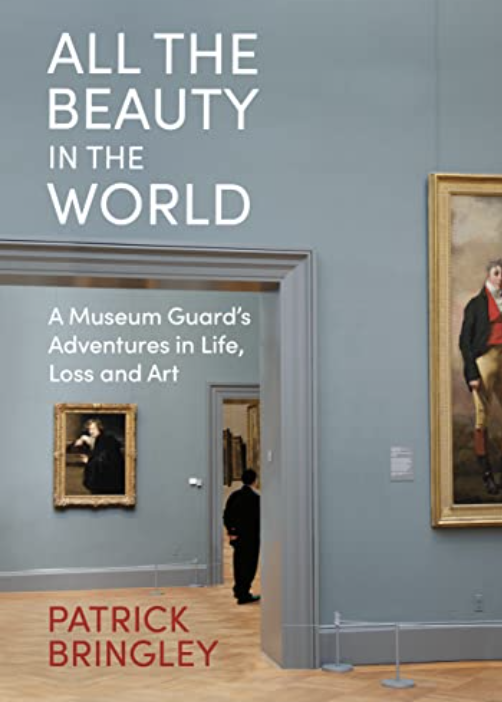
They became not just whole pictures that one preferred or did not.
Rather, he began to notice the details of the artist’s brush strokes.
The parts took on a whole new level of interest.
Now I love beautiful art myself, but I never studied or practiced it. I never became "enlightened" enough to appreciate "modern" art as a genre.
But on a recent trip to Vienna, I walked through a thoroughly contemporary art gallery and, due to his tutelage, began to see some of the paintings with a different level of appreciation.
The parts became as wonderful as the whole.
That is what I am attempting to communicate about the art of song.
As a result of my trying to raise my listener's consciousness of the wonder of great songwriting, I myself began to experience it more deeply.
I wanted, with them, to understand the nature of our lives more deeply.
Allow me an example from the recent shows.
They were arranged in three parts:
the past (memory)
the present (choices)
the future (planning)
That is only a simple way of describing the experience.
The centerpiece—“Present”—suggested, through a handful of selections, that we, in essence, create ourselves.
I then tried to stimulate reflection by demonstrating our various modes of looking inward in order to see if changes might be beneficial.
As I experienced the program with them, it became clear to me that one of the songs pretty much summarized the whole message.
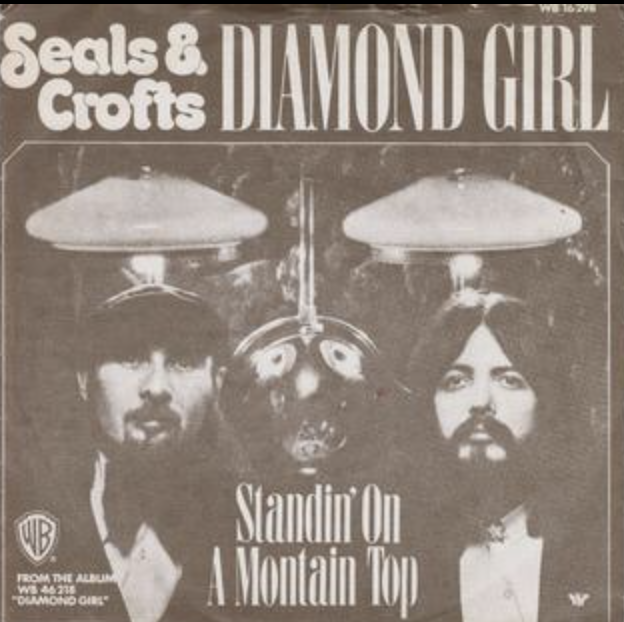
“We May Never Pass This Way Again” by Seals and Croft on their 1973 album Diamond Girl.
Here are the pertinent verses — please read them slowly and contemplatively.
“Life
So they say
Is but a game and they’d let it slip away
Love
Like the autumn sun
Should be dyin’
But it’s only just begun
Like the twilight in the road up ahead
They don’t see just where we’re goin’
And all the secrets in the universe
Whisper in our ears
All the years will come and go
Take us up
Always up
…
Dreams
So they say
Are for the fools and they let ‘em drift away
Peace
Like the silent dove
Should be flyin’
But it’s only just begun
…
So
I wanna laugh while the laughin’ is easy
I wanna cry if makes it worthwhile
I may never pass this way again”
For me, this covers the waterfront.
It can stand on its own in trying to say to you: "pay attention" to the important things.
For some unknown reason, I almost left it out until I heard it again.
One must experience the whole song to "hear" the artistry —the harmony, the instruments, the dynamics of the arrangement.
If you hear it, I dare you to try to get the chorus out of your head.
And then the message becomes clearer.
The song did for me what I wished for my listeners: don't be "late for your life" (Mary Chapin Carpenter). I urge you to take the time to listen and see for yourself.
A song to the wise…
A Footnote:
After retirement, when I started to try to write creatively (instead of professionally), I did not know where to start. I chose to begin with a kind of memoir (though I was not quite sure what that meant at the time). I called it simply "For my children and grandchildren." I thought that they might sometime want to read about my growing up years. It has grown as it proceeded.
What I had not realized was that doing this actually aided in remembering things that I had not thought of in years. I have not chosen yet to share it, though I think it worthy.
Looking back to that point six or so years ago (and rereading some of it), I have realized two things:
It is very "narrative" in style.
I got at least as much from the writing as I hope my readers will.
I believe since then that I have learned to be a better writer—moving from mere narrative storytelling to become more facile, thoughtful, and to become more aware of when it is good and when it needs improvement.
Also, a final piece of advice….
start writing, even if you do not think you can.
If nothing else, you will be creating a gift to yourself—telling the story of your life to the one most able to appreciate it, and understand what it has been, what it means now, and perhaps, what it might become.
— ✦—
I firmly believe that the story of your life is not something that happens to you. It is something you create, one moment of attention at a time.