
Games Versus Sports
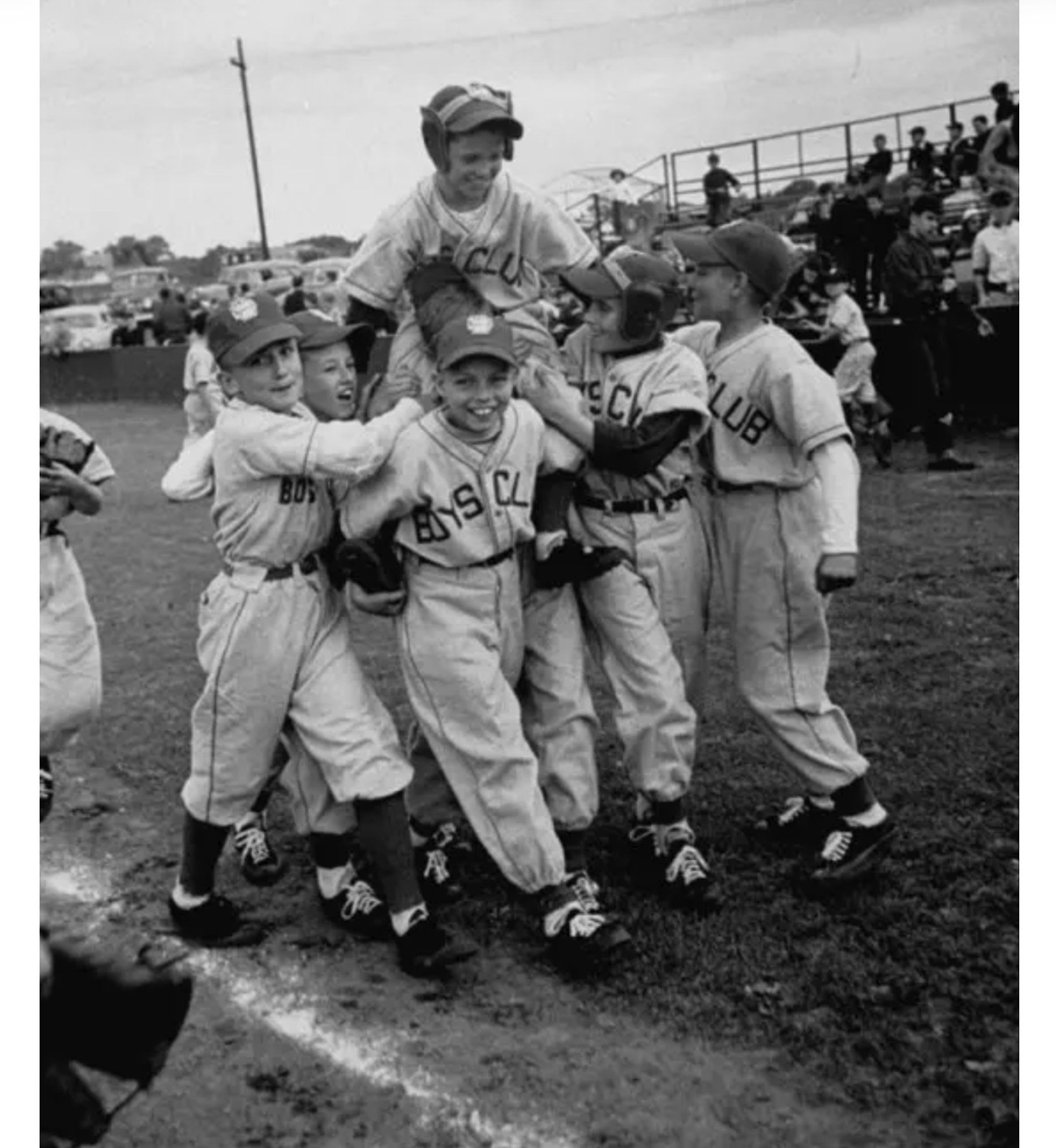
The bowl games are behind us; the Super Bowl has just been played; the NCAA basketball championships are almost here; and spring training is just beginning.
It got me thinking about how much I used to enjoy this time of year.
How times change.
Some of my friends are aware that I have pretty much given up interest in following sporting events. There are several reasons that I find myself there.
In my forties, I suddenly felt the need to wean myself. I realized that being a fanatic about teams—and the nature of competition and winning and losing—was having an essential effect on my mental well-being.
I remember saying to myself, and then to others, that I did not like having my days—and the mornings after—controlled by a bunch of twenty-somethings running up and down courts and playing fields (my very state of mind was altered!).
It was especially bad when it involved a team to which I had some kind of loyalty. When they won, it was great. When they lost, the effect could last until noon or so the next day!
My first home remedy was to limit the number of games I watched live.
Toward the end of my agony, I began to give up one sport at a time. For those teams I could leave (such as the Braves), I started waiting to find out the result until the next day. That proved therapeutic—no matter the score, I had no power to change it.
Celebrate the victories. Let the losses slide off my sports back.
I still keep up with my baseball team, but the rest is virtually irrelevant.
Wow. Who says an “old dog” cannot change his ways?
But I now realize that I did not so much consciously give it all up. Rather, something drove me away.
I think it was the whole American thing about winning and losing and the seeming desire among us to assure that someone—or some team—comes out on top.
One prominent reason for losing my enthusiasm for most “sports” is that they have been infiltrated and overtaken by professionalism and greed.
I was drawn to, and grew up in, Little League and Pony League and then continued to play them all as an “amateur” in high school.
In my small town, we had so few students who were athletically inclined and reasonably capable that in order to compete with other schools almost everyone played everything.
The only leagues we had were with rival towns within fifty or so miles.
We got to sample all the games. We could not specialize or choose one to the exclusion of the rest. We were multi-sport athletes by necessity.
We had good teams, but when (and if) we made the playoffs we were often beaten by teams that came from larger towns that did have “specialists”—one-sport athletes who were position players.
As a consequence, we were often overmatched at some positions—especially in football and basketball. Taller, bigger and stronger, or faster.
Nevertheless, we became well-rounded as individuals and as players because of our reality.
I often think about—and appreciate it—when I read stories about young people who were “stars” growing up today and burn out early. (I was a decent pitcher without star quality, but unlike today I was never over-trained or burned out, nor someone who developed a debilitating injury ending their “career” as an athlete.)
As a result, we are only just now beginning to take action to lessen the chances of that happening.
Imagine the emotional injuries to young people who once “reached for the stars” but instead fell back to earth like Icarus.
Our worship of sports must bear some of that responsibility.
I played baseball from my earliest memories.
As a pitcher (without much of a fastball nor a variety of pitches), my job was to fool the batters.
Turnabout is fair play—I was never more than mediocre as a hitter.
I came to appreciate that baseball was essentially a hybrid game: a combination of individual skills played as a team effort.
Later in life I also appreciated the pace of the game and the fact that a variety of sizes and abilities could play it—compared to the speed and power needed for football and basketball.
My other lifelong pursuit has been golf.
It is the only game where the competition is between the individual self and topography—natural problems to solve.
It can be turned into a player-versus-player thing but need not be.
Certain board games have appealed, but only those that have captured my mind.
(Though chess has completely escaped me.)
I was an amateur.
My “love” of the games makes the reality of today’s professionally oriented culture even harder to accept.
I guess I might as well share one other societal concern.
The prominence of the TROPHY.
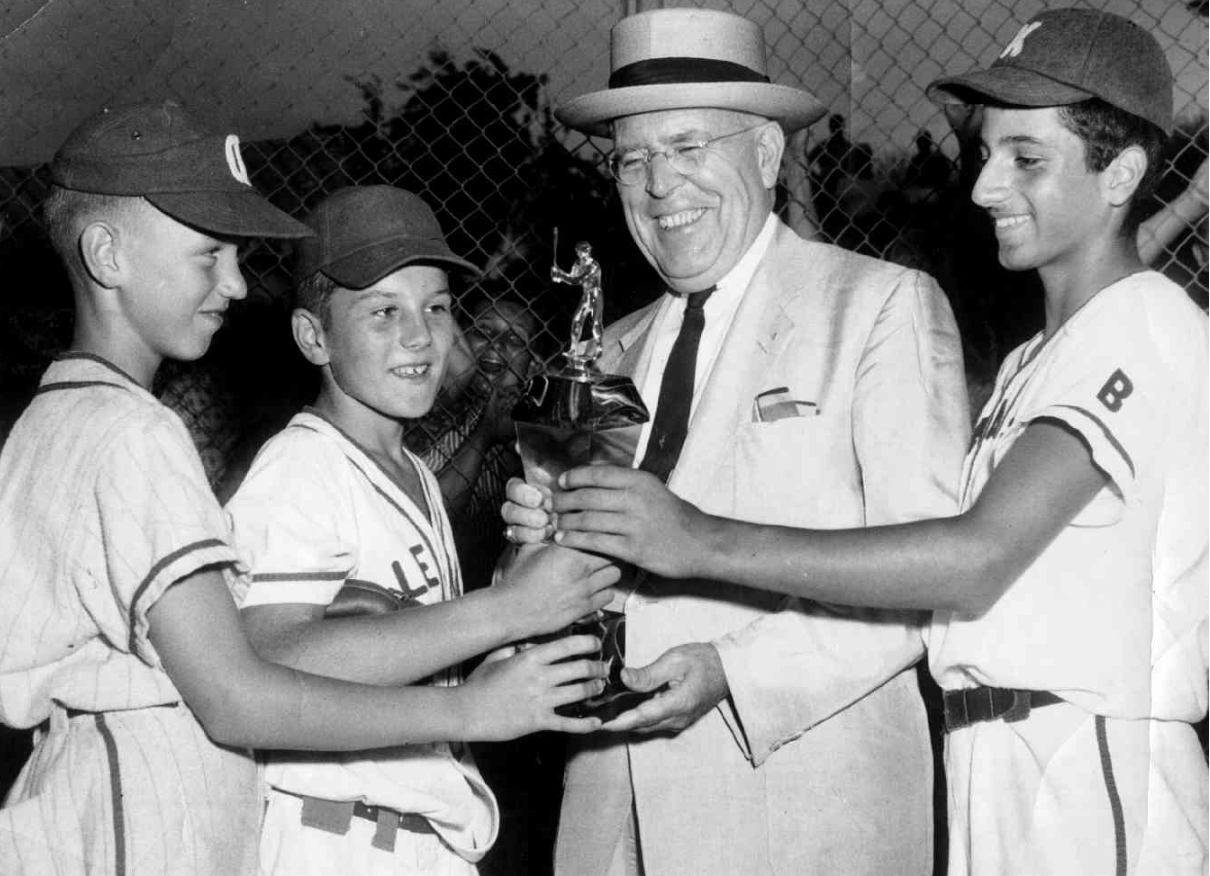
Have you ever stopped to consider the word “trophy”?
Probably not, because we all think we know what it means.
But do we?
It is obviously a thing awarded to those who excel in a sport. So it is a noun.
But if one sits and contemplates for just a little while, you realize that it is also an adjective: trophy spouses, trophy animals such as stags and bass, and so on.
So it is not just about sporting events, but about things that people hold up as an achievement of some sort.
Think a little more and you will certainly discover more that I have not identified.
A search of the web is extensive.
As an adjective, trophy describes people, objects, or properties that are highly desirable, rare, and acquired primarily as symbols of wealth, status, or success rather than for their utility.
It denotes an item or person meant to be displayed to evoke admiration.
Common uses include:
• Trophy wife/husband: a younger attractive spouse acquired by a wealthy or successful older person to display social status
• Trophy property/home: high-value real estate purchased as a status symbol
• Trophy asset: rare or prestigious investments
• Trophy event: a high-profile event attended for prestige
• Trophy fish: an exceptional catch kept as a souvenir of success
The term implies the subject is a “trophy,” a testament to the owner’s accomplishment and prestige.
So is this culturally based?
Are we, as a society, wrapped up in winning as a major part of our identity?
I am sorry to report that it seems so to this observer.
So what, you say.
Well, it feels as if we have diluted the term so much that it means almost nothing more than that.
Have you had a youngster who has played in any sports league?
Social “do-gooders” began years ago fighting the award of trophies.
How?
By suggesting that all of the players and team members be awarded a little trophy to avoid making someone “feel bad” about their abilities or their failure to achieve top honors.
Uh oh.
This is starting to get ugly.
In two paragraphs we have offended the winners and those who try to honor the “losers.”
So the hard-core defenders want trophies to go only to those who truly “deserve” it.
An example?
In the old days we had a wide range of bowl games after the college football season was over. After they were done, a poll was taken to choose the number one team in the country.
There always ensued huge regional arguments across the country that the voting was rigged or biased.
The obvious answer, to many, was to create a playoff system to assure that the real winner had been identified.
But we all know how that has gone.
Now we argue about the polls that determine which teams qualify for the playoff pairings.
How tired do we need to get about our consuming desire to win—to be number one?
Your guess is probably better than mine.
I cannot help but note the greatest evidence of the professionalizing of games and sports and the overwhelming obsession with winning.
We are now paying huge sums to “amateur” athletes to play a game for their colleges and universities.
Am I wrong to say that the love of the game has lost much of its meaning?
We will be poorer as a society when even that has been completely commoditized.
I am left with caring about and pursuing art and amateurism as my “balms in Gilead”.
But I am still glad that I have my very small MVP trophy from my senior year as a member of the baseball team.
And oh yes—I was far from the best athlete among some budding stars.
It warms my heart to know that my great coach, “Lefty” Johnson, found my efforts valuable.
Perhaps that is the real trophy.