
Living Words
By Clay Hipp
Reflections on reading, roots, and what we owe each other
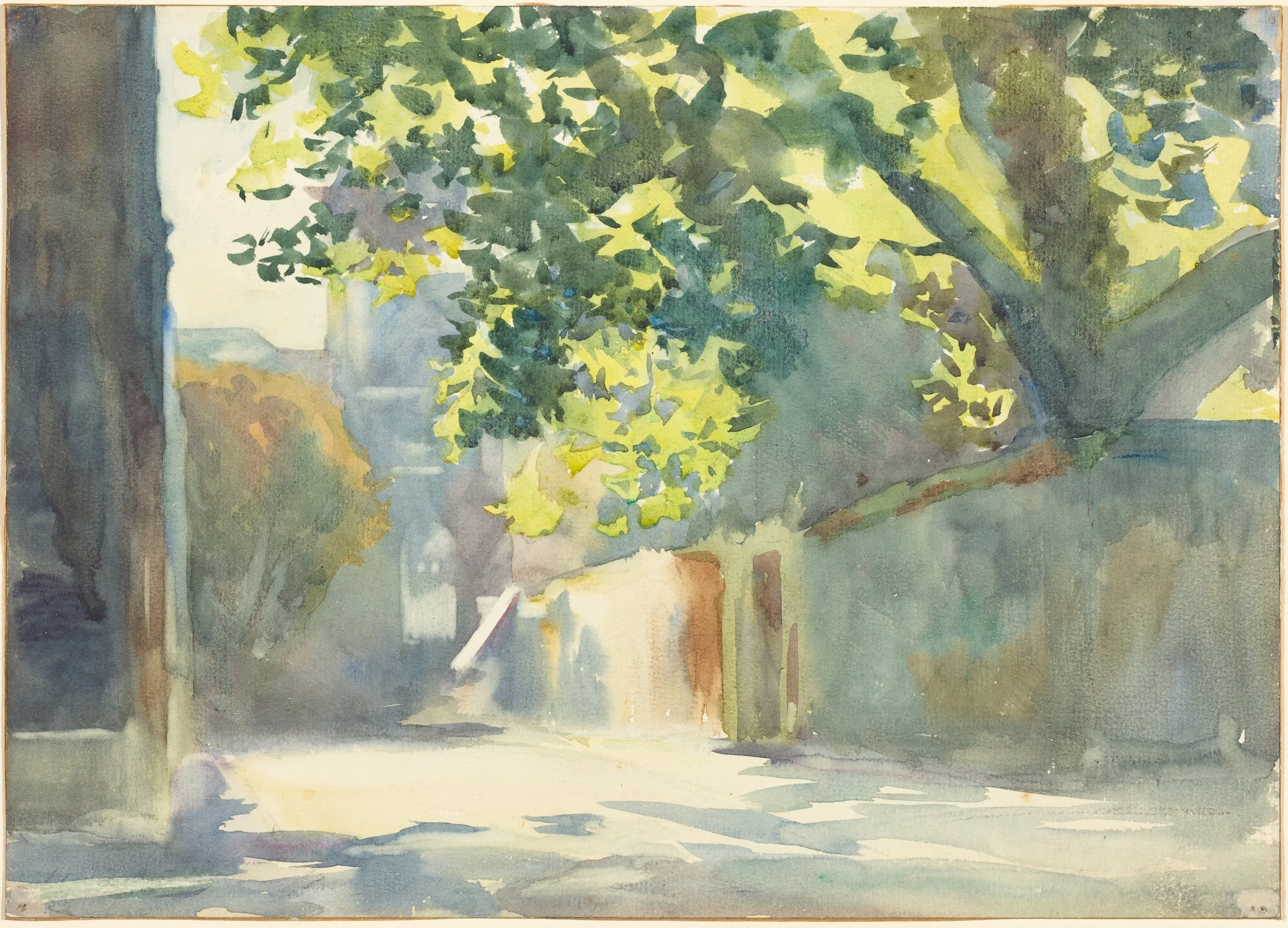
Sunlit Wall Under a Tree, 1913, John Singer Sargent, American
“When I grow up I want to be a tree
Make my home with the birds and the bees
And the squirrels, they can count on me,
When I grow up to be a tree”
-John Gorka
Weather permitting, I spend some morning time on my back porch. The yard is very private, with large trees all around. The number and variety of birds is impressive (no feeder).
Today the morning air was cool, and a breeze created a moving mosaic. A family of squirrels has long made its home in an especially large scarlet oak, a variety that grows tall, and its limbs remain very flexible, with light and sky shining through—they wave in any puff of wind. As I watch the acrobatic squirrels move swiftly on their rounds, they look almost like small monkeys. They find just the right path to move easily from branch to branch and sometimes leap ten feet or so (and never miss).
As I sat alone and quiet, I thought of Sunday's post and some things I might have said. The first came as I was pondering my selections. It was so wonderful to realize that every one of them was created in the mind and with the imagination of a "real" human being. The prolific Wendell Berry wrote every word on a yellow legal pad, and his wife transcribed them on an old manual typewriter. He never had a computer.
The best of our writers are giving us a personal, filtered version of the reality of their lives—and a reflection of ours. All these selections have my admiration. Second thought: I do not claim superiority. These represent my "preferences." If you are one who loves to read, that is enough for me, even if your preference is "best sellers" or a choice of an "influencer." Those of us who choose to spend our precious time in communion with other minds rather than information overload are, I believe, richer for it. I am truly concerned that if we are not diligent in our choices, we might just accidentally fall for seemingly well-written facsimiles devoid of true creativity.
Yes, I am a neo-Luddite. When I read old English novels, I feel a larger kinship with my ancestors. Several people have told me that I should have been born in the nineteenth century—so be it. Perhaps if there had been more "enlightened" European immigrants, we might have been able to join our culture with the existent first Americans and been the better for it (but hindsight is 20/20).
Read Cather, Grey, or Guthrie and decide for yourself.
All right, I will have an inspired Words That Sing on Friday, and who knows about the next Journal on Sunday. Let's make it a summer of reflection on our gift of the Declaration. We are not what the American Dream might have had in mind, but remember—we are a nation of immigrants who have, so far, been able to overcome our differences, with the possibility of rebuilding a stronger bond—perhaps as a result.
This should be a celebration….
The lyrics to Celebration by folk singer-songwriter David Mallett serve as a poignant social commentary and a battle cry for a better nation. Released in 2016 on his 17th studio album, the song contrasts political and societal struggles with a hopeful call for change.
This can’t be our destination
This could be a better nation
Time to set the big horse racin’
We can change the situation
Trains are leavin from the station
Need a brand new generation
This could be a celebration now, now...
Change is hard, but inevitable, and worth our closest attention.
P.S. A footnote:
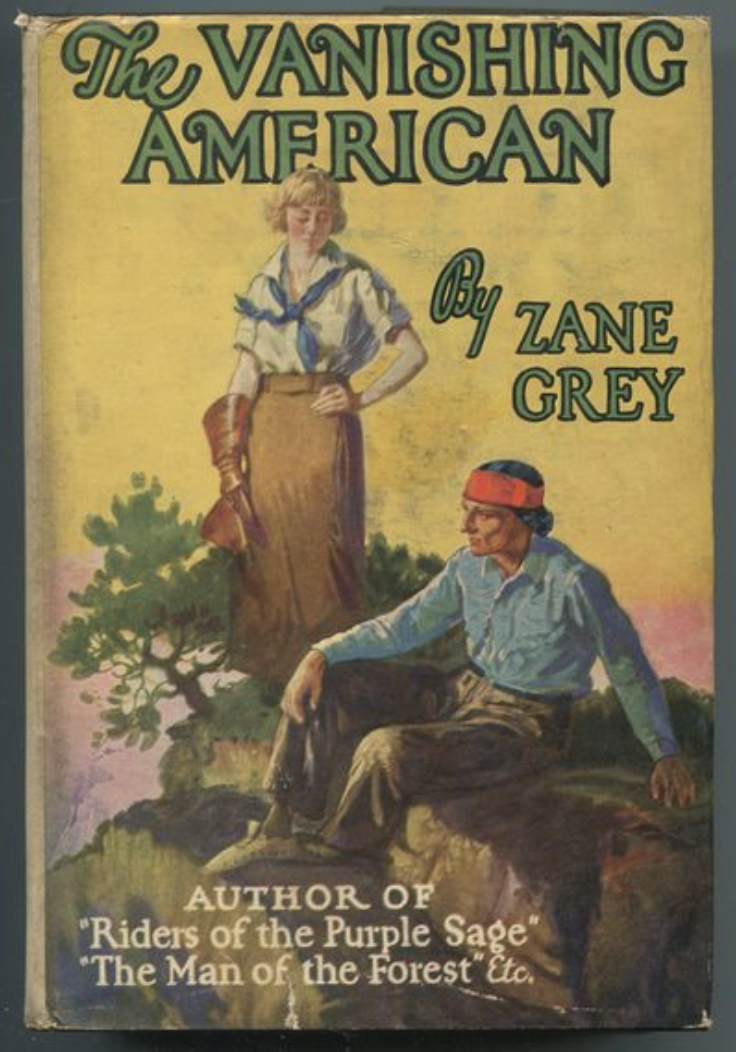
I just finished reading The Vanishing American by Zane Grey. If you wish to get a true picture of what it was like for a Native young man to be removed from his family, taken to an "Indian" school in the East, have his hair cut, his native clothes taken and burned, forbidden to speak his own language, all to become "civilized," consider reading this sweeping tale.
He eventually earns a college degree, falls in love, and becomes, in his words, "half white" before deciding to return to his people, now on a "reservation," only to find that he is now neither—his cultures in conflict, his religious views at war…. It was revelatory to watch him suffer.
Hard, but worthy, fiction at its best.
I read a story somewhere, probably apocryphal, about an old Native chief who called himself a "peace" chief, rather than "war." His small tribe lived remotely in the mountains. He befriended a white rancher below, on the Oregon Trail. They met and exchanged stories, each trying to stay out of trouble.
When he was on his deathbed, they spoke for the last time. A Catholic priest had just been there trying, one more time, to convert him, only to leave unfulfilled. The chief said to him: "I have spent my whole life trying to understand the white man. I have not found a single one who tried to understand me."
Sadly, I think that has never changed….