
The End of the Innocence
By Clay Hipp
A song for two lovers, a lament for a republic
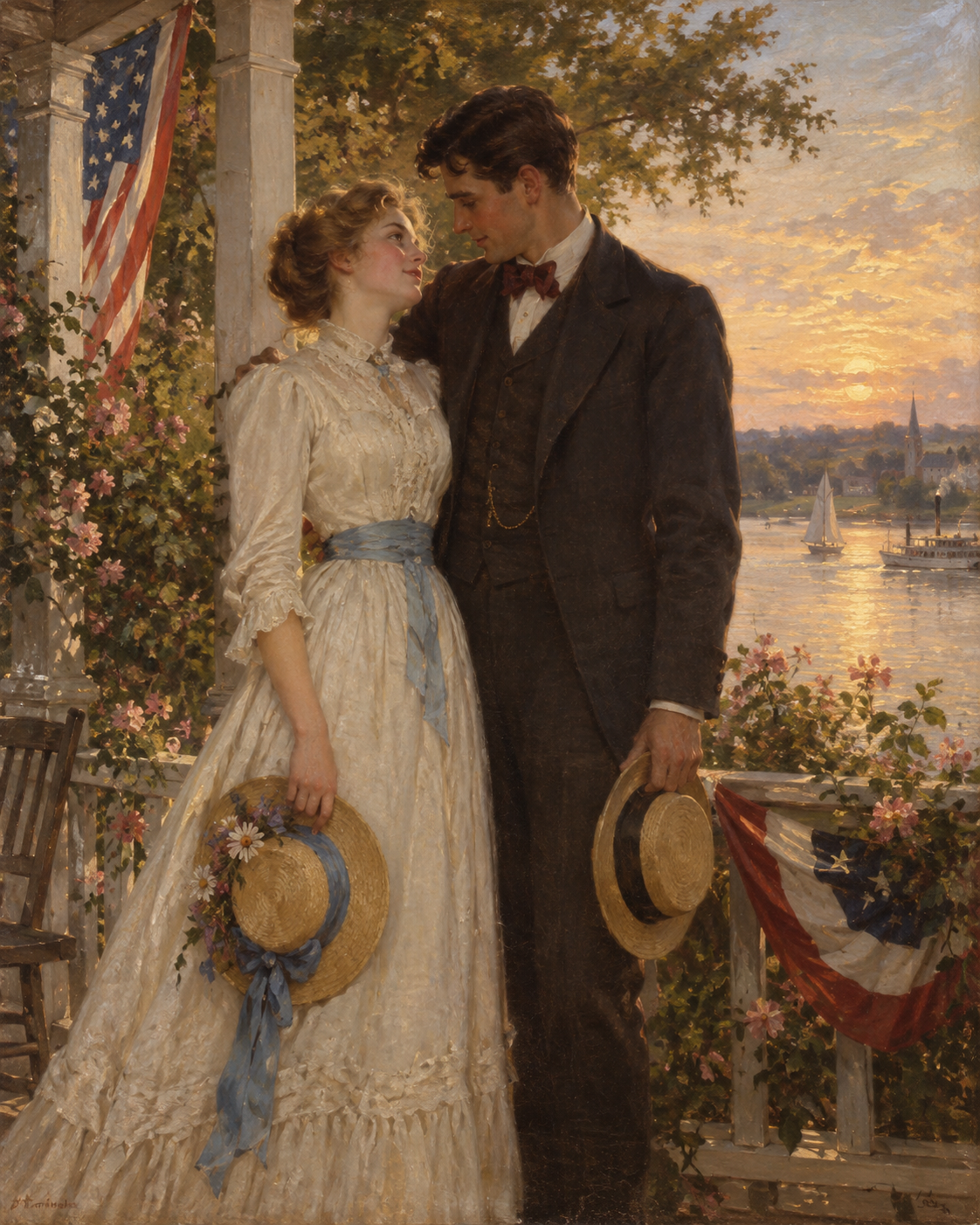
This week, in my legal class, I assigned—and we struggled with—the 2010 Supreme Court case known as "Citizens United." Over the last fifteen years, that decision has been largely responsible for radically changing the face and the functioning of our "democracy." In short, it declared that money is a form of speech, protected under the First Amendment—and paved the way for our political system to be dominate thereby. It also declared that corporations are people, too. For many, it has diminished the value of "one person, one vote" and threatened to derail the way we choose our elected leadership.
Once we read it together and analyzed the effect of that seemingly small (at the time) conclusion, we wrote about and discussed what it might mean for our shared reality. The conclusion, we decided, has yet to be reached—and the next couple of years may reveal it. Our Constitution might ultimately save us, or it might cease to hold its former meaning. For me, having taught about these things for a long time, it was harder than I expected to put words to my present state of mind, and to my fears about our collective future as a people.
You might not be surprised that I turned, instead, to a song, and told my students that its title alone symbolized my deepest concerns. It's called "The End of the Innocence," by a singer-songwriter named Don Henley. You might know him as one of the main composers behind The Eagles. He, along with help from Jackson Browne, wrote the iconic song "Desperado" (the Eagles' first big hit). "Innocence" was a popular piece in the '80s, and it featured the distinctive keyboard work of Bruce Hornsby.
The song is a story of two people in a relationship that might be ending but set in a time when the world around them is also at a tenuous moment in time. That felt about right for me. Let me show the reader why I referred to the song as “metaphorical”.
But I know a place where we can go
That’s still untouched by men
We’ll sit and watch the clouds roll by
And the tall grass wave in the wind
You can lay your head back on the ground
And let your hair fall all around me
Offer up your best defense
But this is the end
This is the end of the innocence
A casual reader of this passage might say something like, "Oh, isn't that sweet and beautiful and touching?" (Or perhaps something less kind, if you question the speaker's motives.) But what if we look at it another way? That reading grows clearer with each verse. My first big clue (actually, more than that). The very next verse:
O’beautiful, for spacious skies
But now those skies are threatening
They’re beating plowshares into swords
For this tired old man that we elected king
Armchair warriors often fail
And w'e’ve been poisoned by these fairy tales
I wish this were “metaphorical”. The truth has begun to be revealed. (By the way, this was written in the 1980’s. The parallel to today is stunning is it not?) Suddenly, the tall grass waves in the wind and two people spending a splendid moment together, now seems to have been a mirage or perhaps the calm before the storm or eye of the hurricane. We had been told that soon we must:
Offer up your (our) best defense
But (because) this is the end
This is the end of the innocence
Are you beginning to feel the power of the art of storytelling? Ready for the denouement—and, at the same time, a hint of a promise (a mere hope)?
Who knows how long this will last
Now we’ve come so far, so fast
But, somewhere back there in the dust
That same small town in each of us
I need to remember this
So baby give me just one kiss
And let me take a long last look
Before we say goodbye
The question for all of us (certainly for me)is must we say goodbye to it all or begin to put up our best defense. We are in control of one thing.
We must not let this be the end.
We have been innocent for much too long (and much to comfortable with our easy
lifestyles) and the naïve belief that the great gifts that our Declaration and Constitution
were self-correcting,and forever. We cannot be as Bob Dylan wished for us all:
“Stay Forever Young”
Let's overturn the bold, selfish word of the Supreme Court by proving that there is still power in the gift of "one person, one vote"—but only if we exercise it together, en masse, in defense of our precious Liberté.
The other song title I quoted to my class, in an attempt to reveal my angst, was Toby Keith's "Wish I Didn't Know Now (What I Didn’t Know Then)," from 1994—a clear sign of my own long-held, and perhaps naïve, innocence.