
Walking Into a Different World
By Clay Hipp
A walk toward stillness, a glimpse of blue fire
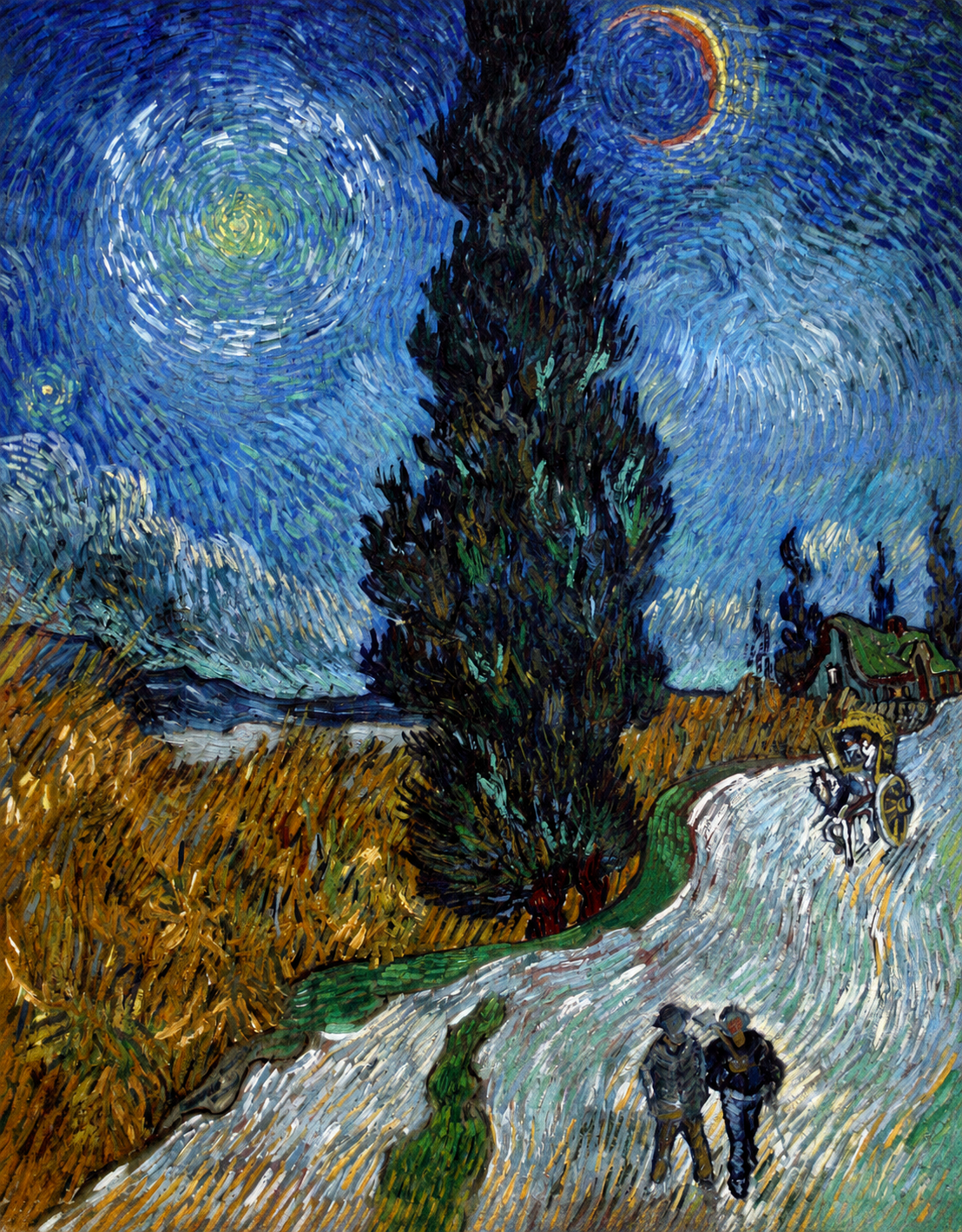
Road with Cypress and Star, 1890, Vincent van Gogh
Walking can be a form of meditation if you let it. It can also be a fine form of exercise for almost anyone, if done regularly. That's not a bad pairing. I have a friend who says that the combination helps him think better, that he comes up with solutions to problems he has been wrestling with. Good for him. I tend to believe, however, that when he talks about coming up with solutions, what he is experiencing is greater creativity. If so, it is his mind that is helping, rather than his rational brain.
If one allows them to, gives them room, they work together beautifully. Some research suggests strongly that those who make the best decisions are those who regularly free themselves from performing tasks and simply close the door and look out the window. (Some of us might say they are "wasting time.") You see, our brains and minds are both wonderful, but they operate differently.
Thinking exercises the brain, contemplation the mind.
One who truly thinks better while walking is still "out there" in the rational world. One who contemplates while walking is freeing the mind to go where it pleases to find inspiration. Perhaps, for some, it reaches a different level of consciousness.
I ran for years before changing to walking, but the distance remained the same — four to five miles, five times a week. For much of that time, I ran alone or with a few friends. I was never fast enough to experience what is called "runners' high," but I came to believe that it is real for those who did. I am told it is triggered by the body's release of chemicals called endorphins.
I mostly thought that I was not having much fun and could only yearn to sit down and have a drink of water. I did it because I knew that it was good for me. At some point, it became something I simply could not give up. The thirty years or so have served me well. I have been incredibly fortunate in my long history of good health. I credit all the time outside in the natural world, breathing good air and soaking up vitamin D. My heart and lungs can still climb hills and proceed at a good pace without becoming winded.
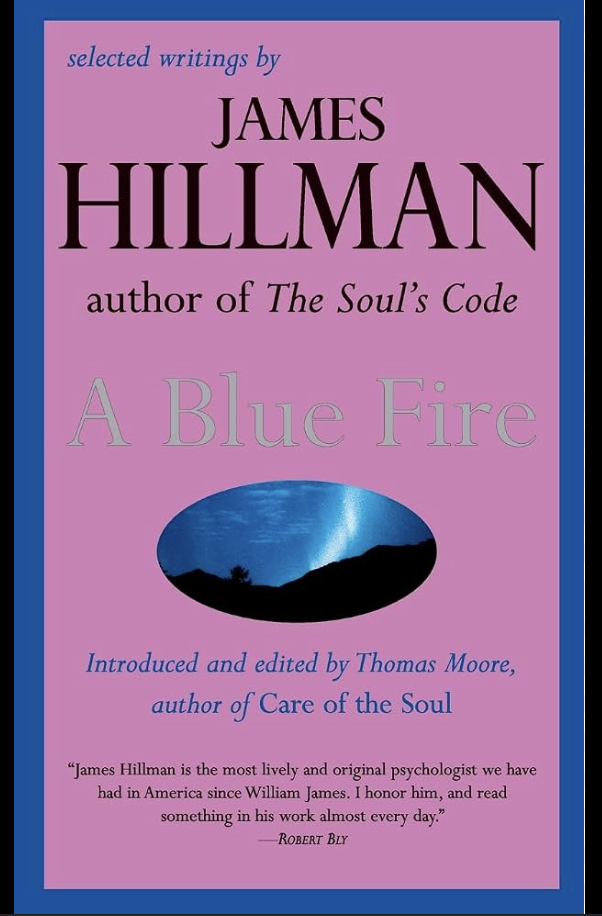
Back to walking. I have dabbled in learning about and practicing meditation. In my forties, I got a little more serious. When I changed universities, I inherited an old, traditional, roomy, high-ceilinged office in, of all places, the building that also housed the chapel. It was very quiet and private. I could hardly think of a better time. I would come in early in the morning and simply "sit" for a half hour or so. Someone had suggested a new book with the provocative title A Blue Fire. In short, it suggested that if one truly emptied his mind and became more "conscious," meditation could take you, literally, to a place you had "never gone before" — without chemicals.
Of course I put little stock in the idea. I have never been a "woo-woo" kind of guy. But as I read the book, I remembered my year in New Mexico and how much the idea of Native American spirituality had drawn me — the sweat lodges, the places of high energy, the sacred mountains, and even the vision quests. And so I decided, "What the heck, maybe I'll find something." Lo and behold, after about a month or so of serious quiet time — of just sitting for a while — I felt surrounded by a shimmering blue light. It lasted for a few glorious minutes.
Later, after reflection, I simply decided that I had never been truly "conscious" before. Conscious of what? I still don't know. Of being alive, for sure, but of something that needed exploring, the unknown.
Of "nothingness," no — rather of "somethingness."
As a result, I have never lost the idea about "consciousness." I taught in several business schools, and almost all classes and discussions among faculty groups were about things like efficiency and productivity — nearly all of it could be described as rationally-based decision making. Creativity got lip service, but it did not lead to publications and promotions. There were, of course, a few exceptions, but since creativity cannot be taught, it got little "serious" attention.
Interestingly, one of our greatest writers and teachers of mindfulness, Jon Kabat-Zinn, has been consulted and hired by major corporations in Silicon Valley and elsewhere to spend long hours with employee groups — teaching meditation to help them learn more creative ways of being. Many of those hours are spent "away from their desks," just sitting and looking out the window. Better to close your door, though — "someone" might get the wrong idea if they see you "twiddling your thumbs."
Perhaps you might be tempted to walk more. It costs no more than about thirty minutes a day of your precious time (that you might heretofore have been "wasting"). You might just walk into a new and healthier life, or a more rewarding future.
Heart and mind are fine partners, and they, for me, represent a better way of problem solving — and of just plain "living."