
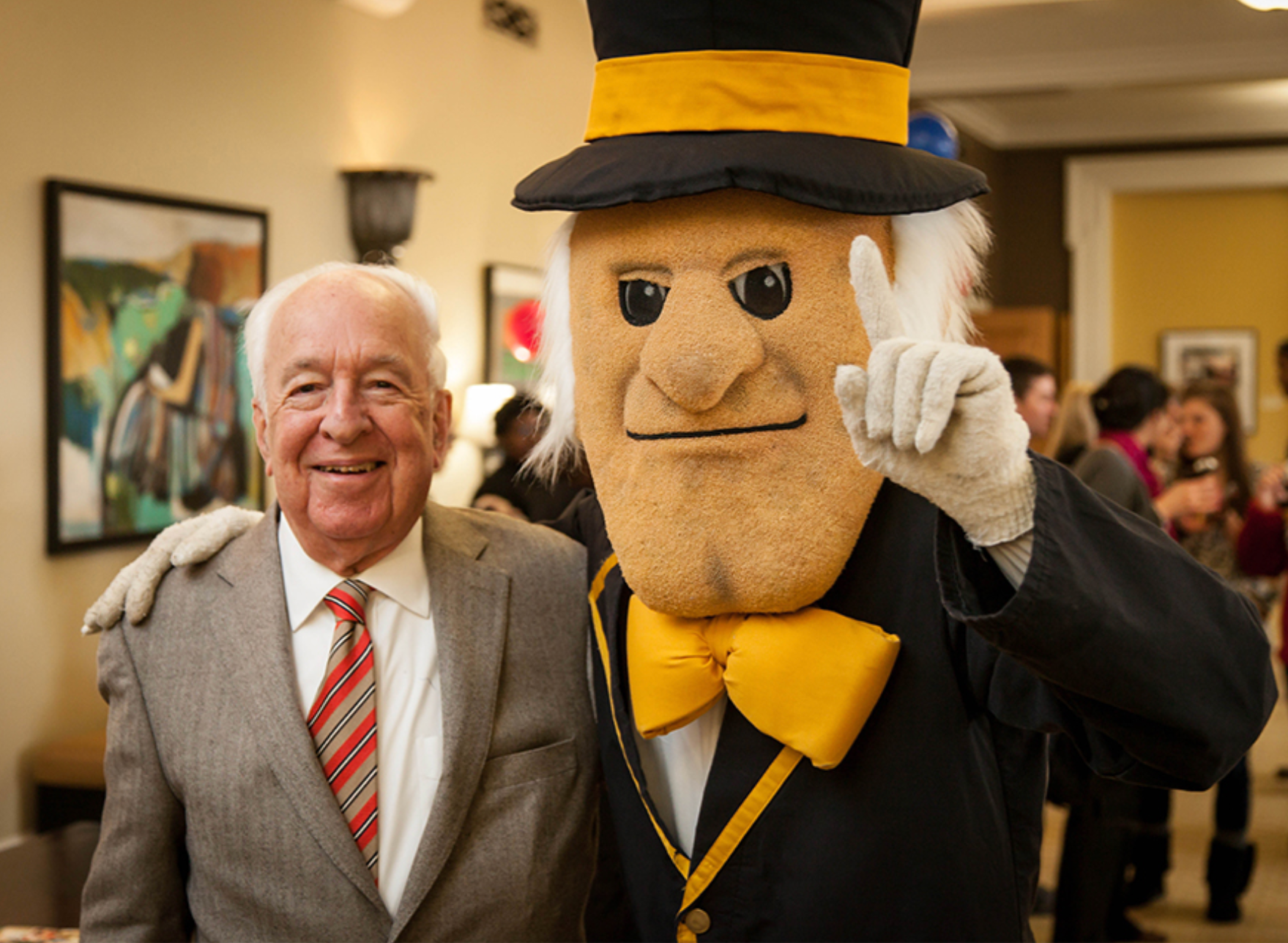
The Mr. Wake Forest I Knew
Edwin G. Wilson
February 1, 1923-March 24, 2024
“To be at Wake Forest is to be at a place that I could love no more, and to be with people whom I could love no more.”
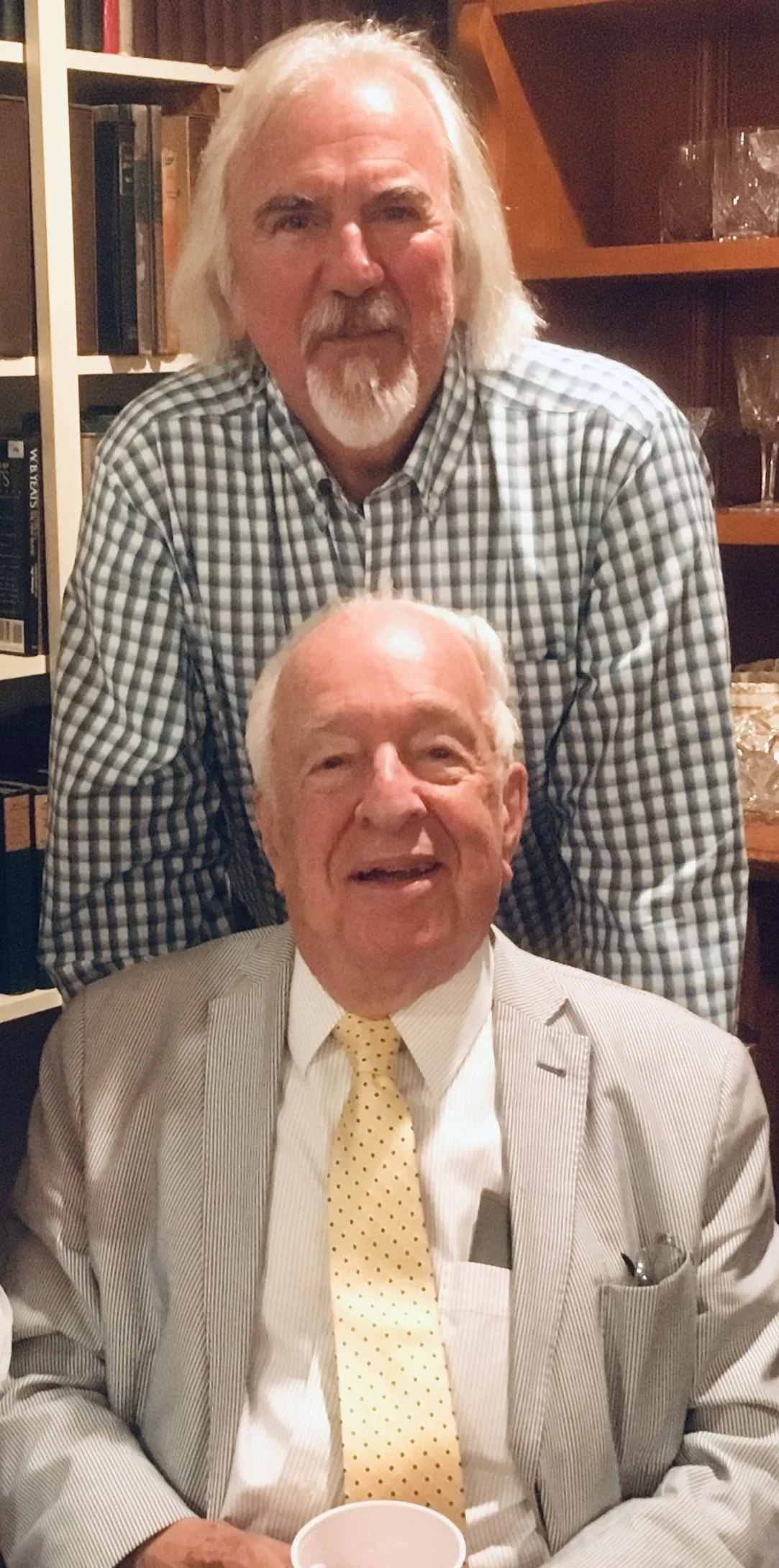
Me and Ed at a “Spring Fling” party in his home in 2018
Dr. Wilson came to Wake Forest as a student in 1939, taught for one year after service in WWII and returned from graduate school in 1951 as a faculty member in the English department. He was successively a department chair, dean, and retired in 1993 as the provost of the university. We called him Mr. Wake Forest. I was honored to be able to call him friend. He is one of a handful of folks who have been the most influential in my life.
I left Clemson University in 1991 and became a member of the WFU faculty. At our new faculty orientation, he talked for forty-five minutes (no notes) about the university’s history.
His voice, his eloquence, and his clear admiration for the place prompted me to say to myself: “you are home”. That did not change.
Within a semester I was invited to join an informal group of faculty and administrators called the High on the Hog Society. Its sole purpose was to share, once a quarter, a meal at one of the many fine barbecue restaurants in the area. We would receive a message from the “Chief Hogistrator”, assemble, and carpool to our destination. On my inaugural Q-run, a car picked me up at the curb and when I slid into the backseat, there was my inspiration (and soon to be hero), in the flesh. We hit it off immediately (Ed never met a stranger) and talked all through lunch about our favorite experiences. This was one of many such moments to come.
When he died at 101, I put pen to paper and wrote an appreciation of my life as his friend, sending it to his wife Emily—a very fine writer herself. It was sent to her as an an intimate act of remembrance, never intended for publication.
His public stature and long tenure to Wake Forest are widely known, yet I was extremely fortunate to have known him more intimately, sharing many precious moments in his presence.
So, on this day, when he would have celebrated his 103 birthday, I offer this once private remembrance to you, to mark the occasion and to celebrate a well lived life. My hope is that those who read this will feel some of what I felt then…and what remains with me still.
Edwin Graves Wilson: Through Existential Eyes
December 13, 2024
Ursula Le Guin is one of our greatest, and most underappreciated, writers. She is best known for her “future history” novels about the Hainish, a civilization that seems to have outstripped other races on other planets and seeks to establish contact with them by peaceful means. My favorite is named “The Telling”. It concerns a planet on which a new government, based on commerce, seeks to cancel historic culture by creating a common state “religion”. It banishes books and destroys libraries and bans all other religious and spiritual practices that might threaten the controlling authority.
In rebellion, an underground society arises with emerging leaders who are mature, mostly from the countryside and small villages and who lead seemingly unimportant lives. They hold secret meetings, and store and protect the remaining old books and texts. In each community cell, stories are told and memories shared in order that they remain “alive” for future generations. These gatherings are called “tellings”.
When we lose someone, their lives, no matter how loving and well-loved they were, tend to become lost, disappear little by little.
They live on only in our collective memories. The life of any of us can only be truly revealed through a melding of many “tellings”. No single person can tell their story; we all experience them differently.
This story is only mine to tell. It is a deeply personal, anecdotal, tale about how my love and respect for Dr. Edwin Wilson was forged by the privilege of proximity and informed by direct observation and years of interactions.
Who am I to tell you this? But that is the point. No one else can do it, any more than I can tell yours.
I do not claim that my view is an unbiased account. From the first introduction I had to Ed, I learned that ideals exist, that they can be lived and consistently observed in a single life. Others may tell details of a long, illustrious career. This telling is simply my idiosyncratic attempt to add an illuminating light to the shining example that was our centenary gift.
In the fall of 1991, a mid-career “scholar” arrived on the Wake Forest campus looking for a home. His path had meandered over familiar red clay hills and through flaming desert sands. The journey, though enlightening and revealing, lacked true fulfillment. The wonder of academe, the spanking new freedom of the mind, had begun to wane under the glaring face of reality. As we all know, ideals seldom stand up fully when put into practice. Yet one must always continue to hope the journey is not being undertaken for naught.
On one shining day, over the course of an hour, the old dreams broke through, and the waning myth was rekindled. The beaming face, the mellifluous voice, the overflowing spirit of warmth and welcome, told the tale of a place clearly apart, and very deeply loved. At that moment, the promise of a spiritual resting place for a tainted vision was revealed. Ed Wilson, in all his glory, hinted that the journey had taken on new meaning as he retold the history of Wake Forest. What a welcoming message for a doubt-ridden prodigal to hear.
The big question is how does one capture the essence of a true phenomenon?
I have never known anything like it.
So long and so prominently in a place that it sometimes seems to bear his name as much as he has come to be called by the name of the place. For Ed Wilson, from his late boyhood throughout his long “retirement”, Wake Forest and the man seemed completely intertwined, at least to the observer. Certainly, from my first viewing and listening experience of him, he was my Wake Forest personified.
What follows are my personal reflections, offered through a series of anecdotal moments, as they first came to me.
I have a propensity for all things “barbecue”. Quite soon in my early tenure, I learned of an elite organization with the highfalutin title “The High-on-the-Hog Society”. Informally—but very officially—membership only came through an invitation by an existing member. Somehow, I was invited to one of its events and soon found myself in an official vehicle, bound for our designated meeting place. As I slipped into the back seat, I was amazed to find my fellow traveler was none other than “Mister Wake Forest” himself. For the twenty-minute drive we talked as if we had always known each other about one of our favorite topics—the virtues of smoked and chopped pork. Soon enough I found myself regularly side by side, at the table, with my once and future idol, whom I now called friend. Over the ensuing years, we repeated similar forays—both with The Society and on more intimate trips—often in the company of our esteemed colleague Dr. Herman Eure, whose presence will appear again in these pages.
There was an added benefit and a very fine one. When my son entered Wake Forest in 1996, I asked Ed (careful not to impose on our growing and special relationship) whether he might serve as Stuart’s academic advisor. He gladly made it so. Ed was still teaching then, and his poetry classes were almost impossible to get into. Not only did my oldest boy have Mr. Wake Forest as his advisor, he also managed to take two of his poetry classes. Ultimately—and I believe largely because of Ed’s influence—Stuart became every ambitious parent’s nightmare: the dreaded “English major” (or to me, someone’s wildest dream).
Over the next several years, as I came to know the institution more fully, I asked for an audience with the retired—but still very busy and active—Ed. On one such occasion, after my love and respect for the greater WFU had grown dear, I visited his designated “throne room” in the university library.
My concern at the time was that after a decade into my life as an acclimated member of the faculty, the university’s essential nature was changing too fast. The new millennium was upon us. I asked, simply, “Do you feel it too—and if so, what can I, what can we, do about it?”
His answer, characteristically diplomatic, was this: “Clay, go out and find all the people on campus who share your concern, and work among yourselves.”
I wanted a revolution.
He suggested a conversation.
In frustrated silence, I departed with my proverbial tail between my legs.
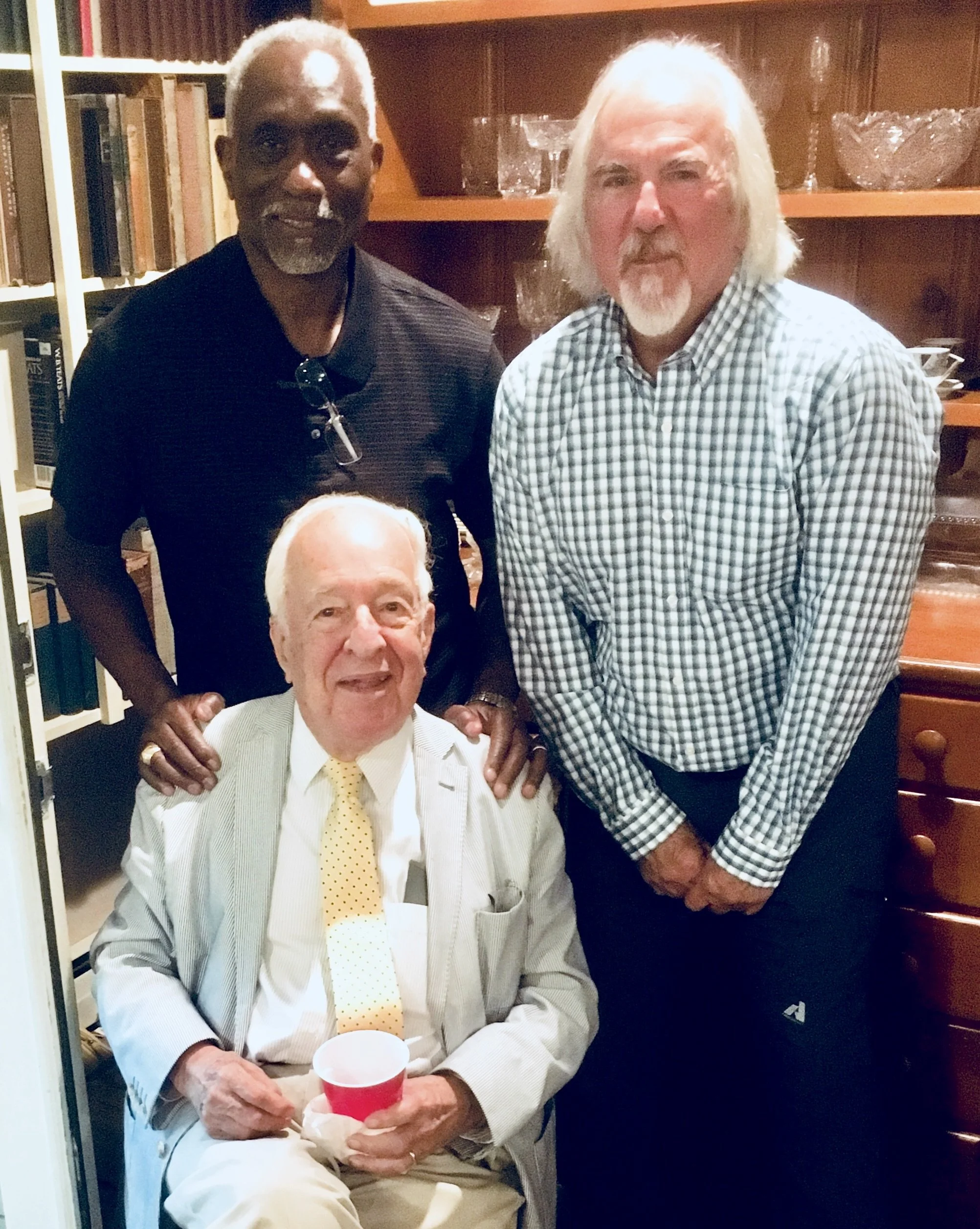
Ed, Herman and Me
Dr. Herman Eure and I had been dedicated companions as runners during the noon hour from the first week I came to campus. We were fellow confidants and mutual therapists. Our strongest bond? Our love for Ed Wilson. We began to become concerned that, despite his long term, continuous “reign” of distinction as Mister Wake Forest, his legacy was not being officially documented. Perhaps, we worried, his distinction was being too much taken for granted. We began to lobby for an official, visual, commemoration of his life and history with the institution. Our chosen vehicle would be a documentary of him on the old campus in Wake Forest town.
For several years we sought funding and support to mount a trip, hoping to send a small crew and entourage to capture him in his element. We were unsuccessful. Then, out of the blue, we learned that a new member of the Communications faculty had arrived, someone who had significant experience in filmmaking. Suddenly, through a series of conversations with him, funding was secured and a plan set into motion. (An aside: the project found new life through the university’s advancement efforts, tied to a broader fundraising campaign. This meant that Dr. Eure and I would not be in control of the project or its content in the way we had envisioned. Still, it was going to happen, and our hope of capturing one of the university’s greatest treasures would be fulfilled.)
On a glorious spring day, an entourage wound its way through the Carolina midlands, setting up cameras at various locations on and off campus. Among the stops was Shorty’s Diner—the pool table still dominated the backroom— where hot dogs and cold drinks were shared, along with conversation about the “good old days” with Ed and a former, long time Chaplain (and equally famous) Ed Christman. They reminisced about movies across the street and late-night snacks. Magical.
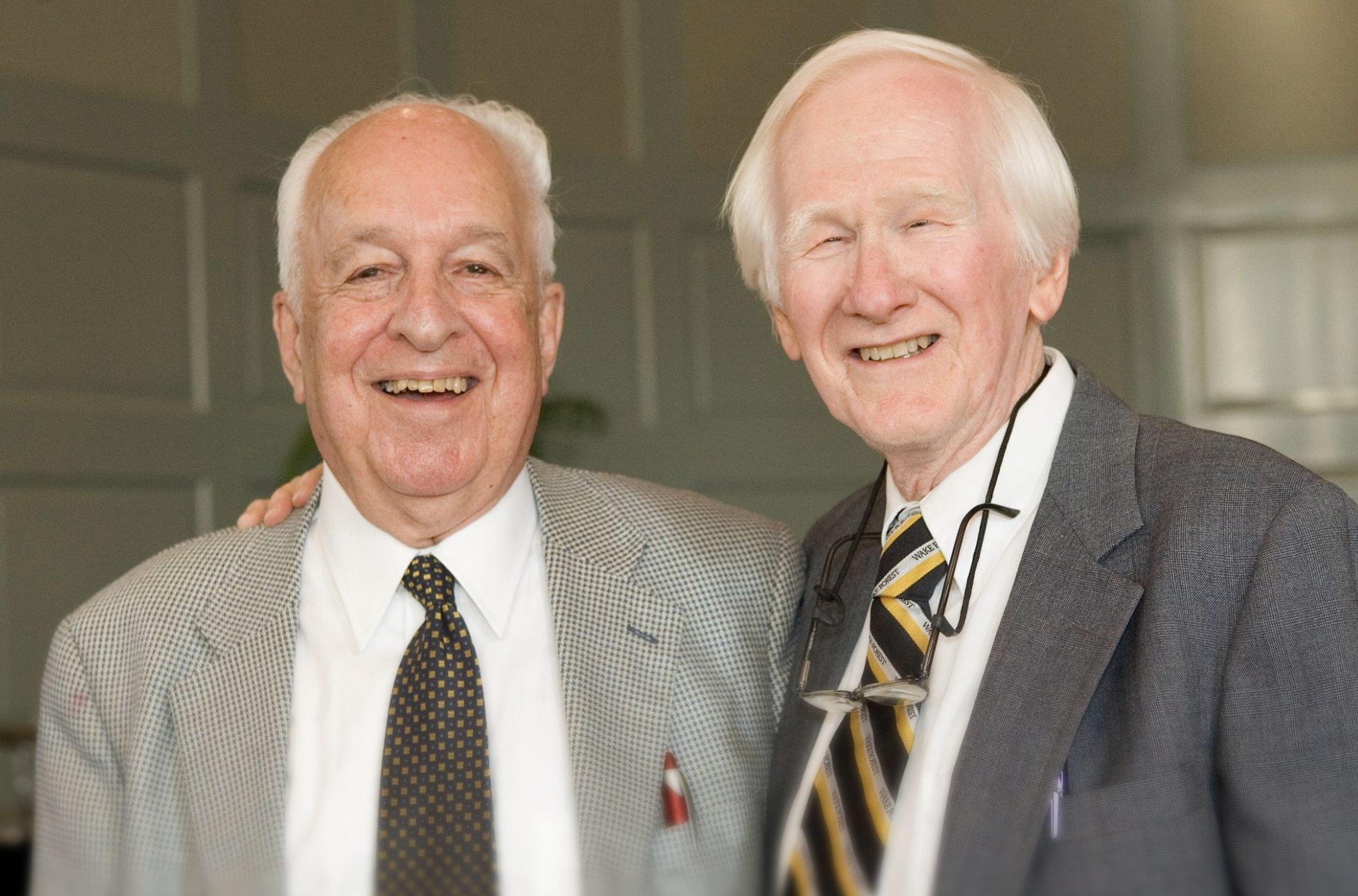
Ed Wilson and Ed Christman
We strolled through buildings and grounds capturing more candid conversations with Dr. Wilson and Ed Christman. As the day drew to a close, Dr. Ed was captured on video giving an informal soliloquy on what it was like living and teaching in the “home” of the university on the Old Campus. Earlier he had reminisced about his love for athletics in the old gymnasium, including anecdotes about particular players and contests. Throughout all of this, we were continuously amazed by the command of his memory and the precision of his recall—he was already well into his eighties. As we filmed his historical summary, outdoors, the director realized that ambient traffic noise and a too sensitive microphone had probably ruined the audio. He asked Doctor Ed if we could start over (the talk had consumed the better part of a half hour), he graciously consented and quoted himself almost verbatim from memory—there was no script.
Looking back on that time—a whole day watching Ed, or standing at his side—one single anecdote seems to define the experience. Even if Herman and I had only been mere observers it would have been enough. Instead, as the instigators in some real sense, we were privileged to be made a part of his memories and, indeed, the spirit of Old Wake Forest, as it could only be told.
We stood in the gym, somewhere around mid-court. He pointed out where his seat was (as if he ever used it!) and told us of the Duke game in 1953, when Dickie Hemric scored a game-high forty-four points to seal the victory. (For those who do not know, Hemric was a superstar in two sports—you ought to look it up.) Through Ed, we were as close to being there as one could be.
Wake Forest Athletics were a huge part of Ed’s campus existence. He served the college as its representative in the conference and the NCAA. He probably attended every game as long as he was able. (Certainly a personal record among Deacon fans).
The day ended with a stop at the “legendary” barbecue establishment Allen and Sons, near Hillsborough (the owner was still splitting his own hickory for his pits in 2004). We sat with Ed, the Christmans, Mary Beth Wallace—one of Ed’s greatest admirers and collaborators—and the camera crew, continuing to swap richly textured stories.
Ironically, though we were still relatively close to the original Wake Forest Campus (located in Wake Forest, NC), Herman and I learned that it was Ed’s first visit there. It felt like a genuine privilege to be able to claim that honor with such a legend—and devoted connoisseur of NC Barbecue.
A few years later Herman and I engaged another camera crew and had a long conversation with Ed in the balcony room of Wait Chapel. Again, try as we might, we were unable to interest the “powers that be” to create duplicate copies of the conversation in some format to share with the larger Wake Forest community.
But we did it—we had the intimate experience—and we have copies in our private collections to view, as we will, whenever we need a “fix”. Have no doubt—Ed Wilson was a trip.
But, most of all, we have our memories, and the sharing, and the caring, and the mutual loving. My wish is that everyone reading this modest effort could have experienced this man Ed Wilson in his ever-present glory. He was, throughout, a friend, a gracious supporter, a gentleman scholar, a poetic speaker, a mentor of generations of students and faculty, and the finest public face that any institution could hope for. I wish you could have heard him read Christmas poetry in the small chapel under Wait Chapel! His favorite was by Christina Rosetti made into a song: “In the Bleak Midwinter”.
In our last, public, encounter, a group of us celebrated the birth date of another Wake Forest institution, Bill Starling—the longtime admissions director—in yet another barbecue restaurant. Ed, at one hundred, came in his wheelchair and mostly listened hard (the place was crowded and loud). Despite his hearing aids, Ed struggled to hear and understand greetings and questions from old friends and admirers. Nonetheless, he spoke lucidly, and we were all inspired and amazed to be in his now legendary, centenary presence.
Ed, my hope is that others may tell “their” stories at every opportunity in order that the tradition that you represent will live, in truth, in the hearts and minds of anyone who has served, or simply loved, Edwin Graves Wilson University (aka, Wake Forest).
If I had gotten wealthy from an illustrious academic career (wink), I would donate enough to the institution to create an endowed chair: a Distinguished Professorship in the Liberal Arts and Humanities. The position’s main role would be to create courses and forums whose purpose was to reinvigorate and enhance and reinstate the college’s emphasis on its inspiring motto, “Pro Humanitate”. If possible, there would be an annual event during his birth month that would bring scholars and distinguished voices to the campus for a weekend of the most vibrant celebration of Wake Forest’s finest son. There would be poetry.
A.R. Ammons, a North Carolina boy like Ed, was one of his favorites. His tribute to Ed:
For Edwin Wilson
By A. R. Ammons
Did wind and wave design the albatross's wing,
honed compliances: or is it effrontery to
suggest that the wing designed the gales and
seas: are we guests here, then, with all the
gratitude and soft-walking of the guest:
provisions and endurances of riverbeds,
mountain shoulders, windings through of tulip
poplar, grass, and sweet-frosted foxgrape:
are we to come into these and leave them as
they are: are the rivers in us, and the slopes,
ours that the world's imitate, or are we
mirrorments merely of a high designing aloof
and generous as a host to us: what would
become of us if we declined and staked out
a level affirmation of our own: we wind
the brook into our settlement and husband the
wind to our sails and blades: what is to
be grateful when let alone to itself, as for
a holiday in naturalness: the albatross, ah,
fishes the waves with a will beyond the
waves' will, and we, to our own doings, put
down the rising of sea or mountain slope: except
we do not finally put it down: still, till
the host appears, we'll make the masters here.
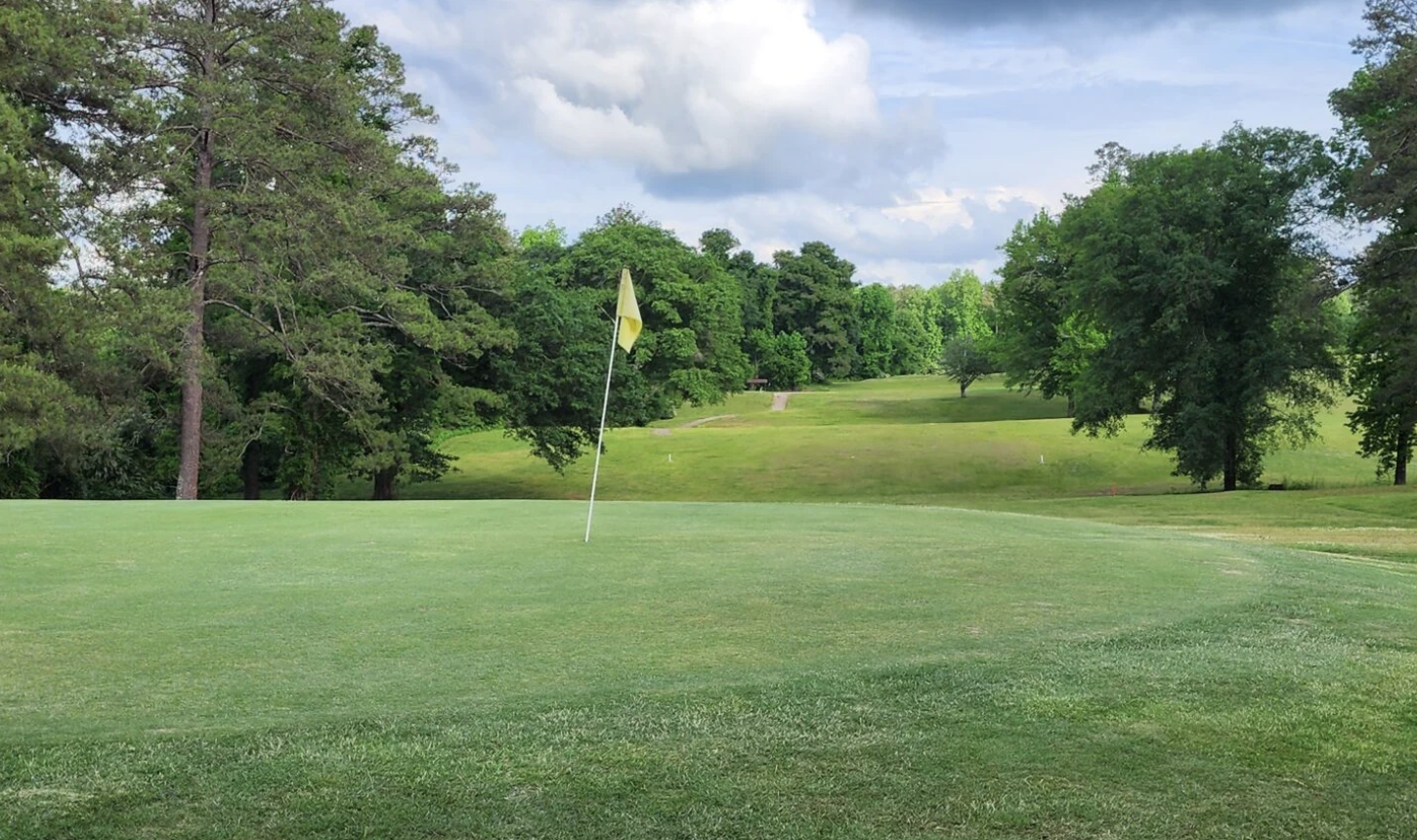
The Life and Times of a Homespun Golf Game
(Chapter One)
If I told you the truth, you would not have wanted to grow up there. A small, textile town in the Piedmont of South Carolina.
The banner of the weekly Whitmire News claimed 2,000 residents (dream on); the main street was four blocks long with two churches, two gas stations, two pharmacies (one with a soda fountain), one grocery store, a hardware store, and a “dime store,” a hometown bank, a post office, and one place to eat (it had a name, but since it had no competitor, the person at the register answered the phone saying simply, “Café!”).
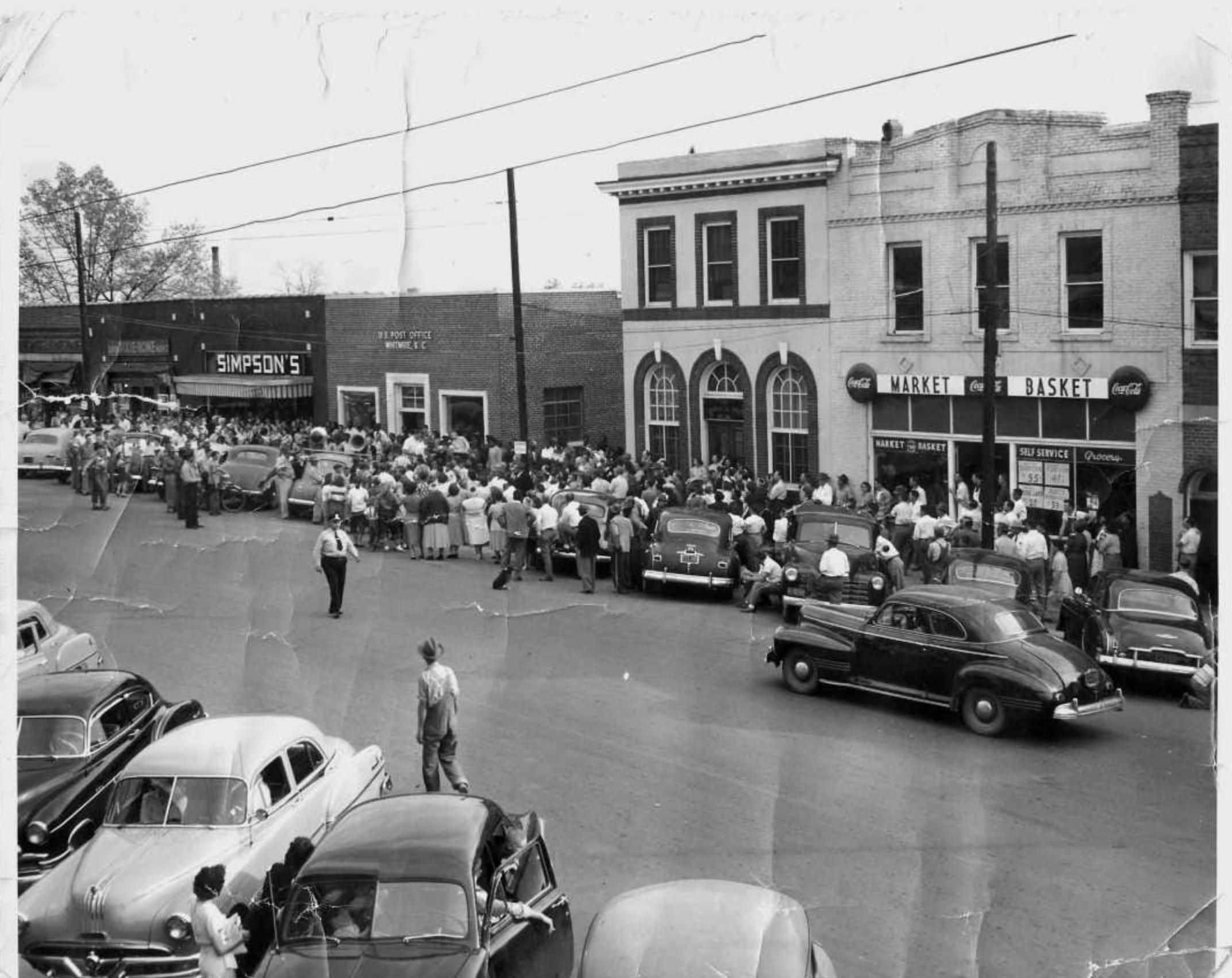
Downtown Whitmire, South Carolina Circa 1950’s
Nearly half of the people worked for JP Stevens, the cotton mill—the rest taught school, ran businesses, or were town employees; two doctors who ran the clinic and made house calls; a lawyer. You drove either a Chevy or a Ford (and drank either Coke or Pepsi) because that’s all we had and if a person drove a Dodge, they were considered uppity. For everything other than essentials, you drove at least seventeen miles—or fifty if it was a big deal.
After it had become clear that cotton did not adapt well to the red clay soils of the South Carolina “upcountry,” the Piedmont of the Carolinas evolved into textile towns. Virtually every town became a mill town, processing raw cotton (from low-country farms) into thread and woven cloth. Whitmire and the Stevens plant were home to spinning machines. If you entered the cavernous interior, you were enveloped in a small storm of white lint from the spinning process that turned raw cotton into huge balls of thread. We did not know it yet, but this cloud was inhaled by lifetime employees who developed emphysema and “brown lung” later in life. The noise was a deafening clatter, and many became hard of hearing. They worked in one of three eight-hour shifts, covering the full twenty-four hours of the day. They lived in small frame houses built by, and rented from, JP Stevens. It was known as the “mill village.” Life was basic and hard.
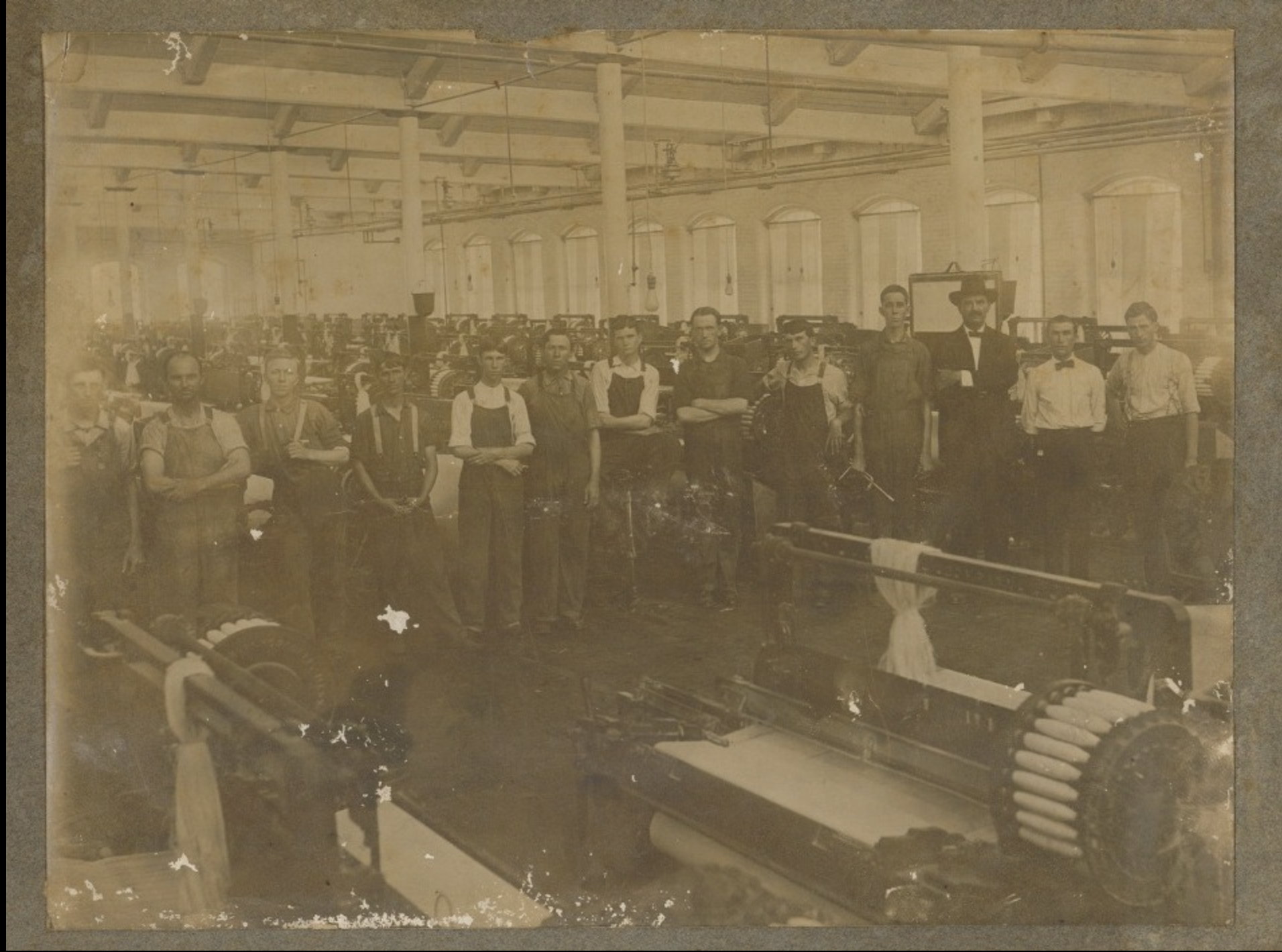
J.P. Stevens & Co. Mill Workers in Whitmire, SC
There was one major saving grace. In addition to paying the wages that drove the “economy,” JP built tennis courts and a nine-hole golf course that everyone played for free. We did not even realize that we were missing a country club—we were country. All other sports were school teams and fairly well-developed little leagues (in truth, we did not have enough kids to field a league. We played all our games in a larger town seventeen miles away.
I, a “towny” (because I did not live in the village), was the son of a schoolteacher and a father who originally worked for the family business—a Humble Oil, Esso gas station, a precursor of Exxon. Yet, I too was a beneficiary of living in a “company town.”
As a direct result of the gift I had been given, I played golf from around the age of eight and developed a very natural, free-flowing swing that repeated with no conscious effort—a swing formed, nurtured, and tested on a rolling, nine-hole track in the Piedmont of South Carolina. Situated on the banks of the Enoree River, there were no sand traps, and, in retrospect, the greens and fairways were adequate at best, subject to the changing seasons and the lack of a true groundskeeper (though I had nothing to compare them to). We did not know what we were doing; we just played and found what worked.
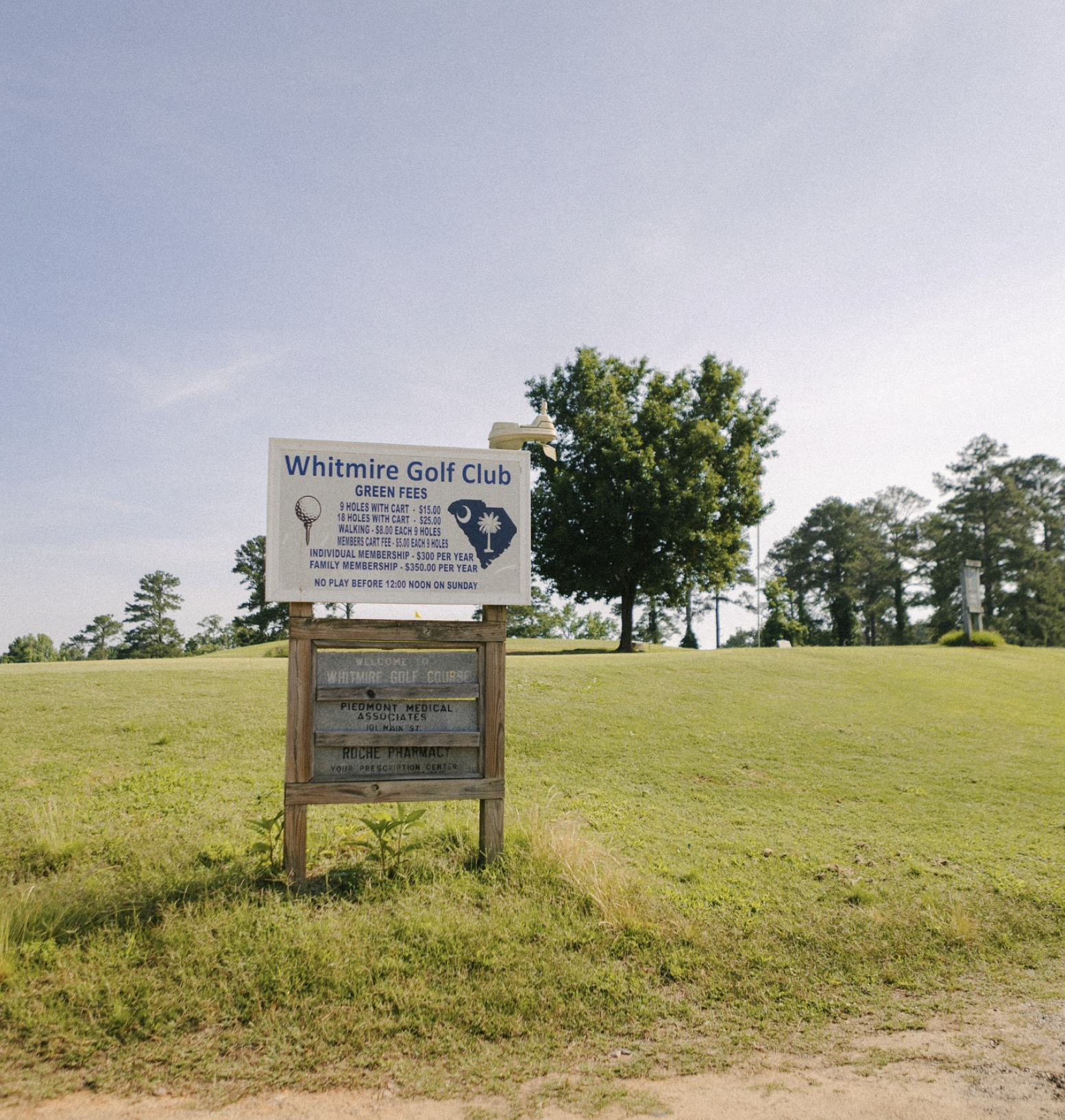
The course had been built in the thirties by the owners of the cotton mill. There was no clubhouse, no first-tee starter, but everyone in the town of roughly sixteen hundred residents could play for free with no starting time.
The course had no pro, but several experienced players to pair with if they were not hard at work. There was no “sporting goods” store, so clubs were either handed down or ordered from the postmaster, who charged no fee to obtain equipment from an unnamed source. You picked them up from the trunk of his car. (I have no idea whether he marked them up, but it did not matter—we were playing in the wilderness.) I began with a hand-me-down set from my father. He gave no history of the clubs or his proficiency in the game.
My friends and I learned from simply playing. I now think that might have been the best way. We played the course and certainly compared our games with each other, but I remember no rivalry. Occasionally, we would pick up a game with an old guy or two. Being young and strong, it was quite a surprise when one seemingly ancient fellow beat us with his short game. I would come to covet his skills later on.
One can get pretty good simply by playing. We made lots of pars, probably some birdies on the easier holes, and could regularly hit drives over a large corner pine at the dogleg par five. I never bothered to actually measure, but based on the length of the hole and the short approach if one successfully negotiated the lonesome pine, one might conclude that we, as pre-teens, were hitting it 250. When we got tired of the layout, we would play it backwards, much to the dismay of our elders.
Much later, in the twenty-first century, I discovered a young professional named Kevin Morikawa. He was an extremely creative shot maker. He seemed like a player on the rise. I read about him and discovered that he learned the game early from a teacher who did not think much of the practice tee. Rather, he took his young student to the course, where he made him play shots from several fairway positions on each hole. They talked strategy, club choice, and side-hill lies. He learned the game by playing under real conditions. Looking back, that seems to be a better way of discovering the game itself. It certainly worked for him—a future British Open champ.
My memory tells me that due to our regularity of play and ever-increasing knowledge of the course and its eccentricities, we measured ourselves against par. It would not surprise me to learn that as we grew in stature and into the game, we often came close to par—never realizing how fine a thing that was.
I do not even remember what our scores were. We played the course because it was what we had, and, since in the fifties there was no reliable state or national source of sports news, we had nothing to compare our experience with. The game was the thing (along with our baseball, football, and basketball). It was a small town. In order to field teams, everyone played every sport. We had no city leagues and drove seventeen miles to nearby Clinton for little and pony league competition.
So, for this one person, regardless of the context, the “game” was an absolute luxury (and I had a lot to learn about the beauty of personal accomplishment.)
Playing is the word, whether golf or any of the other sports. Small town life taught me that organized physical activities are much like life—cooperation, ups and downs, successes and failures, testing your capacity to adjust to ever changing challenges, and that “tomorrow is another day.”
Growing Up, and Into, Music
“Matter delights in music, and became Bach”
—Ronald Johnson
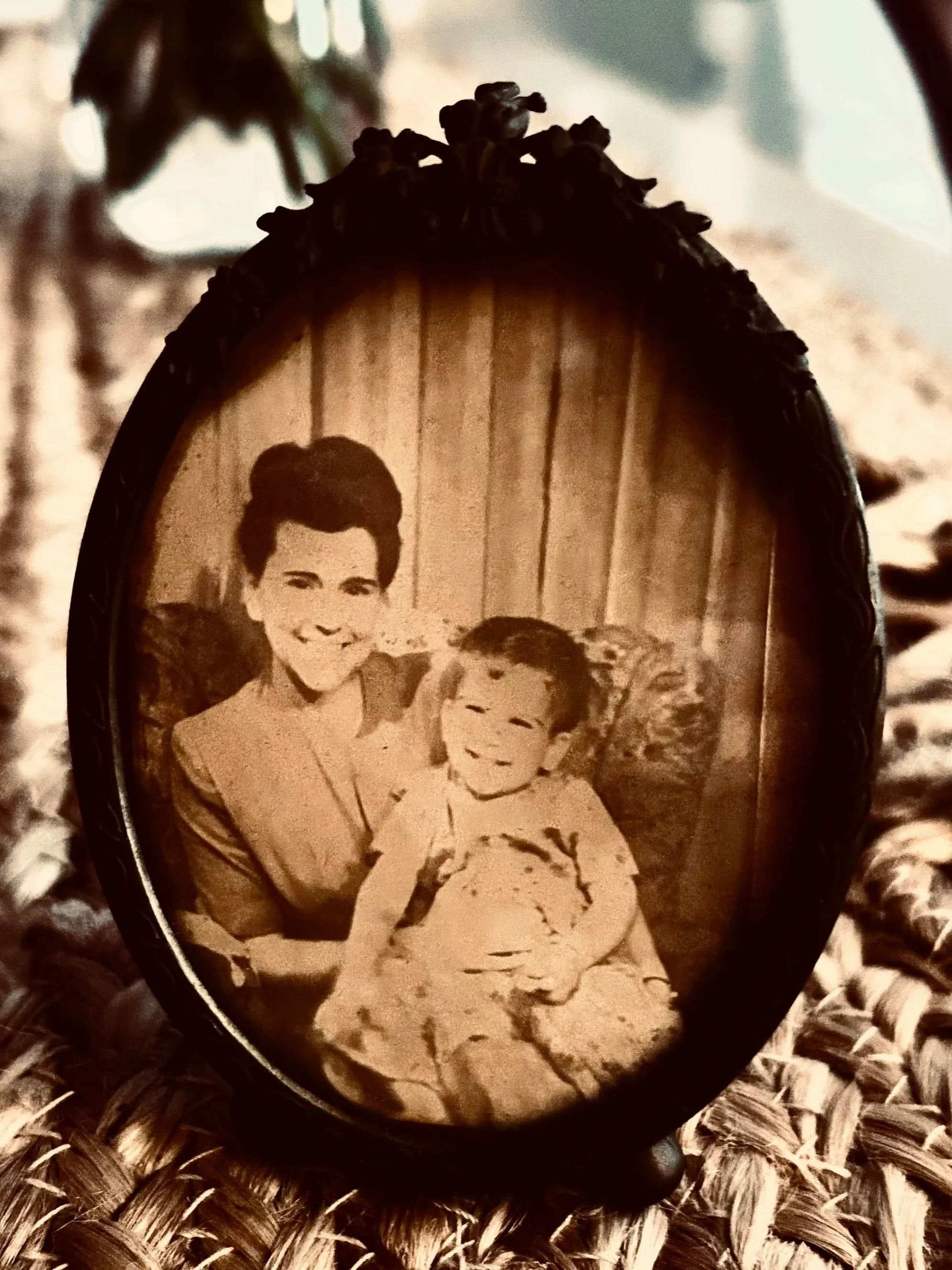
My Mother: Evelyn Chambers Hipp
This morning, I want to talk with you about music. It is a major contributor to the person that I am, that I have become. My mother introduced me and my little brother. She was an amateur pianist, an alto in our local church choir, and an advocate of truly “listening” and making music “instrumental” (more about that below).
For me, offering music to others seems almost like a personal duty as a result—a sacred trust.
A major component of this site is, and will continue to be, a separate blog about music in general, but specifically, here at the start, a radio-like show. Shortly, we will be offering a program called “Words That Sing.” If I were to be more audacious and descriptive, not to mention presumptuous, it might be called something like Poems That Sing: The Transcendent Power of “Lyrical” Music.
Each week, we will be offering the works of artists who write (and sometimes perform) music that transcends mere tunes and lyrics but is rather a melding of the two. Neither of the two would have the same impact on their own.
This is a conclusion and conviction I have reached from decades of listening to and occasionally singing them.
I believe a few things deeply:
— “Music hath charms.”
— Songs touch us at an essential level
(just as all good art can).
— We do not truly “listen” to music very well.
And if we did,
our lives would be significantly enhanced.
For me, it is a shame that in our busy lives the only music we experience on a regular basis is “ambient”—a backdrop to our lives in places of business, as we relax at the end of the day, and to create moods for our special moments, which seem to be getting more and more rare.
So, in this hour or so each week, I will be asking that you join me as I attempt to make my case.
If that is my task, please allow me to give you a glimpse of my inspiration and motivation with this little musical “résumé.” 😊
If I were you and was being asked to go on a literary journey, I would want to know, up front, who was speaking to me. That is just who I am. I have learned from personality and experience, during a long, rewarding life, that it is important to consider the source.
It is not so much lack of trust.
I am not, by nature, a skeptic.
I just do not want to waste any of my precious time considering a serious topic, such as this one, without having some idea of where it is coming from and what has informed another person’s care for the subject.
In other words, it is always prudent to consider the source.
I should tell you, for what it is worth, that what follows began as a somewhat whimsical little piece, an introduction to a much larger work that I have been working on for several years. A work that has taken on a small life of its own. I keep rewriting it because I have not yet captured the right “voice” that might attract a wider audience. My first and second efforts proved too “narrative,” even “professorial” (as per my previous vocation).
Maybe sometime it will see the light of day.
Until then, humor me, please.
Let’s go….
Growing Up, and Into, Music
This little book is the “child” of a baritone ukulele.
It was a gift from my mother at Christmas 1963, before my senior year in high school. I have come to believe that it was symbolic of her disappointment, a decade earlier, when I chose baseball over piano lessons.
Over the next year, I practiced and played simple three-chord arrangements whose identities have escaped me. I only know that by next Christmas I could play and sing without being embarrassed. During practices for our senior play, I surprised my classmates with singalongs. They knew me only as a very good student and a “fair-to-midlin’” multi-sport athlete. We had one classmate who played piano and who would become “most talented” in the senior yearbook. A very attractive young lady friend gave me a boost when she confided that, if she had known about the ukulele, she would have voted for me instead.
The summer of 1964 found us in a summer of love and protest. My favorite songs became “If I Had a Hammer” and “Blowin’ in the Wind,” and I worked hard to learn them both. They served me well as I went to summer camps and Methodist Church youth assemblies.
I was a traditional southern boy, so this was my only contribution to the nascent protest movement sweeping the country.
It felt good to “hammer” out the energetic chords of Pete Seeger’s lyrics at parties. (I was bold enough to sing Bob Dylan’s “The Times They Are A-Changin’” from the back of the sanctuary one night when the youth were in charge of the service.) Later that summer, I attended a “Youth and Missions” retreat at Lake Junaluska, NC (a lovely denominational summer getaway in the Smoky Mountains).
Two significant things happened there.
Musically speaking, I met another “performer” who would become a friend as I entered college that fall. He played a “banjo uke” better than I could the baritone. We worked up a small repertoire of songs and regaled the young lady attendees with our sparkling personalities and (quite good) harmonies. The power of song was not lost on us.
The other formative moment shook me to the core.
At that same retreat, on a bus trip to an outdoor play, we stopped in a small town for snacks. A “liberal” pastor, who was leading the trip, came on board and announced that we were going to have a “sit-in” at a diner nearby because of a racist sign in the window. A goodly number participated, but I chose to remain in the back of the bus with a young lady who was fast becoming a “girlfriend.” We were from small towns and scared to death about being arrested. The protest movement had become real.
All that is to say that playing music became a more conscious endeavor.
The emotional excitement of playing music began to take form and join with the real and symbolic lyrical content. Without truly “knowing” it, I was aware for the first time of the poetry of songs I had learned.
Over the years, this realization never left and has brought me to this day—and to this writing.
The baritone uke soon spawned a six-string Gretsch classical guitar, which became my true musical companion and led me to become a member of a trio that played together through college. It also gave me many magical nights around campfires at summer camps where I was a counselor.
The final piece of my introduction to, and love of, playing live music was a gift.
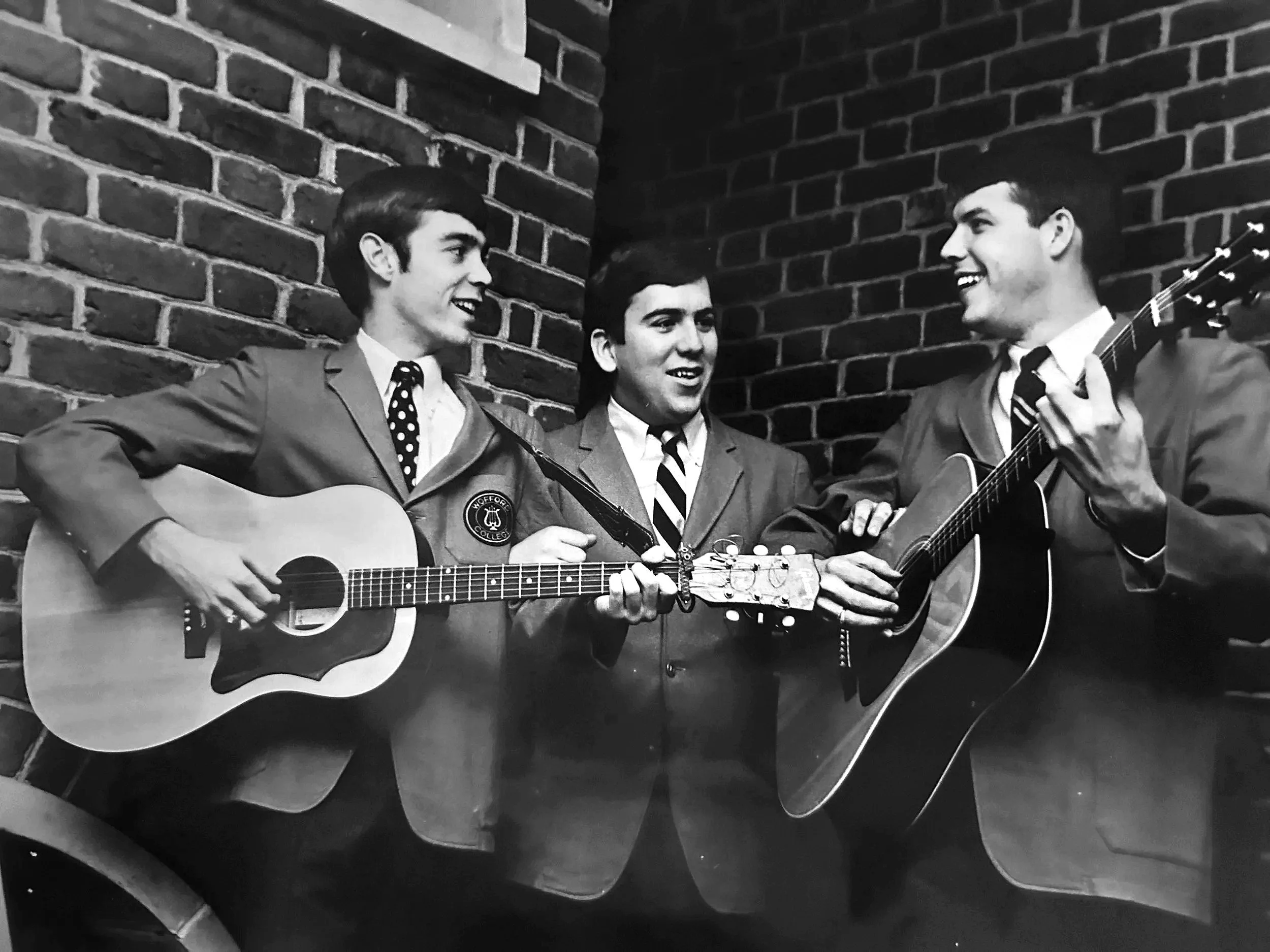
In college, I was a member of the men’s glee club. We sang at college events and various local holiday celebrations. We took a spring break tour each year to destinations in the Southeast (New Orleans, Florida, and D.C.). We sang in churches and civic clubs and a country club or two. At the end of my first year, a duo who had played during intermissions graduated. The choir director approached three of us, who were “known” as musicians, and suggested we put together a trio to replace them.
After discussion, we accepted and became “Those Guys Again”—figure it out for yourself.
We were “folkies,” children of the sixties (Peter, Paul and Mary; Bob Dylan; Pete Seeger; Woody Guthrie—and even a Beatles number!). Our first song was “Early Morning Rain” by the Canadian giant Gordon Lightfoot.
Off and running, we played around town at civic clubs and church groups and the like—no money, just fun and occasionally a free meal. At the end of three years, we were pretty pleased with our sound and a growing playlist.
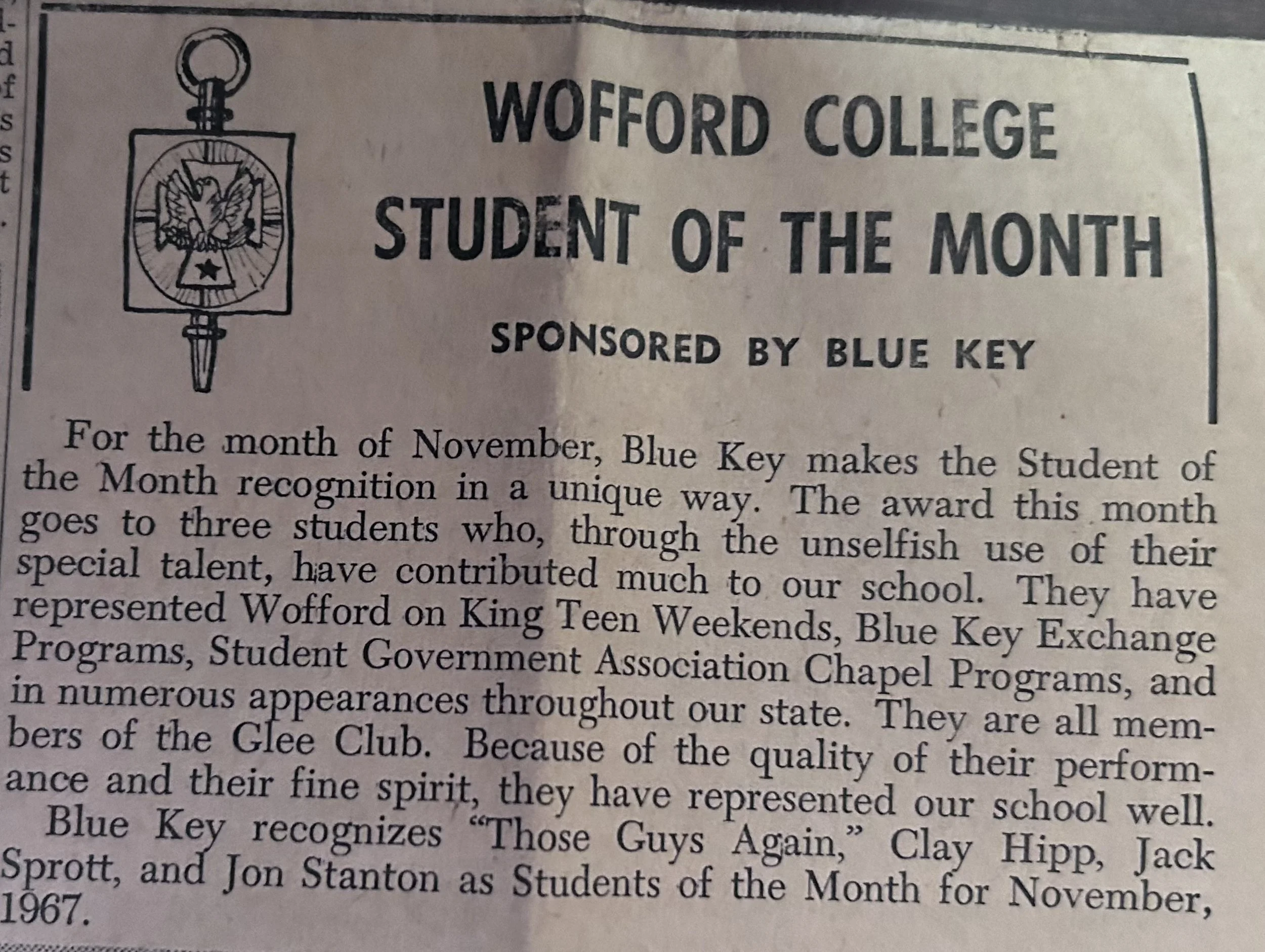
Those Guys Again
Jon Stanton, Clay Hipp, Jack Sprott
(L to R in title picture)
Wofford Glee Club
1967-1968
We continued to add new songs for our various “gigs.” Towards the end of our senior year, we even hinted to each other that we might try to “take it on the road” (one of us had played coffee houses during his high school days). I was going to graduate school and felt free, as did our minstrel member. Before we could talk seriously, the third, and most talented, of us (he wrote and arranged his own music and was a talented guitarist) announced, “I am getting married in the summer.” The end—but a great ride nonetheless, a small taste of possible fame.
It was also a sign that my life was changing, going in a different direction. It hurt a little at the time.
I have come to have that feeling more and more strongly as time has passed. Reflection revealed that I really did have enough talent to succeed in life dedicated to music. I had a lovely (I am told) high tenor voice. I had a rudimentary understanding of music theory based on experience, not technical training.
I had sung harmony and solo in several performing contexts: early church choirs in which I experienced Bach’s contrapuntal harmony along with more traditional hymns; being good enough in the college glee club to be appointed “tenor section leader”; and there is no discounting that the solo and group public exposure gave me confidence and a wide-ranging experience in numerous kinds of music. If I had used my acceptance into graduate school as a deferral from the draft, I and the trio might have hit the road and become real “folkies.”
As I have said, the musical genius in the group was already writing original songs, and the other guy was a traveling solo act in coffee houses up and down the East Coast as a teenager—he was worldly wise, as they say. Instead, I took my ROTC Army commission, deferred my grad school, got married myself, and entered active duty in the fall.
A year later, I was off to Southeast Asia. On returning safe and sound (!), I went to graduate school, practiced a little law, had children, and entered the new world of college teaching. Needless to say, my musical life suffered as a result and took a fifteen-year hiatus (not to say “sabbatical”).
There is another chapter which truly cemented my singer-songwriter obsession. Perhaps I will tell you later (on request)? 😊
Once again, thanks for reading.
Clay
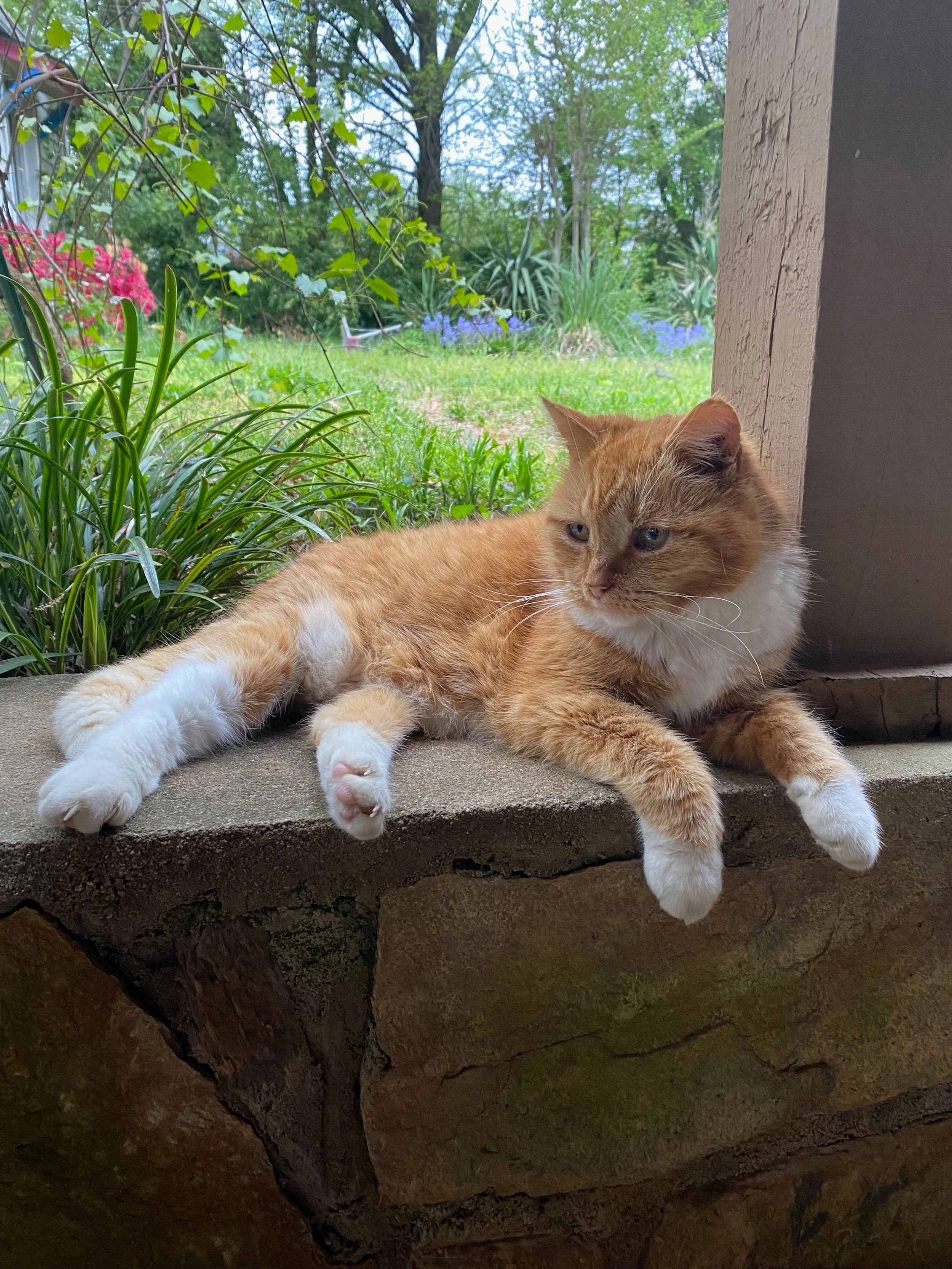
ORLANDO GATITO
The Extremely Famous Cat
He was larger than life for someone so small and one of the finest non-human animals in my experience. His presence continues to permeate our lives, as we are often reminded of how his quiet, steady companionship bore witness to our becoming.
I have written elsewhere at some length about his life with us. At some point—when we have gotten to know each other better—I may be able to share more of his story. For now, I will just offer this.
By now, you have learned something about Joanie and Clay. It feels only right to complete the triangle with the story: the namesake of “The Orlando Gatito Society.” Our triangle was not just symbolic; it was substantive and very real.
Here is the short version of why he became such a huge factor in our lives.
The first week of July 2008 saw the convergence of several forces in my life. I had just closed on a small cottage in an historic neighborhood. Joanie and I had met months earlier at a coffee shop, Cafe Roche, and suddenly learned that it was closing. The owners, Orlando and Lina, had decided to move back to their original home in Seattle due to the effects of the recession. While their coffee shop had been opened for a little over a year, the care and warmth they imbued created a wonderful tight-knit community. The two of us decided that we could not let them go without a party that conveyed what the shop had meant to us. So we exchanged numbers and began planning outside the coffee shop.
Soon after, the Roches closed the shop on a Sunday afternoon for the private celebration. We prepared the food, decorated the tables, and poured the wine. Soon the little shop filled with loyal customers and friends. No one wanted to leave. A handful stayed behind, and we finally broke up around two a.m. As Joanie and I drove home we realized that our traditional meeting space was gone and we wondered what came next.
I think it dawned on us, separately, that our relationship changed after that night. We had not come close to a date, though Joanie later confessed that when we met at a wine bar to plan the event, the sun shining through the window illuminated my clear, Caribbean blue eyes and gleaming, white henley shirt, making her think, “Hmmmmm”—my tan from working in the vineyard didn’t hurt either ;-).
We met a couple of times at other coffee places. I had no idea if the attraction was mutual or just the residual goodwill from the party. I have never been good at the “courting thing” but finally found the temerity to ask her if she would like to “go out”. She suggested Thai food which was a complete mystery for me (which became obvious when I did not even know how to order). Despite displaying my culinary ignorance, several real dates followed. Romance? I began to think so and was delighted when she reciprocated.
All that is to say that suddenly and without warning, we became inseparable. We began making ordinary decisions together that carried symbols of permanence. We choose a dining room table together, the kind that promised long, candlelight meals and even longer conversations. We were no longer just visiting each other’s worlds, we were making one together.
As all of this was unfolding, I discovered poor little Orlando—no more than six weeks old—seemingly abandoned in a campus parking lot where I worked. I gathered him from beneath a car, dirty ears, feet, and nose and all, and carried him back to my office.
Knowing he must be hungry, I fetched an envelope of tuna from a campus convenience store. I sat in my office with little Orlando and called Joanie. She knew I had been thinking about adopting a cat for some time and convinced me that my meeting with this little orange orphan was a sign from the heavens (cats have always been an essential part of my life) and I eagerly agreed. At the day’s end I took him home, bought a litter box, and installed him in the guest room.
A few days later at the coffee shop I shared my story with Señor Roche and asked if I might name my newfound companion, Orlando, in honor of our short but very sweet little coffee klatch. He graciously agreed.
For sixteen years, he, Joanie, and I were a close-knit trio in that little bungalow.
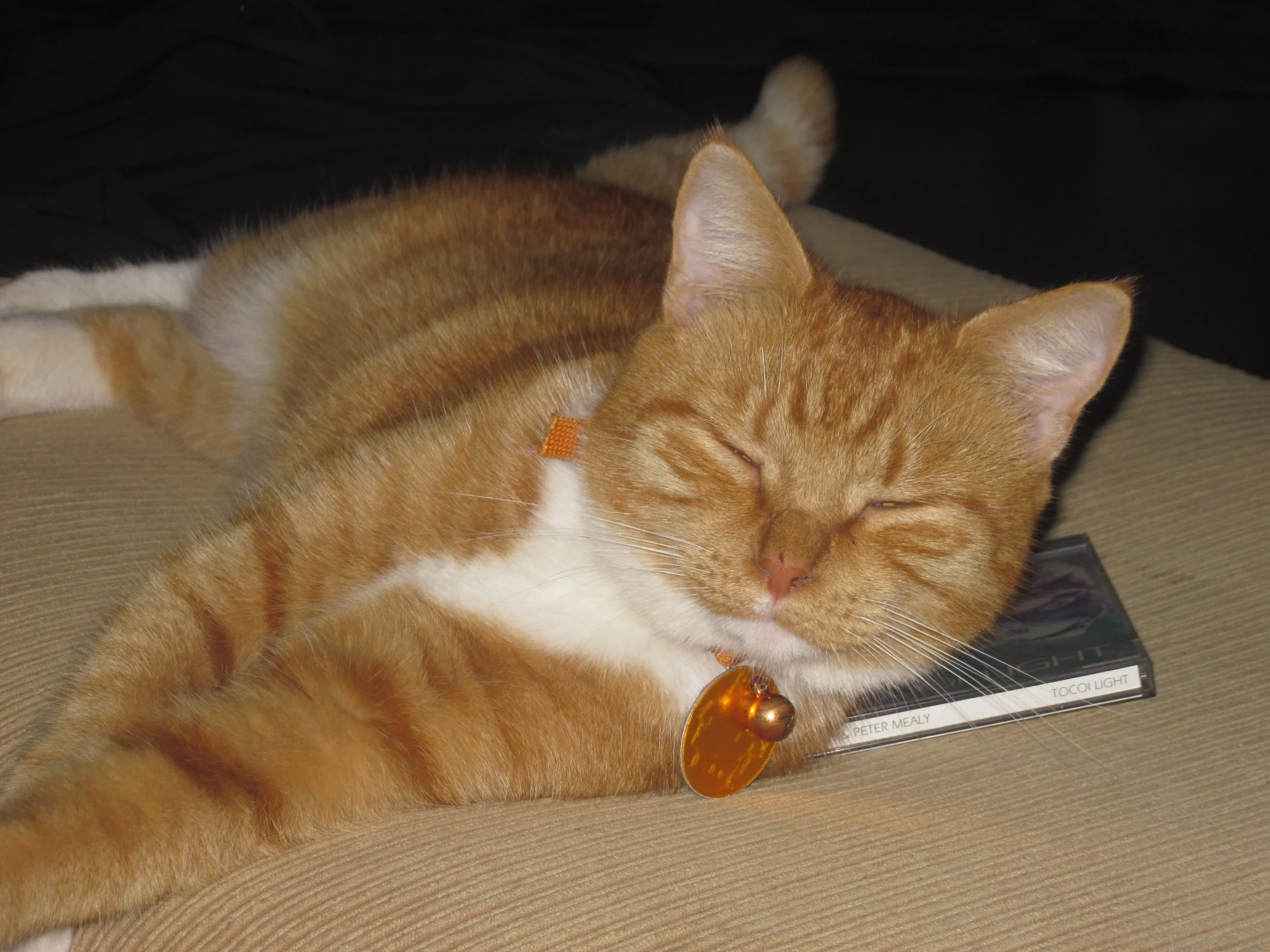
“ORLY”
Circa 2009
So, you see, I could not start this website without him. Our triangle was complete—formed during a magical week in July 2008—and it remains the quiet foundation of all that followed.
Another defining moment of that year soon followed: my first grandchild, Mila, was born in November. Her arrival was marked by a small Japanese maple that her father and I planted in the flower bed by our front door. It remains there today, a symbol of growth and the changes that the seasons bring to our lives.
After the shop closed, Cafe Roche friends began meeting in our home occasionally and I began sending out a regular email to friends and family that I began affectionately calling the Orlando Gatito Society, I used the name to represent the sense of community, continuity, and joy that had grown around this small, orange catalyst.
Words matter. They try their best to portray ideas and feelings that we struggle to express. Sometimes, in a very long while, they emerge and become a kind of truth. The name Orlando stands for something precious to Joanie and me and to many of our friends and relatives who were fortunate enough to make his acquaintance. He was not overtly affectionate, but neither was he one of those standoffish, run-and-hide felines. He was not a lap cat, but if one of us was available, you might find him curled up close by. When he desired a good scratch, he made that clear with a stoic stance and precise eye contact. He roamed the neighborhood as a young explorer but returned soon when his chores were done. When challenged by would-be rivals, he resisted combat but rather stood his ground, rising above the callous yowling, ever the regal neighborhood prince.
He left us on July 21st, 2024. He has a little plot of his own in our small, private backyard, not far from some of his favorite leafy patches of sunlight. Out of respect, and reluctance, we have not yet replaced the presence of his absence but will when the time seems right and the spirit makes itself known. In the meantime, may his rest be peaceful, until he returns as the “king of the jungle” he was destined to become.
So now you have it—the magic of “Three”: Clay, Joanie, Orlando. The human mind is fueled by memory. Long may it live.
Clay
P.S. Readers of the Jomeokee Journal are considered honorary members of the Society! 😊
No One Is an Island
…entire of itself
If I am asking you to spend some of your precious time with me, I feel a need to share more about the life experiences that inform me.
Each of us at any stage of our life is an amalgamation. Someone has said that “memory is mind”. We have relationships. As we grow, we develop preferences. Information flows in relentlessly from many sources. Our personalities are formed and molded and recast continuously. If we are fortunate, there are more positive impacts than negative. At some point we stand naked and vulnerable to all who choose to encounter us. This can be frightening or exhilarating or simply boring and mundane.
If we are brave, we come accept and live within this reality. In the coming weeks, I shall “expose” some of the forces that memory tells me were among the most formative. Eventually, I will reveal figures from music, literature, and family that feel essential parts of who I have become. I shall begin more “humbly”.
In the small mill town of my youth, I attended with regularity the church one block from our house. My mother’s father was a Methodist minister so that was our choice (instead of my father’s Baptist congregation one block in the opposite direction). In that church there was a regular looking guy and his lovely wife. In middle age they remained childless. He invited the young boys to join him on Saturday morning hikes in the surrounding woods. The woods were a part of a national forest so there were very few limitations on wandering once we left the town limits.
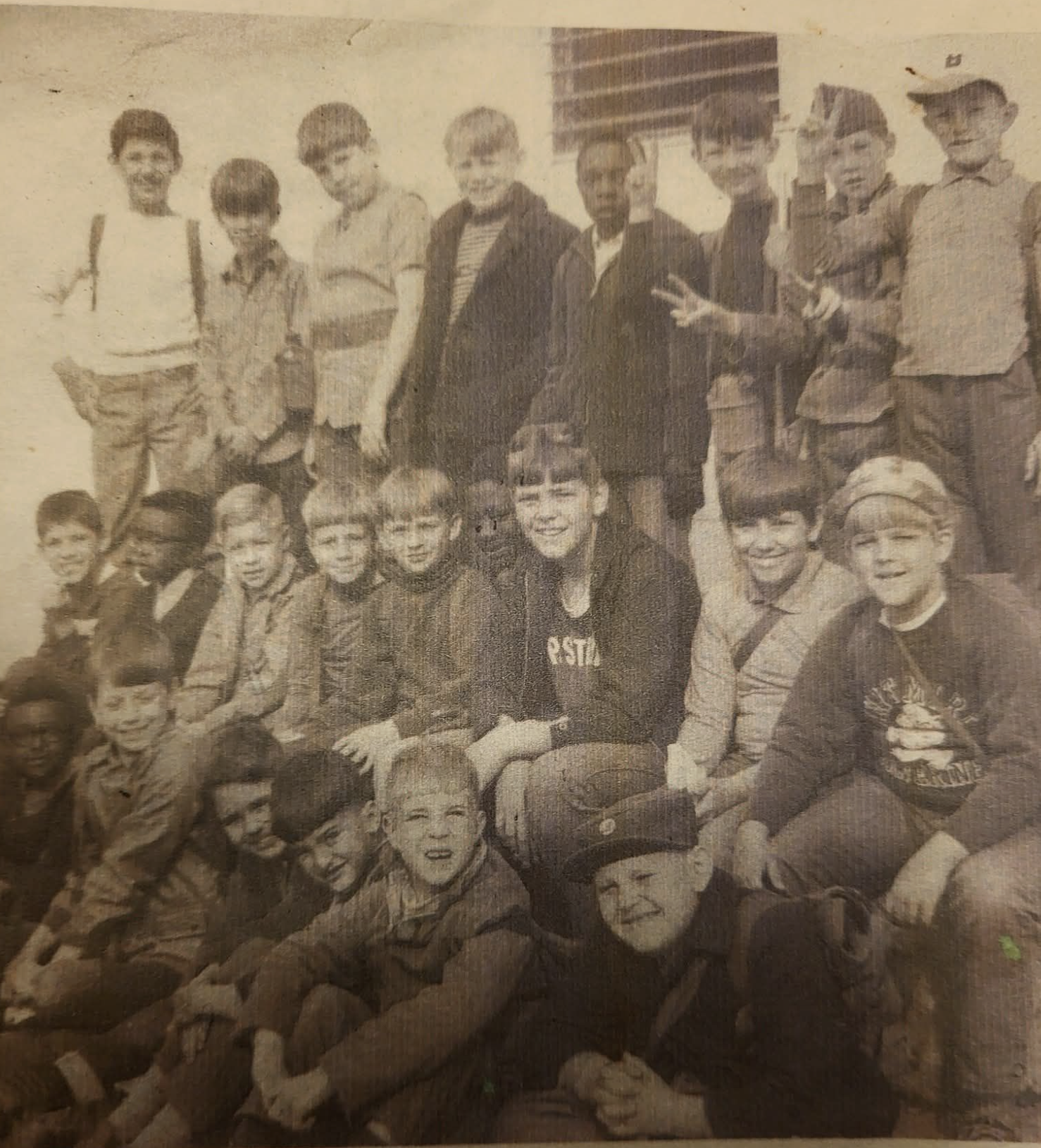
A Group of B.F. Poole’s “Junior Minute Men”
B.F. Poole (Benjamin Franklin to be exact) worked in the textile mill for eight hours, five days a week. While many of my friends’ parents chose to rest or play during their free hours Mr. Poole and his wife spent Sunday at the church, and he dedicated Saturday mornings to his young minions. None of us knew where he intended to go or what we might see—that was a delicious part of the outing. I wish I remembered more, but I can give you a few snatches.
Usually, we followed the Seaboard Coastline railroad tracks for a mile or so to escape sidewalks and traffic on the country roads. It was exciting to cross Duncan Creek on the high bridge never worrying about a coming train (I am sure Mr. Poole had checked the schedules meticulously. He certainly felt the responsibility he had taken on, even as we felt free as birds). Once we were in a low, damp forest floor, he held up his hand to stop. He had seen something that might spell danger. In a moment he motioned us to follow and pointed to the ground. Distinct footprints, not human or resembling any usual animal, tracked across the damp floor. He squatted and told us to look closely so that we would remember— the hoof prints of a pack of several wild hogs. He told us that they raided gardens and damaged fences and did not take lightly any attempts to deter their wants and needs; they had sharp tusks.
Much later as an adult I was canoeing a black water river in eastern North Carolina with an outdoorsman friend, and we startled a pack of 30 or so on the bank. With a loud snort from their leader, they crashed wildly through the underbrush. I recalled Mr. Poole’s warning and teaching.
Another time in early summer, we rode in cars to another branch of Duncan Creek, stopped and climbed down a slope to a sandy spot next to the water. He broke off a stout branch, sharpened it with his pocketknife, stuck it deeply into the sand, and proceeded to roughly vibrate it by rubbing another against it as if trying to start a fire with the friction. A minute or so later worms began to emerge from the ground around the spot. We were astounded to watch thirty-inch-long slimy worms emerge as if summoned like an Indian Cobra—we learned that they were called “nightcrawlers”. Big enough to entice a large mouth bass if you could somehow got them on the hook.
Exhausted by the hike in and as sweaty as the worms were creepy, Mr. Poole allowed us to strip down and swim in the creek. The first act of “skinny-dipping” in my life. I shall reveal nothing more.
Mr. Poole joined us in youth meetings and summer Bible-school and became more like a gracious uncle, a fine alternative to whatever home life we experienced. When not in the woods one would regularly encounter him on a bench downtown in front of a gas station, always there to talk or merely listen. For some of our older members he invited them home to learn the art of tying flies and crafting elegant bamboo rods.
I tried, in adulthood, to contact him but found that I was too late. I did not get to say thanks or tell him how grateful I was. That taught me his last lesson—do not put off the most important things in life. There in a small, insignificant village a local hero bestowed on a tiny band of budding teenagers a model of responsibility and care, a gift that we hardly realized. My fervent hope is that I was not the only one whose life bore a small portion of his character.
I do not remember any great sermons or revivals, but that little church nurtured us in the membership and community.
Amen.
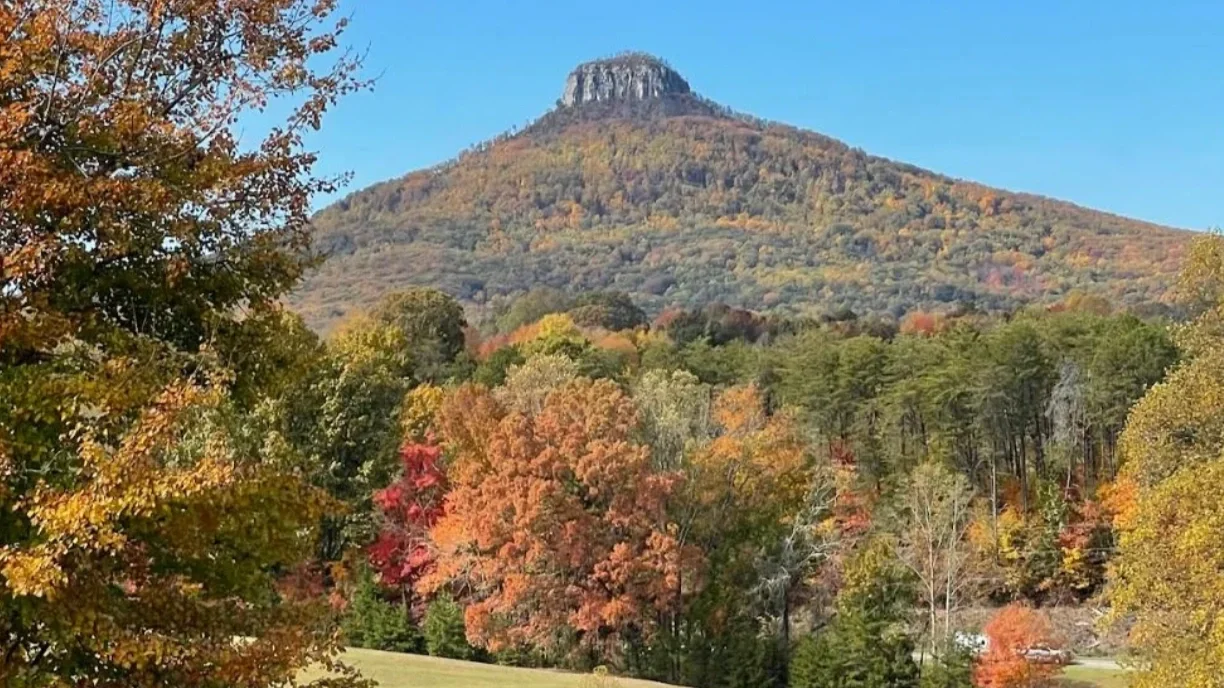
Welcome to the Land of Jomeokee.
I look forward to chatting with you wherever you are and whoever you might be.
It’s as simple as this. My name is Clay, and I spent nearly forty superb years teaching, as they say, in “higher education.” I have always liked school and was fortunate to grow up in a world where education was affordable for almost anyone (in my case aided by the GI Bill). I now see clearly that converting a law degree into undergraduate teaching was the best path that I can imagine. The privilege of standing before small classes of fine, eager students and trying to open their minds to the magic of our creation and unlimited opportunity cannot be adequately communicated.
Teaching is a sacred trust, but even better is what one learns in the process. Since my mother exposed me to classical music, my first library card at six, two unbelievably fine teachers in a small textile town, being able to choose and afford a small liberal arts college degree, serving my country abroad, and earning degrees in business and law, I can now look back and appreciate the charmed journey. Because of it, I have never lost my curiosity or my interest in almost everything.
Now, my greatest hope is that I can somehow give some of that back in sharing the full range of my interests with others.
What to Expect Here
First, a weekly entry posted each Sunday on whatever happens to seem relevant and irregular entries in the topical sections listed under Guideposts.
Words that Sing is an especially important project of mine that I’ll be talking about more going forward, so stayed tuned!
Please fully read the About section of the blog. It gives a fuller picture of who we are and what we care about.
Lest I forget, I am compelled to reveal one of the things we are MOST passionate about: The Table. Food, wine, and entertaining with flowers and candlelight is an important ritual of presence for us. Around the table, we enjoy a slower pace where we can reflect on the day, allowing the conversation to flow as naturally as the wine. It is a quiet celebration of the everyday moments that make up our lives and a practice that nourishes our bodies and souls. We hope to share some of our dinners with you through pictures, words and occasionally a video or two.
What Led Me Here
Well, I thought you’d never ask.
Writing, whether through essay or email, has always been a place where I have felt most at home. An essential part of my life, even more so since retirement. Yes, practically speaking, I have more time to dedicate to the process, but it's also been therapeutic, giving me a space to sort the myriad of thoughts that flow in and out of my mind.
Writing has always been my way of getting to the heart of things, as I feel that the right words chosen carefully are the most direct path to understanding and authentic connection. Yet I also know the precision I crave is often elusive—a truth a friend captured beautifully when he quoted the words of a philosopher: “There are no words, but there are only words.”
There is no denying it; the writer’s garret gets a bit lonely at times, and my care for community and communication moves beyond the page. They are in the real world of interaction. These reflections, and my desire to combine writing with connecting to a wider audience, led me to the conclusion that a website would allow me to bring together the things I care about most these days: reflective writing, meaningful communication, and a sense of community.
My Morning Practice
For the last several months, my day begins with a quiet hour somewhere around 5 or 6. I have found a special piece of music that helps me begin in a good place. It is called “Hymn to a Blue Hour” by the American composer John Mackey. I have learned that blue hour is the period between dawn and the arrival of fuller light before sunrise. If you rise early and sit through it, you might experience a wholly new awakening. For me, it is a time to push away the distracting images of the rational brain and allow space for my mind to wander as it will. I have experienced magical moments and occasionally something that seems “profound.” Take this as you will, but I have truly benefitted from the “practice.”
Slowing Down
My days are less prone to profane thoughts and words. I have slowed everything down. I hardly ever fret at stop lights, and I follow all speed limits as the rest of the traffic roars over, under, around, and through the frantic need to get from here to there. I have, step by step, retreated from exposing myself to media outlets that constantly remind me how bad things are and how little control I have over the things that are being done to, and by, us.
I read more (preferring books purchased from small independent stores), listen (truly listen) to more music, watch less video, and spend time with friends around the table and the hearth. (A confession: I talk too much and listen not nearly enough—a personality trait that I am beginning to studiously work on.)
Looking Inward and Outward
It would serve us all well to look inside in order to better understand ourselves and our interactions with others and to look outside and spend more time in the natural world. The “philosopher” Yogi Berra famously said, “You can see a lot just by looking.”
Then, share some of your joy with others.
Please know—this is not “instruction.” I claim no truth. Just trying to open us all to higher possibilities. We have had enough shouting and gesturing, and somehow believing that our chosen way is better than theirs. We must, and we can do better.
A Parting Wish
Again, it delights me to welcome you to the land of Jomeokee (the small mountain at the top of the page). If it brings you even a small portion of the joy that it has given me, I have succeeded.
Come back again if you will, just to hear what might be going on.
In goodwill,
Clay